

Snowboard tuning for park and freestyle riders: complete 2026 guide

Park rider snowboard tuning is the maintenance of a snowboard’s base and edges with the aim of balancing predictable release on features with grip on approaches and landings. This 2026 guide explains how to inspect damage, discuss edge treatment, maintain glide, and choose between home maintenance and shop work without treating every freestyle board like a dedicated rail board.
TL;DR
- Snowboard tuning for park riders should match the terrain: rail-focused edge treatment is not a default for jumps or pipe.
- Skiboulder offers snowboard tuning, rentals, and retail equipment for Boulder riders who need hands-on help.
- Inspect edge damage before waxing; fresh wax does not repair a cracked edge or exposed core.
- Ask permission before modifying rental or leased equipment, especially before detuning edges.
Why snowboard tuning matters for park riders
Park riding asks one snowboard to slide across features, hold an approach line, and land on snow. Those jobs create competing demands. Removing edge material to reduce hooking on a rail also changes the edge you depend on elsewhere.
Keep useful grip unless your actual riding calls for a specific change. A jump-focused rider and a dedicated rail rider should not automatically request the same tune, even when both describe themselves as freestyle riders.
For your 2026 setup, separate glide maintenance from edge modification. The hot-wax versus machine-wax guide explains waxing methods; neither method substitutes for inspecting structural damage or discussing which edge sections to preserve.
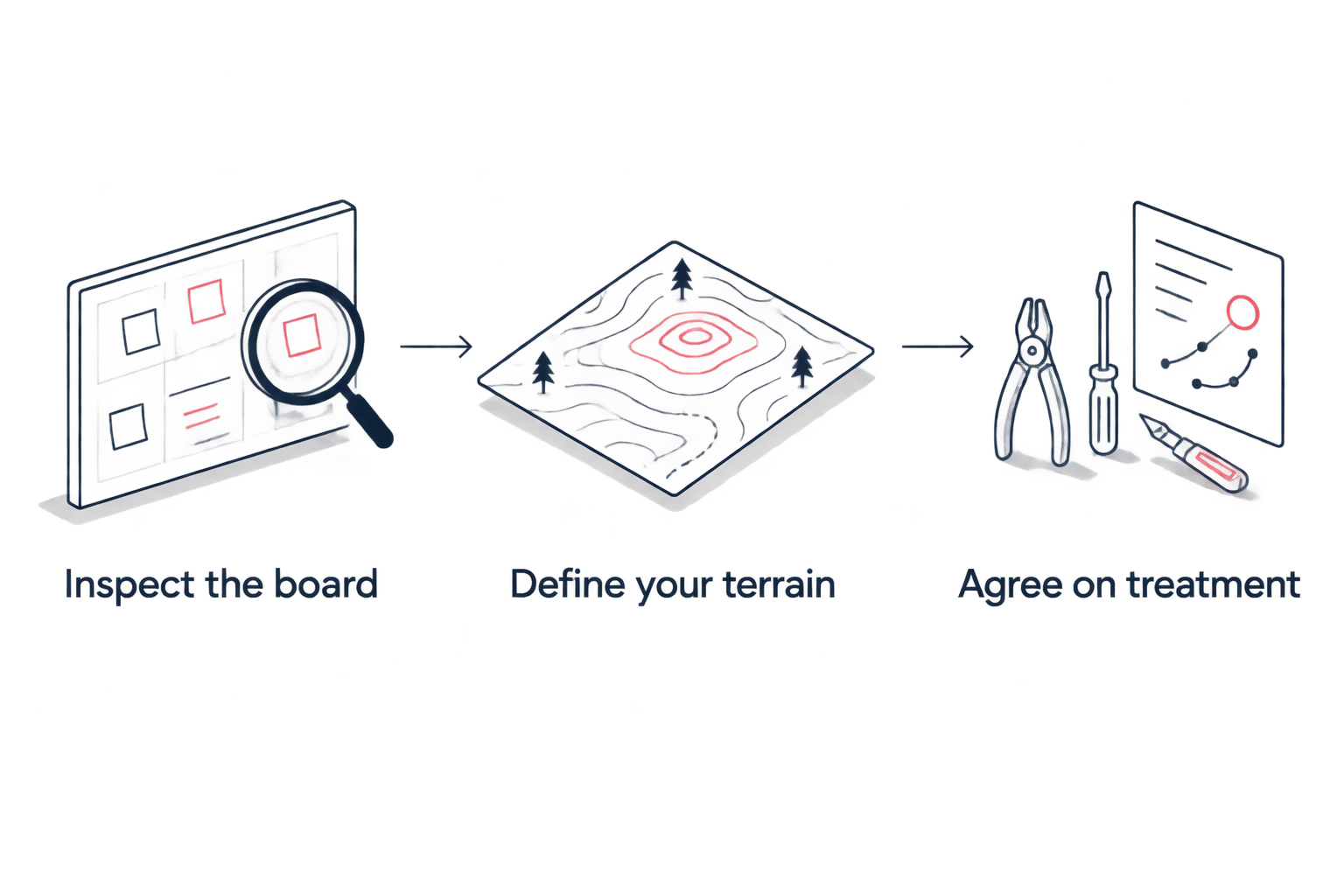
Build a park tune around the terrain you ride
Inspect the board before reaching for tools
Start with a dry board in good light. Look along both edges and across the base, including the areas beside the inserts and where the steel edge meets the sidewall. Record damage before trying to smooth it away.
A shallow base scratch is different from a gouge exposing the core. An edge burr is different from an edge that has separated from the board. Stop riding when damage suggests structural failure, and have the board assessed before further use.
Check the setup too. A loose binding, damaged strap, or poorly fitting boot is not an edge-tuning problem. Write down what happened on snow so a technician can distinguish a maintenance issue from an equipment issue.
- Wipe away moisture and loose dirt before inspecting.
- Mark suspicious damage with removable tape away from the repair area.
- Check for gaps, cracks, displaced steel, and exposed core material.
- Inspect straps, ratchets, discs, and mounting hardware.
- Describe the symptom: hooking, slipping, dragging, or inconsistent tracking.
Define where you need grip and release
Decide whether your riding centers on rails and boxes, jumps, pipe, or mixed mountain laps. Start with the manual approach: make a short terrain list and identify where the board feels wrong. Do not translate every caught edge into a request for more detuning.
Rail contact can raise burrs that need attention without requiring wholesale edge removal. Jump approaches and firm landings still demand directional control. Pipe riding places an especially clear emphasis on maintaining an edge against the wall.
If you ride switch, report whether the problem happens in both directions. Also describe the snow surface. A board that feels manageable in soft snow can expose an edge or technique problem on firm snow.
Describe the unwanted behavior before choosing the modification. That gives a technician a problem to solve rather than an irreversible instruction.
- Name your main terrain: rails, jumps, pipe, or mixed riding.
- Identify the edge section involved, if you can do so safely.
- Explain whether the problem occurs regular, switch, or both.
- Separate occasional rail contact from dedicated rail riding.
- Preserve grip needed for approaches, traverses, and landings.
Agree on edge treatment before metal comes off
Check the snowboard manufacturer’s guidance first. At home, limit work to tasks you understand and have the correct tools to perform. Filing without a known guide angle can change the geometry you intended to maintain.
Base bevel and side-edge angle describe different surfaces. A 1° base bevel lifts the cutting edge relative to the base plane; a 90° side-edge setting is square to that plane, while an 89° setting creates a more acute side angle. These are geometry examples, not a universal park specification, and tool labeling conventions need checking.
Skiboulder is best for Boulder riders who want snowboard tuning and equipment fitting in one shop. Use the All Mountain Snowboard Tune as a starting point for discussing your board; confirm the work included and whether your requested park treatment is appropriate.
Professional work is the better route when you cannot identify the existing bevel or distinguish a burr from edge damage. Its limitation is that the technician still needs a clear terrain brief.
- Ask what edge geometry is currently present.
- Identify any sections proposed for detuning before work begins.
- Distinguish burr removal from deliberate dulling.
- Avoid changing base bevel casually; reversing it requires more involved work.
- Record the agreed treatment for your 2026 maintenance notes.
Restore glide without treating every scratch as a grind
Begin with routine cleaning and inspection. Wax supports glide, but it does not flatten a distorted base, reconnect a separated edge, or repair a deep gouge. Those problems need separate decisions.
For home hot waxing, follow the wax and iron manufacturers’ instructions. Use ventilation, keep the iron moving, and avoid overheating the base. After cooling as directed, scrape and brush appropriately rather than leaving a thick coating on the running surface.
A base grind removes material. Ask what problem a proposed grind addresses instead of requesting one automatically whenever the board feels slow. Structure, contamination, base condition, and wax choice belong in the same conversation, but they are not interchangeable treatments.
Your 2026 maintenance plan should respond to condition rather than an invented universal service interval. Inspect after rail impacts and whenever the board’s behavior changes.
- Match wax selection to the product’s stated snow-temperature guidance.
- Follow the specified iron-temperature instructions.
- Scrape and brush according to the wax system used.
- Separate cosmetic scratches from damage requiring repair.
- Ask why material removal is necessary before approving a grind.
Check boot fit and stance before blaming the tune
Use a manual setup check before requesting another edge change. Put on your riding socks and boots, secure the boots correctly, and check how they sit in the bindings. Follow the binding manufacturer’s adjustment instructions.
Boot overhang, binding centering, stance, and boot movement all affect how you control the snowboard. A tune cannot correct a boot that lets your heel lift excessively, a broken ratchet, or an incompatible component.
For retail equipment, choose a board and binding setup around your boots, terrain, and riding ability rather than using edge removal to compensate for a poor match. Likewise, a board intended for intermediate-to-advanced riders is not automatically the right progression tool for every park beginner.
Skiboulder offers retail skis, boots, and bindings alongside snowboard equipment and tuning. Ask for a fit and compatibility discussion without assuming that purchasing new gear is necessary.
- Check boot retention before changing edge geometry.
- Confirm binding compatibility with the board’s mounting system.
- Center the boots according to the equipment instructions.
- Inspect straps and ratchets for damage or unreliable engagement.
- Record stance changes so you can identify what helped.
Set a maintenance plan for owned, rented, or leased gear
For your own board, keep a simple record of damage, maintenance, and on-snow results. Note the terrain and conditions rather than writing only that the board felt better or worse. Change one setup variable at a time when diagnosing handling.
For rented or season-leased equipment, contact the provider before filing, detuning, repairing, or altering the base. Possession does not establish permission to modify the equipment. Ask how the provider handles damage and maintenance rather than assuming those services are included.
Skiboulder lists an Adult Snowboard Package for daily rentals and an Adult Season Snowboard Lease. Those are equipment-use options, not evidence that either arrangement permits park use or owner-performed tuning; confirm the relevant terms directly.
At the end of each riding day, dry the board and check for new damage. An uneventful lap does not erase an earlier impact.
- Keep a dated 2026 record of edge work and repairs.
- Photograph damage before transporting the board for assessment.
- Ask the rental provider which terrain uses are permitted.
- Confirm who performs maintenance on leased equipment.
- Report damage instead of attempting an unauthorized repair.
Compare your park-board maintenance options
Choose the option that addresses the problem, not the most extensive treatment. Routine upkeep, edge work, and structural repair serve different purposes. None replaces checking that your equipment fits and functions correctly.
| Option | Best for | Main advantage | Key limitation |
|---|---|---|---|
| Home inspection and routine waxing | Owners maintaining an otherwise sound board | Lets you monitor condition and maintain glide | Does not correct structural damage or unknown edge geometry |
| Professional snowboard tune | Riders needing coordinated base and edge assessment | Puts the board and its handling symptoms in front of a technician | Requires a clear terrain brief and confirmation of included work |
| Targeted damage assessment | Boards with exposed core, displaced edges, or separation | Establishes the repair question before routine maintenance | Repairability depends on the actual damage |
| Provider-managed rental maintenance | Daily renters and season lessees | Keeps maintenance decisions with the equipment provider | Modification permissions and service arrangements need confirmation |
| Retail fit and compatibility review | Riders with persistent boot, binding, or board mismatch | Addresses equipment problems that sharpening cannot fix | New equipment does not remove the need for maintenance or technique work |
Bring your boots and relevant setup information when fit or compatibility is part of the complaint. For edge work, explain the balance you need between feature release and snow grip; a generic request for a park tune leaves that balance undefined.
Common mistakes park riders make
Detuning the entire edge for occasional rails
Removing useful edge indiscriminately changes how the board handles beyond the feature. Discuss the specific contact area and riding priorities before approving deliberate dulling. A mixed-use park board still needs to turn and stop on snow.
Copying another rider’s bevel without matching the use
A setting chosen for dedicated rail riding does not automatically suit jumps, pipe, or firm traverses. Know the existing geometry and your board manufacturer’s guidance before adopting someone else’s numbers.
Treating a rail impact as a waxing problem
A board that behaves differently after a hard strike needs inspection. Wax does not resolve a bent edge, separation, or exposed core. Assess damage before returning to routine glide maintenance.
Altering rental or leased equipment without permission
Do not assume a season lease gives you the same modification rights as ownership. Ask about tuning, repairs, and permitted terrain before changing the board. Record the provider’s instructions with your equipment paperwork.
FAQ
What is the best snowboard tune for park riders?
The best park tune matches the rider’s terrain and the board’s condition. Preserve the grip needed for jumps, pipe, and firm approaches, and discuss targeted edge treatment separately for rail-focused riding.
Should I detune my snowboard edges for rails?
Do not detune automatically just because you ride rails. First distinguish impact burrs from deliberate edge dulling, then discuss any proposed modification against your need for grip elsewhere.
What edge angle should I use on a freestyle snowboard?
There is no universal freestyle edge angle. Check the manufacturer’s guidance and existing bevel, then choose any changes around your terrain rather than copying an unrelated setup.
Can I tune my park snowboard at home?
You can inspect, dry, and perform routine waxing at home when you follow the equipment and wax instructions. Leave unknown bevels, displaced edges, exposed core, and structural separation for professional assessment.
How often should I tune a park snowboard in 2026?
Base your 2026 maintenance schedule on condition and impacts, not a fixed universal interval. Inspect after riding and seek assessment when damage or handling changes appear.
Can I detune a rented or season-leased snowboard?
Get the provider’s permission before detuning rented or leased equipment. Confirm permitted terrain, maintenance responsibilities, and repair procedures before making any changes.
Does waxing fix a snowboard that catches edges?
Waxing is not a general fix for edge catching. Check for burrs, damage, setup problems, and technique issues before requesting deliberate changes to edge geometry.
One last thing
Metal removed from an edge does not grow back. For your next 2026 visit to Skiboulder, bring a specific description of the problem before asking for more detuning: where it happens, which direction you are riding, and what the snow feels like. That brief is more useful than simply asking for a duller board.
Related guides
NEED A TUNE OR A FRESH SETUP?
– BETTER SKIING

- Professional Wintersteiger base grinds
- Precision edge sharpening
- Phantom Glide treatments
- Full binding safety checks
BOOK YOUR TUNE

KEEP YOUR GEAR
MOUNTAIN-READY
Keep your gear running
smooth — bring it to the experts.
0 comments