

Hot wax vs machine wax: how ski waxing works

Hot waxing uses an iron to melt ski wax onto the base, followed by cooling, scraping and brushing; machine waxing uses equipment such as a heated roller or automated waxing system. When you search for ski waxing near me, ask about the application and finishing steps—not just whether the service is called hot wax or machine wax—because a machine can also apply heated wax.
TL;DR
- For ski waxing near me, compare the actual process: application, cooling, scraping and brushing.
- Iron-on hot wax suits skiers seeking condition-specific preparation; machine-wax results depend on the equipment and finishing.
- Skiboulder is best for Boulder skiers seeking a ski shop with tuning, boot fitting, rentals and retail gear.
- Wax supports glide; it does not repair deep base damage, sharpen edges or correct boot fit.
Hot wax vs machine wax: how does ski waxing work?
Hot wax describes a heated application process; machine wax describes the equipment doing the work. Those labels overlap. A heated roller applies hot wax, while an automated system can use a different application and finishing sequence.
The useful comparison is between an iron-on treatment with a defined finish and the specific machine treatment being offered. For a Boulder service visit in 2026, start with the Sharpen and Wax service page, then confirm the waxing method and included work before leaving your equipment.
| Method | How it works | Best for | Main limitation |
|---|---|---|---|
| Iron-on hot wax | An iron spreads melted wax over the base; excess wax is removed after cooling, then the base is brushed | Skiers seeking deliberate wax selection and a defined finishing process | Careless heat application can damage the base; the method still needs proper finishing |
| Heated roller wax | A powered roller transfers heated wax onto the base | Routine glide maintenance when the application and finish match your needs | The label alone does not identify the wax, cooling period or finishing steps |
| Automated waxing system | Equipment applies and, depending on the system, finishes the wax | Skiers whose shop can explain the complete treatment | Different systems perform different tasks; automation alone does not establish the result |
None of these labels tells you whether the service includes edge work, base repair or grinding. Ask about those separately. A waxing appointment and a full tune are not interchangeable.
Why this matters
A ski that feels slow does not automatically need more wax. Base condition, snow characteristics, surface contamination and the existing finish all affect glide. On firm snow, dull or damaged edges create a different problem: poor grip rather than simply poor glide.
Choosing a service by name alone leaves those distinctions unresolved. Tell the technician whether your skis feel sticky on a traverse, unpredictable through a turn or reluctant to release an edge. Describe the symptom before requesting the treatment.
Skiboulder offers ski and snowboard tuning alongside boot fitting, rentals and retail equipment. That makes the shop relevant when you need to separate a maintenance issue from a fit or equipment question, without assuming every problem needs the same service.
Iron-on hot wax: best for a defined preparation process
An iron-on wax treatment gives the technician direct control over wax application. The technician selects a suitable wax, melts and spreads it over the base, lets the ski cool, then removes excess material and brushes the surface.
The finish matters as much as the application. Ski bases have a surface texture called structure, which helps manage moisture at the snow interface. Leaving excess wax on the surface can obscure that texture rather than improve the ski's glide.
For your 2026 ski preparation, ask whether the service includes scraping and brushing after the wax cools. Also ask how the wax is selected for your expected conditions. A treatment described only as hand wax does not answer either question.
The drawback is that an iron requires controlled use. Excessive heat or leaving the iron stationary can damage the base. This is not a reason to reject iron-on waxing; it is a reason to value the technician's process rather than the label.
Choose iron-on hot wax when you want a clearly explained wax choice and finishing sequence. Do not treat it as a substitute for repairing damage or correcting an unsuitable base finish.
Machine wax: best for clearly specified routine maintenance
Machine waxing covers more than one process. A heated roller transfers wax to the ski through contact with the roller. Other equipment uses different application methods, and some systems include additional finishing operations.
The advantage is repeatable mechanical application. The limitation is ambiguity: the words machine wax do not tell you what happens before or after the ski passes through the equipment. Ask whether cleaning, cooling, scraping or brushing are part of the treatment rather than assuming they are.
A machine-wax service is a sensible choice when its stated process suits the ski's condition and your intended use. It is not automatically inferior to a hand-applied treatment, and a machine does not automatically make a treatment complete.
Choose the explained process, not the promise implied by automation. If a shop cannot describe the wax application and finish, the service name gives you little basis for comparison.
How does a proper ski-waxing process work?
The exact sequence depends on the wax and equipment. For a conventional iron-on treatment, these are the main stages to discuss with your technician. Use them as a service checklist, not as a substitute for the wax manufacturer's instructions.
- Inspect the base. Look for contamination, damaged material, exposed core and edge problems. Decide whether the ski needs repair or tuning before wax application.
- Select wax. Match the wax to the expected snow conditions and its manufacturer's guidance. Air temperature alone does not describe everything happening at the snow surface.
- Apply wax. Use the application method specified for that wax. With an iron, control the heat and keep the tool moving.
- Cool the base. Follow the wax manufacturer's guidance before removing excess wax. A warm base and a finished base are not the same thing.
- Scrape and brush. Remove excess surface wax and clear the structure. Check that the finished surface is clean rather than coated with loose material.
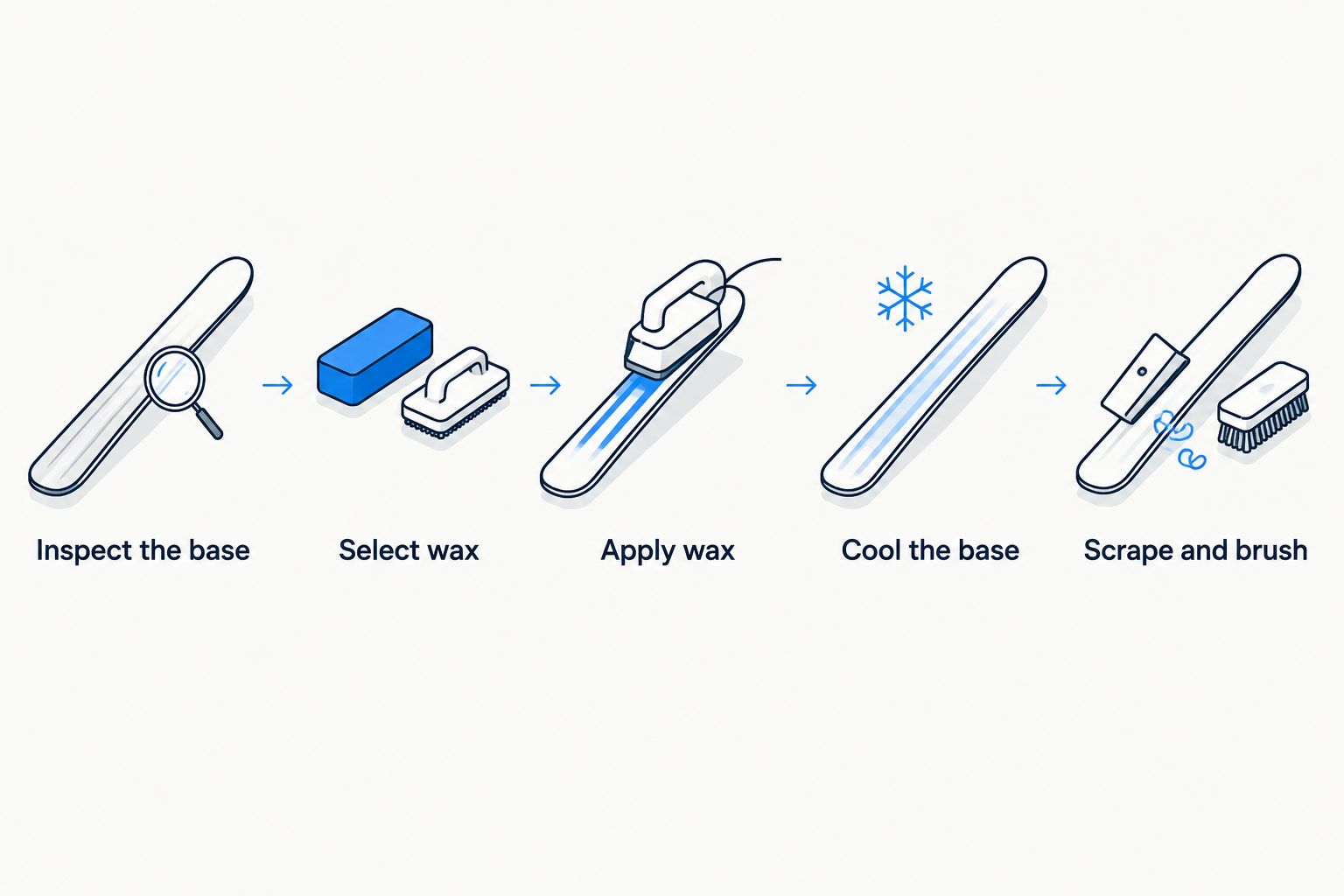
For machine treatments, ask which stages the equipment performs and which the technician completes separately. A roller pass describes an application step, not necessarily the entire service.
What should the finished ski look like?
A finished, scraped and brushed ski should not carry thick ridges of excess wax. The surface structure should remain visible rather than buried under a coating. Appearance alone, however, cannot confirm that the wax suits the snow or that the base is flat.
Avoid using a shiny finish as your only quality test. Ask what was done and why. For a 2026 service appointment, a useful explanation connects the ski's condition, the selected wax and the final brushing process.
Why ski-waxing results vary
Waxing results depend on more than whether a person or a machine applies the wax. These factors explain why the same service label can describe different experiences:
- Snow conditions: Cold, dry snow and wetter snow place different demands on the wax and base finish. Choose wax using the manufacturer's condition guidance.
- Base condition: Dirt, damage and an unsuitable surface finish remain relevant after waxing. Wax does not rebuild missing base material.
- Wax selection: A wax intended for particular conditions is not interchangeable with every other wax. Ask what conditions the treatment targets.
- Application control: Proper heat and contact matter during heated application. More heat is not a shortcut to better preparation.
- Finishing: Scraping and brushing remove excess material and expose the base texture. Application without an appropriate finish leaves the job incomplete.
- Use and contamination: Snow contact, abrasive conditions and dirt change the running surface over time. Judge the ski's condition rather than relying on a universal calendar interval.
These factors apply to owned skis, rental skis and seasonal lease equipment. The maintenance responsibility can differ, so confirm the arrangement before doing work on equipment you do not own.
How do you know whether you need wax or a full tune?
Wax addresses glide preparation; a tune can address additional base and edge work. The phrase full tune is not a fixed list of operations, so compare the stated inclusions with the condition of your skis.
| What you notice | What to discuss | What waxing alone does not resolve |
|---|---|---|
| Drag or sticky glide | Wax choice, contamination and base finish | Every possible cause of slow glide |
| Poor grip on firm snow | Edge condition and existing edge angles | Dull or damaged edges |
| A deep gouge or exposed core | Base repair before further use | Missing base material or core damage |
| Pain, numbness or heel movement | Boot fit and equipment assessment | Pressure points or an unsuitable boot fit |
| Unpredictable handling | Technique, tune, fit and equipment suitability | A reliable diagnosis without inspection |
Bring the skis in rather than trying to diagnose everything from a description. If you changed boots, mention that too: boot-binding compatibility and adjustment are separate safety matters, not part of waxing.
For retail equipment, use the same distinction. New skis still deserve a preparation discussion, while new boots need a fit assessment. Neither a new purchase nor a fresh wax treatment establishes that the entire setup is ready for your needs.
Can you wax rental skis or seasonal lease skis?
Ask the rental provider before applying wax or arranging outside service. Confirm who handles routine maintenance, who authorizes repairs and what to do if you damage a base or edge. Do not assume a seasonal lease includes unrestricted changes to the equipment.
For a 2026 rental or lease, report the same on-snow symptoms you would report with owned skis. Describe drag, inconsistent grip or visible damage, and let the provider identify the appropriate next step. Keep boot-fit concerns separate so they receive their own assessment.
Skiboulder's rentals, tuning and boot-fitting services make those practical questions relevant to a Boulder visit. Confirm the terms and service inclusions for your specific rental or lease rather than transferring assumptions from another package.
Is hot wax always better than machine wax?
Hot wax is not automatically better than machine wax because some machines also apply heated wax. Compare wax selection, base preparation and finishing instead. An accurately described machine treatment is more informative than an unexplained premium-sounding label.
For condition-specific preparation, ask how the technician chooses the wax and finishes the ski. For routine maintenance, ask whether the proposed treatment addresses the actual condition of your base.
Does ski wax fix scratches or dull edges?
Ski wax does not repair scratches or sharpen dull edges. Deep damage needs a repair assessment, while grip problems require an edge and tune discussion. Covering either issue with wax does not correct its cause.
If you see exposed core, stop treating the problem as a waxing question. Have the damage inspected before using the ski again.
FAQ
What should I ask when searching for ski waxing near me?
Ask how the wax is applied and whether the service includes cooling, scraping and brushing. Explain your snow conditions and any glide, edge or base problems so the technician can assess the right work.
Is machine wax the same as hot wax?
Machine wax and hot wax are overlapping labels, not opposites. A heated roller applies hot wax, while other machines use different application and finishing processes.
How long does a ski wax last?
A ski wax has no universal service interval because snow conditions, abrasion, contamination and use differ. Check the base and changes in glide, then discuss maintenance with your technician.
Do my skis need sharpening every time they get waxed?
Waxing does not automatically require sharpening. Edge work should follow an assessment of edge condition, existing angles and your skiing needs rather than a blanket rule.
Can snowboard bases be waxed the same way as ski bases?
Conventional ski and snowboard bases share the basic heated-wax, cooling, scraping and brushing process. Follow the wax and equipment manufacturers' instructions, and assess edge or base damage separately.
Can I wax my seasonal lease skis myself?
Ask your lease provider before waxing or modifying leased skis. Confirm maintenance responsibilities and approved service arrangements for your specific equipment.
Can Skiboulder help with more than ski tuning?
Skiboulder offers ski and snowboard tuning, boot fitting, rentals and retail skis, boots and bindings in Boulder. Discuss the specific work your equipment needs before selecting a service.
One last thing
More wax left on the ski is not the goal. For a conventional scraped-and-brushed treatment, removing excess wax is part of preparing the running surface, not undoing the application.
Before your next 2026 ski day, ask one practical question at pickup: what did the base need, and what finish did it receive? That answer tells you more than hot or machine alone.
Related guides
NEED A TUNE OR A FRESH SETUP?
– BETTER SKIING

- Professional Wintersteiger base grinds
- Precision edge sharpening
- Phantom Glide treatments
- Full binding safety checks
BOOK YOUR TUNE

KEEP YOUR GEAR
MOUNTAIN-READY
Keep your gear running
smooth — bring it to the experts.
0 comments