

Ski base repair: when your skis need more than a tune

Your skis need ski base repair when damage removes base material, exposes the core, or affects the edge attachment; wax and sharpening do not fix those problems. A routine tune addresses glide, edge condition, and base finish, but deep gouges and structural damage need separate assessment before finishing work. Use this guide to distinguish normal wear from damage that needs attention before your next ski day in 2026.
TL;DR
- Ski base repair replaces missing base material; waxing and edge sharpening do not fill deep gouges.
- Exposed core material, loose edges, and separating layers need inspection before you ski again.
- Skiboulder offers Core Shot Repair for skis and snowboards in Boulder.
- Choose the repair first, then address base finish, edge condition, and wax.
Why this matters
A ski base is a running surface, not just a place to hold wax. Damage that stays within that surface is different from damage that reaches the underlying construction. Treating both as ordinary scratches misses the distinction that determines the next step.
For your 2026 equipment check, separate surface condition from structural condition. A dry-looking base calls for maintenance; exposed underlying material calls for inspection. Skiboulder is a ski base repair option for Boulder skiers with core-shot damage, with a dedicated Core Shot Repair service. Repairability still depends on the condition of the individual ski.
When do your skis need base repair rather than a tune?
Your skis need repair rather than tuning alone when material is missing or the construction is damaged. The length of a scratch does not decide the issue: a long, shallow mark and a short gouge through the base require different responses.
| What you see | Best for the next step | What that approach addresses | Limitation |
|---|---|---|---|
| Light scratches with intact base underneath | Routine tuning assessment | Surface finish, edges, and wax | Does not replace missing material |
| A gouge contained within the base | Base-fill assessment | Missing running-surface material | Does not establish whether hidden damage exists |
| Underlying material visible through a gouge | Core-shot assessment | Damage through the base | Repair method depends on the exposed area and surrounding construction |
| A bent, loose, or displaced edge | Structural assessment | Edge attachment and adjacent damage | A base fill alone does not secure a damaged edge |
| Layers opening or separating | Structural assessment | Integrity of the ski construction | Not every damaged ski is suitable for continued use |
Inspect the surrounding area, not just the most obvious mark. A gouge beside an edge deserves a close look at the metal and the seam where it meets the base.
Shallow scratches: start with a tuning assessment
Fine scratches are common signs of contact with abrasive snow or debris. If the base remains continuous, the edge stays secure, and no underlying material is visible, the ski belongs in a different category from a core shot. A mark does not automatically require filling just because you can see it.
The benefit of a tuning assessment is that it considers the whole running surface. The limitation is equally clear: waxing does not rebuild a gouge, and sharpening addresses the edge rather than the base.
Describe what changed on snow, too. Slow glide, inconsistent grip, or a catching sensation gives the technician useful context, but none identifies the damage by itself. Do not diagnose a core shot from ski feel alone.
Avoid asking for every scratch to disappear. Removing base material merely to erase cosmetic marks is not the same objective as preparing a functional running surface.
Deep gouges: assess missing material before finishing the base
A gouge that stays within the base still needs assessment when it leaves a meaningful cavity. Repair material must attach to sound surrounding material, and the finished area must sit level with the running surface. Filling the visible opening is only part of the job.
The advantage of a suitable base repair is straightforward: it restores missing surface material without treating the entire ski as damaged. Its limitation is that attachment and durability depend on the location, depth, cleanliness, and condition of the repair area.
A previous patch that lifts or breaks out needs a fresh inspection. Repeating the same fill without checking why it failed does not address the underlying problem.
Tell the technician whether the damage is new or recurring. Mention any home repair already applied, including adhesive or repair material. That history helps distinguish the original damage from material added afterward.
Core shots: stop and inspect the exposed construction
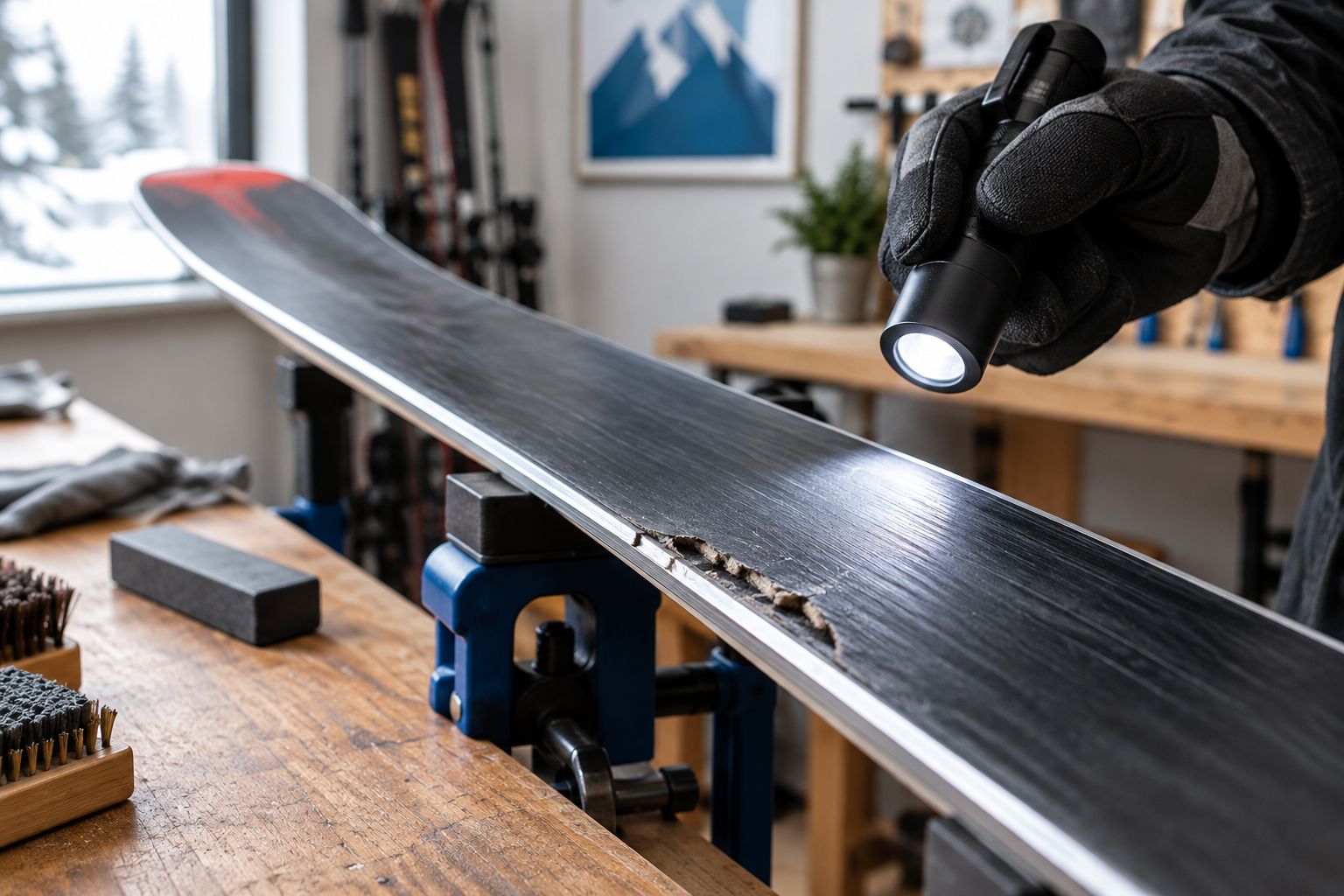
A core shot passes through the base and exposes underlying ski construction. Exposed material is not always easy to identify by color, especially through dirt or old repair material. If you cannot tell whether a gouge remains within the base, treat it as an inspection question rather than guessing.
Do not use wax as a seal for exposed construction. Wax is not a structural repair, and moisture entering damaged construction creates a different concern from ordinary surface wear.
Dry the ski and keep the damaged area clean while arranging assessment. Do not pry into the opening to discover how deep it goes; enlarging the damage makes inspection harder rather than more informative.
A core shot does not automatically mean the ski is finished. It also does not establish that a simple fill will be sufficient. The surrounding base, edge attachment, and internal condition determine the repair approach.
Edge movement and separating layers need structural assessment
A base gouge next to secure metal differs from a gouge beside an edge that has moved. Look for a gap, a change in edge alignment, or surrounding material that has pulled away. Avoid running bare fingers along damaged steel.
Separating layers deserve the same caution. A patch over an opening does not prove that the layers beneath it remain securely bonded. Likewise, a smooth-looking repair does not establish that a displaced edge is sound.
The benefit of structural assessment is that it addresses whether the ski remains suitable for use, not merely whether the underside looks tidy. The limitation is that some damage cannot be resolved with routine base work.
Set aside skis with loose edges or opening layers until a technician assesses them. Bring the ski in its current condition rather than clamping, bending, or gluing it back into place first.
Your 2026 ski base repair checklist
Inspect the ski somewhere dry and well lit. Work from general condition toward the damaged area, keeping your hands clear of sharp edges.
- Dry the base. Remove loose snow and moisture so you can see the running surface clearly. Let the equipment dry before storage or transport in a closed bag.
- Inspect the gouge. Look for missing material, loose pieces, an old patch, or underlying construction. Do not dig into the opening with a metal tool.
- Check the edge. Look along the metal beside the damage for displacement or a gap. Visual inspection is safer than tracing a sharp edge with your fingertip.
- Check the layers. Look at the nearby sidewall and top sheet for openings or separation. Report those signs even when the base damage appears small.
- Describe the impact. Explain whether you struck a rock, noticed the mark after skiing, or found a previous repair lifting. Include any change in handling.
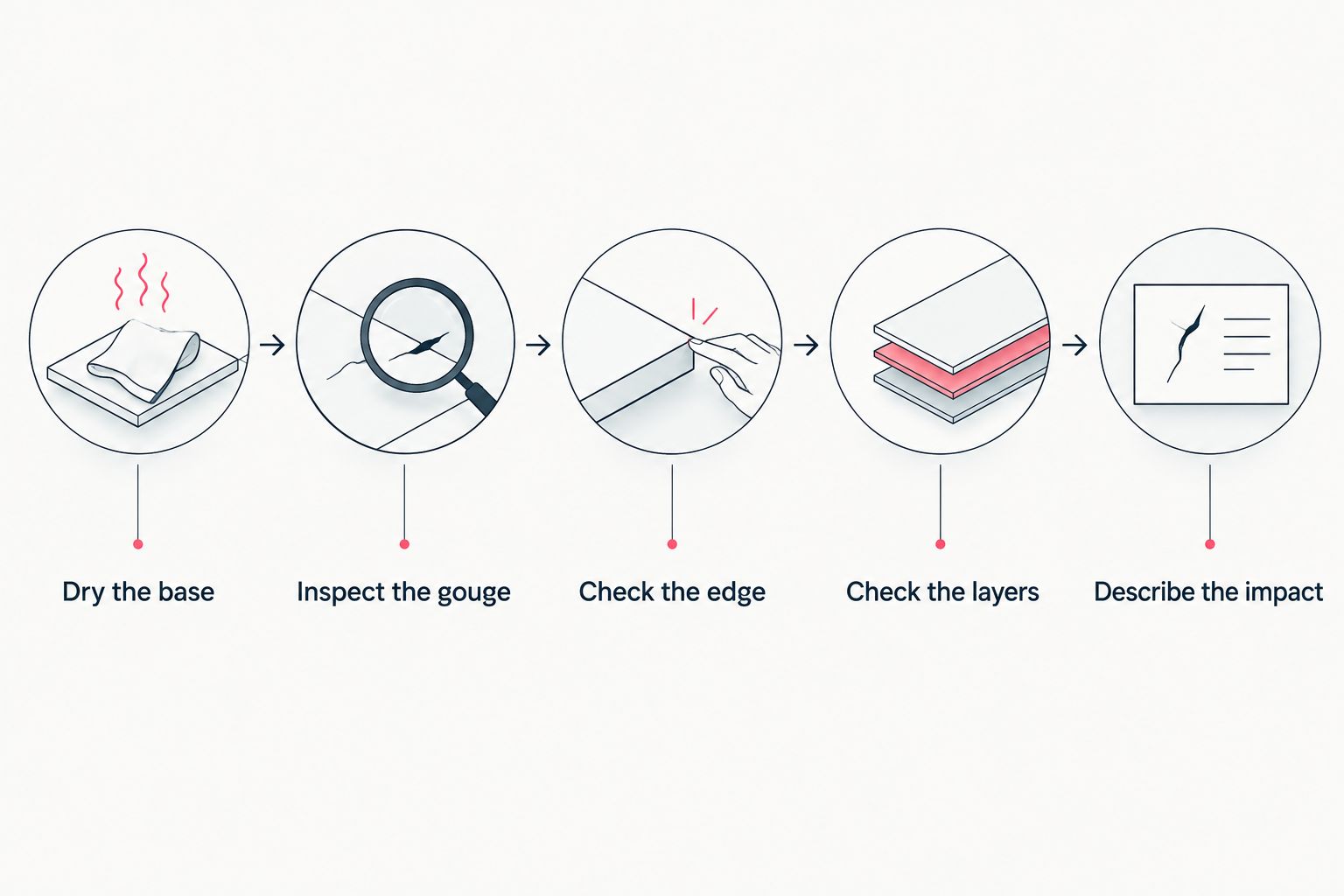
This checklist organizes what you report; it does not certify the ski for use. If the damage exposes construction or affects the edge, stop at observation and leave the repair decision to a technician.
Why ski base repair methods vary
The visible opening is only part of the repair decision. These factors explain why apparently similar gouges do not always receive the same treatment:
- Depth: Damage confined to base material differs from damage extending into underlying construction.
- Location: Damage beside an edge requires attention to the metal attachment and adjacent material.
- Surrounding condition: Loose, contaminated, or previously repaired material changes what provides a sound repair surface.
- Structural damage: A displaced edge or separating layer requires more than restoring the running surface.
- Previous repair history: A patch that repeatedly fails calls for reassessment of the repair area.
- Base condition: Existing flatness and remaining material matter when deciding what finishing work is appropriate.
Choose the repair from the damage, not from a preferred service name. Asking for a grind, wax, or tune before identifying the problem reverses the useful order of decisions.
What happens after the damaged area is repaired?
A repaired area needs to blend into the surrounding running surface. Finishing work addresses that transition; edge work and wax then address separate parts of ski preparation. The appropriate sequence depends on the repair and the condition of the rest of the ski.
A belt and stone grind concerns base finishing, not a substitute for rebuilding missing material or assessing structural damage. Ask what the ski needs rather than assuming every repair requires the same finishing package.
Before your 2026 shop visit, write down the handling issue you want addressed alongside the visible damage. Skiboulder offers tuning and boot fitting as well as repairs, but those services answer different questions: a base repair does not correct a poorly fitting boot.
Can waxing fix a gouge in a ski base?
Waxing cannot replace missing ski base material. Wax supports glide and base maintenance; a gouge requires a separate decision about filling, deeper repair, or structural assessment.
If a ski looks dry and also has a deep gouge, it has more than a waxing question. Address the damage before treating the final wax as the solution.
Can you repair a ski base at home?
Home repair is not the right starting point for exposed construction, edge movement, or separating layers. Those conditions need assessment beyond the visible cavity.
Even a surface repair requires suitable preparation and finishing. If you cannot identify the damaged material or explain why a previous patch failed, keep the area clean and bring it in rather than adding another layer.
Should you replace skis after a core shot?
A core shot alone does not determine whether skis need replacement. Structural condition, the repair area, and the remaining base all matter.
Evaluate repairability before choosing retail replacements. If replacement becomes the appropriate next step, discuss terrain, skiing style, boot fit, and binding compatibility rather than selecting a ski solely because it resembles the damaged pair.
What if the damaged skis are rentals or a seasonal lease?
With rental or leased skis, report damage to the supplying shop before attempting a repair. Explain what happened and show the affected area. Do not assume the same repair permission or damage policy applies to every rental arrangement.
For your 2026 rental or lease, distinguish equipment fit from equipment condition. A boot that allows unwanted foot movement needs a fitting discussion; a gouge through the base needs a repair discussion. Neither problem becomes the other simply because both affect your confidence on snow.
Rentals and seasonal leases also require clear communication about intended use. Describe where and how you ski, then ask what equipment and fitting are included. Do not infer service inclusions from the package name alone.
FAQ
How do I know if my skis need base repair?
Your skis need a base-repair assessment when material is missing, underlying construction is visible, or damage affects the edge attachment. Light scratches with an intact base belong in a different category from a core shot.
Can I keep skiing with a core shot?
Set skis with exposed underlying construction aside for assessment before skiing again. Keep the damaged area dry and clean rather than using wax as a temporary structural repair.
Does a ski tune include core-shot repair?
Do not assume a ski tune includes core-shot repair. Identify the damage first and confirm the repair and finishing work included in the service.
Is a long scratch worse than a short gouge?
Scratch length alone does not establish damage severity. Depth, exposed material, edge involvement, and separating layers determine the next inspection questions.
Can a stone grind fix a deep gouge?
A stone grind is not a substitute for repairing missing base material. Repair assessment comes before deciding what base finishing is appropriate.
Where can I get ski base repair in Boulder?
Skiboulder offers Core Shot Repair for skis and snowboards in Boulder. Bring the damaged equipment for assessment so the repair decision reflects the base, edge, and surrounding construction.
Should I repair rental skis myself?
Report rental-ski damage to the supplying shop before attempting a repair. Confirm how the shop wants the equipment handled rather than assuming its repair permissions or policies.
One last thing
A smooth patch is not proof of a sound ski. The repair needs secure surrounding material, and the edge and internal construction still matter. For the rest of your 2026 ski days, make the inspection question specific: does this damage stay within the running surface, or does it involve the structure beneath it?
Bring that question, the equipment, and an honest account of the impact. It gives the technician a better starting point than asking for wax to cover the mark.
Related guides
NEED A TUNE OR A FRESH SETUP?
– BETTER SKIING

- Professional Wintersteiger base grinds
- Precision edge sharpening
- Phantom Glide treatments
- Full binding safety checks
BOOK YOUR TUNE

KEEP YOUR GEAR
MOUNTAIN-READY
Keep your gear running
smooth — bring it to the experts.
0 comments