

Seasonal ski rentals: the complete 2026 guide

Boulder skiers’ seasonal ski rentals are equipment leases that keep a fitted setup with you for repeated mountain days rather than requiring a separate rental for each outing. This 2026 guide explains how to choose a lease, check boot fit, maintain the equipment, and decide when your own gear makes more sense.
TL;DR
- Choose seasonal ski rentals for repeated outings with a consistent setup; confirm equipment inclusions and return terms before committing.
- Skiboulder is best for Boulder skiers who want rentals, boot fitting, and tuning at one shop.
- Fit boots before choosing skis; a different ski cannot correct a poorly fitted boot.
- Compare season leases, daily rentals, demo skis, and retail gear by fit, terrain, maintenance, and equipment responsibility.
Why seasonal ski rentals matter for Boulder skiers
A season lease changes your equipment routine: you keep the setup between outings instead of arranging a fresh rental each time. That consistency lets you learn how the same boots and skis respond as your technique develops.
The distinction matters when comparing a lease with a short rental. The daily ski rentals and fitting guide explains the pickup-and-fitting approach for individual outings; a season lease adds questions about storage, ongoing maintenance, and return requirements.
For your 2026 ski plans, start with the skiing you actually expect to do. A developing skier working on groomed turns, a growing child, and a racer training in gates need different equipment conversations. Choose the setup around the skier, not simply the length of the rental.
A lease also leaves some work with you. You need to notice fit changes, dry the equipment, and report damage rather than assuming a season-long arrangement removes those responsibilities.
How to choose and manage a season lease
Define your skiing plans before selecting equipment
Write down your likely terrain, current ability, and goals before visiting the shop. Use concrete descriptions: linking turns on groomers, learning parallel turns, skiing bumps, or training with a team tells a fitter more than calling yourself intermediate.
Then separate your usual skiing from occasional ambitions. Equipment selected mainly for an imagined powder day can feel different from what you want during regular groomer sessions. Explain both priorities and ask what compromises each ski introduces.
If you are arranging equipment for a child, describe the child's current skiing rather than the terrain the adults prefer. A younger skier's fit and control deserve their own assessment.
Bring a short checklist:
- Describe your usual terrain and turn style.
- Explain what felt difficult with your previous equipment.
- Identify lessons, team training, or park sessions you expect to attend.
- Note whether you already own boots or other equipment.
- Separate your main skiing goals from occasional plans.
Check both boots before choosing skis
Boot fit connects your movements to the ski. Excess movement inside the boot makes precise control harder, while concentrated pressure or numbness needs attention rather than tighter buckles.
Wear 1 pair of ski socks, not stacked pairs, during the fitting. Try 2 boots, because the fit of one foot does not establish the fit of the other. Stand upright, flex into a skiing stance, and describe where your heel moves or pressure builds.
For children, do not select oversized boots simply to create growing room. Ask the fitter to distinguish useful toe space from movement that interferes with control. During your 2026 lease, return to the fitting conversation if growth or persistent discomfort changes how the boots feel.
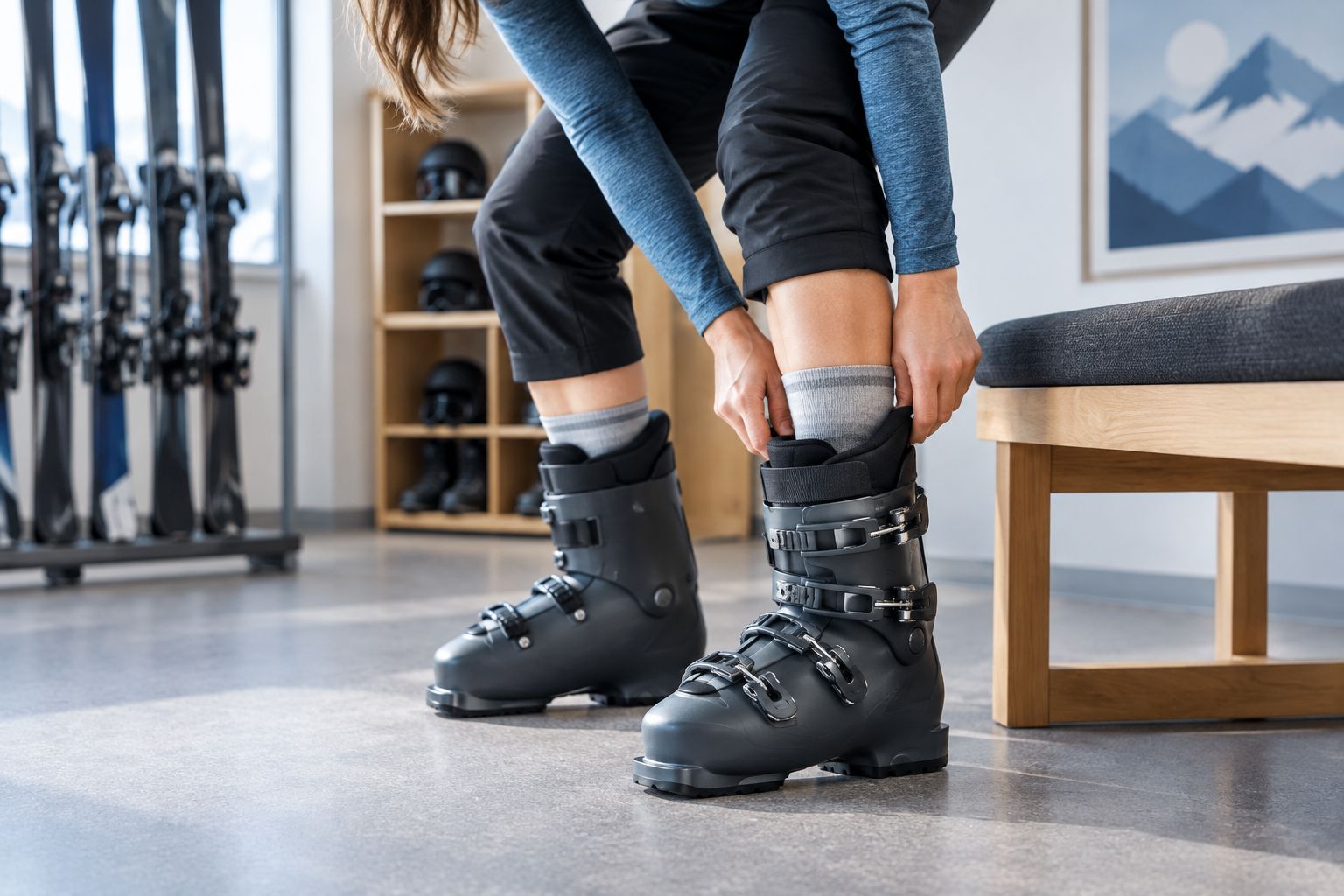
Treat the fitting as a conversation about specific sensations, not a test of how much discomfort you can tolerate.
- Bring the socks you intend to ski in.
- Describe pressure locations rather than saying only that a boot feels tight.
- Check for heel movement while flexing forward.
- Tell the fitter about numbness, previous injuries, or recurring fit problems.
- Ask what to do if discomfort appears after skiing.
Confirm the lease package and its boundaries
Begin with a written equipment list and the lease agreement. Confirm what you receive, how long you retain it, and what happens if your needs change. Do not treat a product photograph as a complete list of included equipment.
Skiboulder’s Adult Season Ski Lease is an adult rental-fleet option prepared in-house. The shop also lists a Junior Season Ski Lease, a Demo Season Ski Lease, and a 5 & Under Season Ski Lease; the latter explicitly describes skis, boots, and poles fitted in the shop for children age 5 and under.
Those names distinguish intended uses, but they do not establish identical inclusions or exchange terms. Confirm the details for your selected lease rather than transferring assumptions from another package.
A demo lease deserves a separate discussion about the ski you want to evaluate. A familiar setup supports comparison over time, but it does not eliminate the need to check suitability and fit.
- Confirm whether skis, boots, bindings, and poles are included.
- Ask whether a helmet is separate.
- Record the lease period and return requirements.
- Clarify procedures for growth, fit problems, and equipment changes.
- Ask who handles tuning, repairs, and damage assessment.
- Keep the equipment description and agreement together.
Verify the boot-binding setup with a technician
Your boot, binding, and ski form a system. A binding that accepts a boot physically is not proof that the combination is compatible or correctly adjusted.
Bring your actual ski boots when discussing binding setup. Give the technician accurate skier information and explain any equipment changes. A different boot can require a fresh assessment even when its marked size matches the previous boot.
For a 2026 lease, ask the shop to explain what setup checks apply and what changes require you to return. Skiboulder lists binding adjustment with torque testing as a service; confirm the work appropriate to your equipment rather than assuming it is included in every lease.
Do not copy a friend's release setting or move adjustment screws to solve an unexplained problem. Report unexpected release, difficulty stepping in, or visible damage to a technician.
- Bring the boots you will actually use.
- Provide accurate skier details requested by the technician.
- Confirm boot-sole and binding compatibility.
- Ask which checks or tests apply to the setup.
- Return for assessment after changing boots.
- Report unusual binding behavior before using the setup again.
Maintain the skis throughout the lease
Start with the care you can do yourself: remove snow, dry the equipment, and inspect it after skiing. Keep skis out of a closed, wet bag during storage, and let boot liners dry according to their care instructions.
Separate routine care from work that needs tools and experience. Wax supports glide; edge work affects how the ski engages; base repair addresses damage. These are different jobs, so describe what you see and feel instead of requesting an unspecified tune.
Inspect the equipment at 3 checkpoints: pickup, after skiing, and before return. At pickup, document existing damage with the shop. After skiing, look for new edge or base damage. Before return, review the agreement and flag anything that needs assessment.
A damaged edge, separating component, or deep base injury needs inspection rather than another test run. Ask the shop to determine the appropriate repair.
- Dry skis and boots before storage.
- Inspect bases and edges after contact with rocks or other obstacles.
- Describe changes in glide, grip, or steering to the technician.
- Confirm which maintenance tasks the lease requires you to arrange.
- Ask before changing edge angles or attempting structural repairs.
Reassess fit before replacing the whole setup
Keep a simple record of what happens on snow. Note whether the problem occurs in both turns, on a particular surface, or only after your feet become uncomfortable. That description helps separate a fit issue from ski condition or technique.
Use a manual log first: terrain, snow, discomfort location, and how the ski responds. Bring those notes to the shop rather than choosing a replacement from specifications alone.
Skiboulder offers retail skis, boots, bindings, and boot fitting alongside rentals and tuning. That gives you a place to discuss keeping a lease, addressing a fit issue, or moving into owned equipment without treating replacement as the automatic answer.
Owned boots offer continuity, but they still need a suitable fit and binding compatibility assessment. Owned skis give you a known setup, but you take responsibility for their condition and maintenance. Neither solves a problem that has not been identified.
- Record when and where the problem appears.
- Separate foot discomfort from ski handling complaints.
- Ask whether maintenance should come before an equipment change.
- Recheck boot fit before selecting different skis.
- Discuss retail equipment around a defined need.
Compare rental and ownership options
Choose the arrangement that matches your use, not the one with the most specialized name. A season lease suits repeated use of a fitted setup; a daily rental suits a specific outing; demo equipment supports evaluation; ownership gives you continuing responsibility for the equipment.
This comparison describes the choices, not guaranteed package terms. Confirm the equipment and requirements for the particular arrangement you select.
| Option | Best for | Main advantage | Key limitation |
|---|---|---|---|
| Daily rental | Individual outings or occasional visits | Equipment arranged around a defined trip | Pickup, fitting, and return remain part of each rental arrangement |
| Adult Season Ski Lease | Adults planning repeated ski days | A season-long rental arrangement | Equipment suitability and agreement terms still need checking |
| Junior Season Ski Lease | Children and teens needing a junior setup | Equipment selection focused on younger skiers | Growth requires continued attention; exchange terms need confirmation |
| Demo Season Ski Lease | Skiers evaluating equipment over a season | Extended time to assess a ski | Boot fit and maintenance still affect the evaluation |
| Retail equipment | Skiers ready to maintain their own setup | Continuing use of selected equipment | You take responsibility for fit, compatibility, storage, and maintenance |
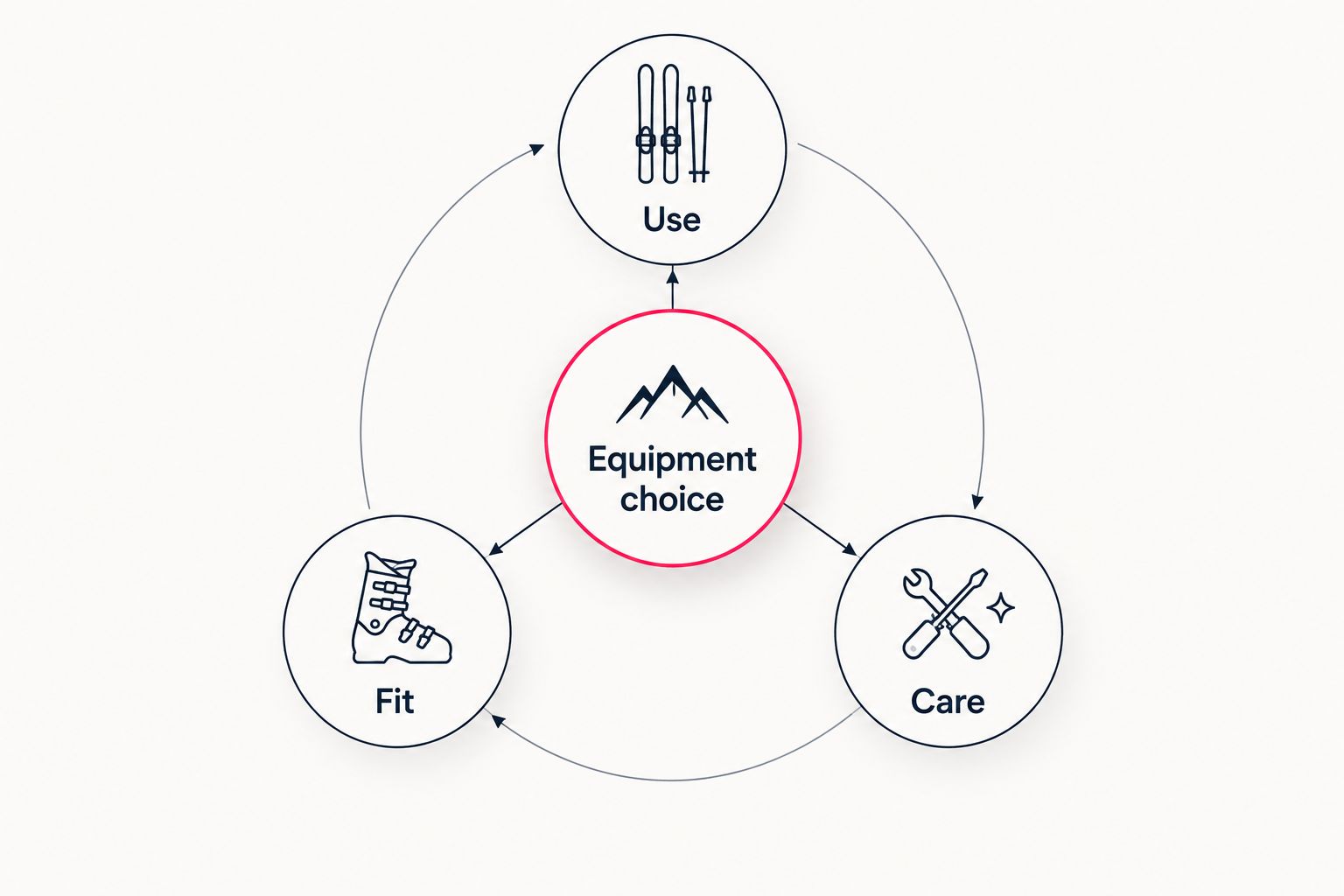
The decision rests on three separate questions: how you will use the equipment, how it fits, and who handles its care. Keep those questions separate when comparing options.
Common mistakes Boulder seasonal renters make
Selecting skis before resolving boot fit
A ski change does not remove heel movement or a concentrated pressure point inside a boot. Describe the boot problem first, then assess whether the ski also needs changing.
Assuming every lease contains the same equipment
A season lease, demo arrangement, and daily package are different selections. Ask for the specific equipment list, including whether boots, poles, and a helmet are part of your arrangement.
Treating maintenance as an end-of-season task
Your 2026 lease needs attention while you use it, not just when you return it. Dry the equipment after skiing and report damage when it occurs so the shop can assess the next step.
Ignoring growth or persistent discomfort
Children's fit needs continued attention, and adults should not dismiss numbness as normal. Explain changes promptly; do not assume an exchange or adjustment is automatic under the agreement.
Choosing specialized equipment without a specific need
Race, park, and all-mountain labels describe different intended uses. Tell the fitter what you actually ski and follow relevant coach guidance for training equipment rather than selecting by appearance or ambition alone.
FAQ
What are seasonal ski rentals?
Seasonal ski rentals are equipment leases that let you retain a ski setup for an agreed season-long period. Confirm the equipment included, maintenance responsibilities, and return requirements for the selected lease.
Are seasonal ski rentals better than daily rentals?
Seasonal ski rentals suit repeated outings with a consistent setup, while daily rentals suit individual trips. Choose according to your skiing plans and the responsibilities in each agreement.
What is included in a seasonal ski rental package?
Inclusions depend on the selected package. Ask specifically about skis, bindings, boots, poles, and a helmet rather than assuming every lease contains the same equipment.
Can my child change boots during a season lease?
An equipment change depends on the lease agreement and the shop's assessment. Report growth, heel movement, or discomfort promptly and confirm the process before continuing with an unsuitable fit.
Can I use my own boots with seasonal rental skis?
Have a technician assess your own boots with the proposed rental bindings. Bring the actual boots so compatibility, adjustment, and appropriate testing can be addressed.
Do leased skis need tuning during the season?
Leased skis still need care and condition checks during use. Ask the shop to assess changes in grip, glide, or visible damage and confirm how maintenance is handled under your agreement.
Where can Boulder skiers discuss rentals and boot fitting together?
Skiboulder offers rentals, boot fitting, tuning, and retail ski equipment in Boulder. Bring your skiing goals and any existing boots so the discussion addresses the whole setup.
One last thing
Keep a setup note with your lease agreement. Record which boots you used, what felt right at fitting, and any problems after skiing. A precise description of when your heel lifts or an edge feels inconsistent is more useful than asking for a different ski without explaining why.
Related guides
NEED A TUNE OR A FRESH SETUP?
– BETTER SKIING

- Professional Wintersteiger base grinds
- Precision edge sharpening
- Phantom Glide treatments
- Full binding safety checks
BOOK YOUR TUNE

KEEP YOUR GEAR
MOUNTAIN-READY
Keep your gear running
smooth — bring it to the experts.
0 comments