

From used ski purchase to safe binding mount: 2026 workflow

Instead of buying used skis and discovering that your boots or bindings do not work with them, confirm condition, compatibility and serviceability before committing to a mount. This 2026 workflow takes you from seller inspection to professional binding setup, release testing and pickup checks.
TL;DR
- Used skis need structural inspection, boot compatibility checks and professional binding testing before use.
- Skiboulder suits Boulder skiers seeking boot fitting, tuning and binding services in one shop.
- Bindings included with used skis are not automatically compatible with your boots or serviceable.
- Finalize your boots before mounting; changing boots afterward can change the required binding setup.
Why this matters
A binding that clicks shut is not proof of a correctly functioning ski–boot–binding system. Boot-sole compatibility, binding condition, adjustment and measured release behavior all matter. A seller’s settings describe a previous setup, not yours.
Skiboulder lists binding mount and test as a service. Bring the actual equipment for assessment rather than treating a listing photograph or a boot-size match as approval.
For a 2026 used-ski purchase, separate three questions: does the ski suit your skiing, can the equipment be serviced, and does the completed system pass its required checks? An appealing ski model does not answer the other questions.
Before you start
- Bring the complete system: both skis, both ski boots, any included bindings and your intended skiing information. The technician also needs accurate skier details, including height, weight, age and skier classification, for the applicable setup procedure.
- Collect the history: ask about previous mounts, repairs, impacts and binding changes. Get clear photographs of the topsheets, bases, edges, binding model markings and existing mounting area before making a trip.
- Check the hidden gate: ask whether the shop can service the exact binding model and inspect the existing mount. A binding can look intact yet fall outside a shop’s current service program; an adjustable track does not establish boot compatibility.
Keep this 2026 inspection checklist with the equipment. If the boots are still being selected or fitted, resolve that first rather than asking the technician to mount around an estimated boot size.
Ski condition and intended use
Inspect the ski before planning the binding work
- Match the ski to your terrain and ability. Tell the technician whether you ski groomers, bumps, trees, park features or race courses. Include the ski model and length; a used race ski and an all-mountain ski serve different purposes even when their lengths match.
- Look along both skis. Compare their shapes and inspect for unusual bends, separated layers, cracked sidewalls and damaged mounting areas. Ask about visible repairs rather than assuming a smooth surface means sound construction.
- Inspect the bases and edges. Flag exposed core material, deep gouges, displaced edges and cracks. Cosmetic topsheet chips and damage that affects structural integrity require different decisions.
- Have the mounting area assessed. Existing holes, plugged holes and binding plates affect the technician’s options. Do not remove bindings or drill exploratory holes to investigate the ski yourself.
Expected result: you know whether the skis deserve further assessment and which concerns need a technician’s decision. A home inspection identifies questions; it does not certify the equipment.
Used skis also need enough usable base and edge material for the work they require. Ask the technician to assess that condition before requesting a grind or an aggressive edge correction. Repeated tuning history is relevant even when the topsheets look clean.
A tune addresses glide and edge condition; it does not establish binding compatibility or repair every structural defect. Keep the maintenance decision separate from the binding decision so one completed service does not stand in for the other.
Boot compatibility and service route
Establish the boots before choosing the work
- Confirm boot fit. Bring your skiing socks and describe heel movement, pressure points or numbness during a fitting discussion. Do not choose an unsuitable boot simply because its sole length matches the seller’s setup.
- Find the boot-sole markings. Show the technician the BSL or boot sole length marking, normally expressed in millimeters, and the sole-standard markings. Mondo size describes boot sizing; it is not a substitute for boot sole length.
- Identify the exact binding. Record the model from its markings, not just the manufacturer’s name. Ask the technician to confirm compatibility using the applicable manufacturer documentation.
- Let the technician select the service route. Depending on the equipment, the work involves adjustment, a new mount, a remount or stopping because the system is unsuitable.
Expected result: the technician has the actual boots, an identified binding and a defined service route. Nothing depends on the assumption that all adult ski boots fit all alpine bindings.
Common sole standards include ISO 5355 for alpine boots, ISO 23223 for improved-walking alpine boots and ISO 9523 for touring boots. These markings help identify the interface; they do not independently approve a particular boot–binding pairing. Touring compatibility requires its own equipment-specific checks.
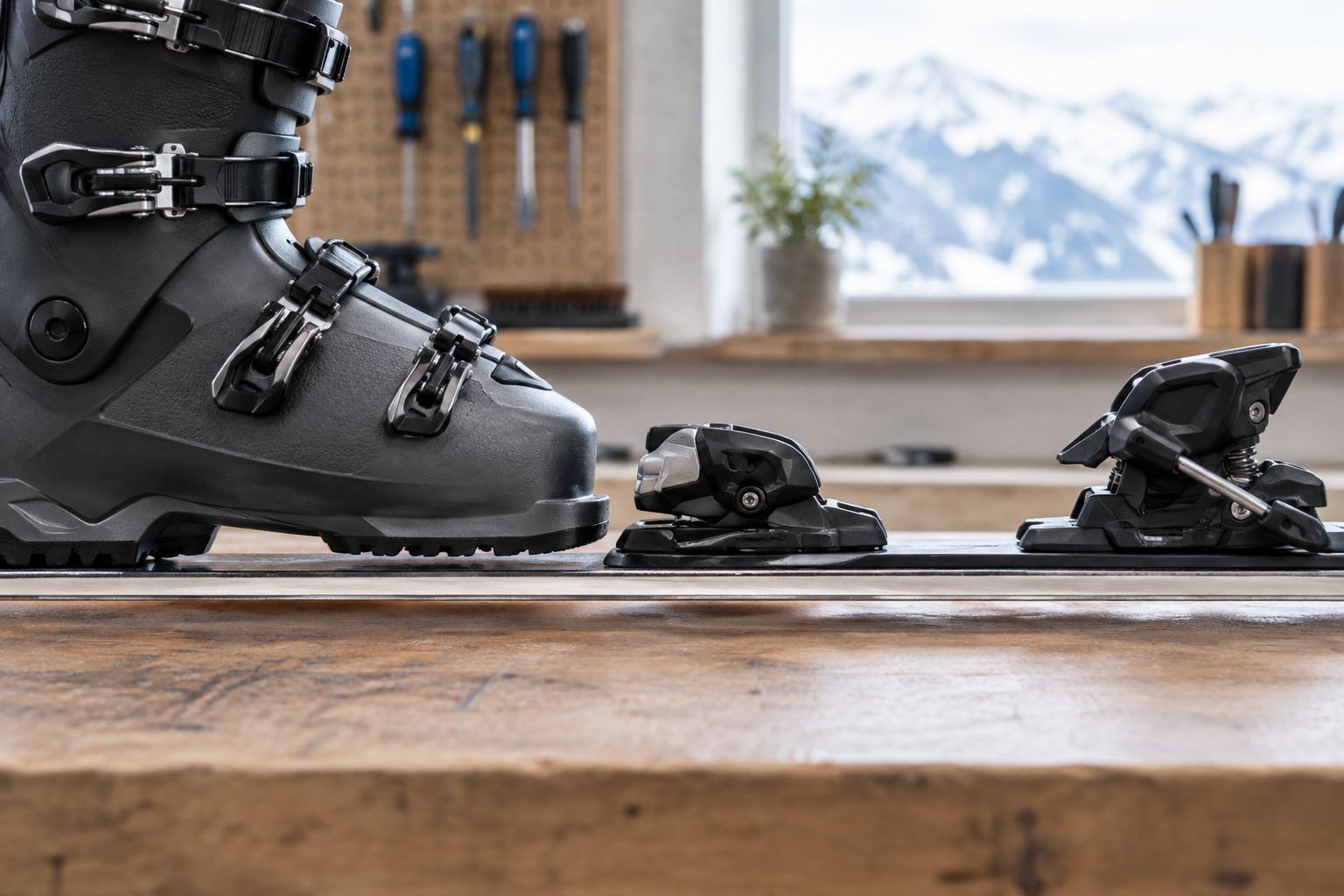
Compare the service routes
The service route follows the inspection, not the seller’s description. Use this comparison to understand the technician’s recommendation without attempting the work yourself.
| Route | Best for | Main advantage | Limitation |
|---|---|---|---|
| Adjust and test | Compatible, serviceable bindings with sufficient adjustment range | Retains the existing mount | Cannot resolve incompatible soles or unsuitable mounting hardware |
| Mount and test | Suitable skis receiving an approved binding installation | Establishes the selected binding position | Requires assessment of ski construction and existing holes |
| Remount and test | Suitable skis needing a different hole pattern or binding position | Allows a revised installation when the ski permits it | Previous holes constrain the possible layout |
| Stop and reassess | Damaged, incompatible or unserviceable equipment | Prevents proceeding with an unsuitable system | Requires another equipment choice |
Keep the existing mount only when the technician confirms it works for your equipment. Avoiding new holes is useful, but it never overrides compatibility, condition or correct adjustment.
Professional mount and release testing
Hand over a clear setup request
- State the intended use. Describe how and where you ski, and provide accurate skier information. Do not request the previous owner’s release setting or select a setting by copying someone else.
- Agree on the mounting position. Ask the technician to identify the ski manufacturer’s reference position and explain any proposed departure from it. A park-oriented mounting choice is not automatically appropriate for directional skiing.
- Authorize inspection before drilling. The technician must assess the existing hole pattern, hardware and ski construction. There is no universal safe number of remounts that applies to every used ski.
- Leave installation and adjustment to the technician. Mounting involves more than locating holes; the installation must follow the applicable ski and binding procedures.
- Request the applicable release-function test. Ask for an explanation of the documented result and any equipment concerns before collecting the skis. A setting shown in a binding window is not a measured test result.
Expected result: the equipment has completed the shop’s applicable installation, adjustment and testing process, or the technician has explained why it cannot proceed. A failed assessment is a stop signal, not a reason to seek a higher setting.
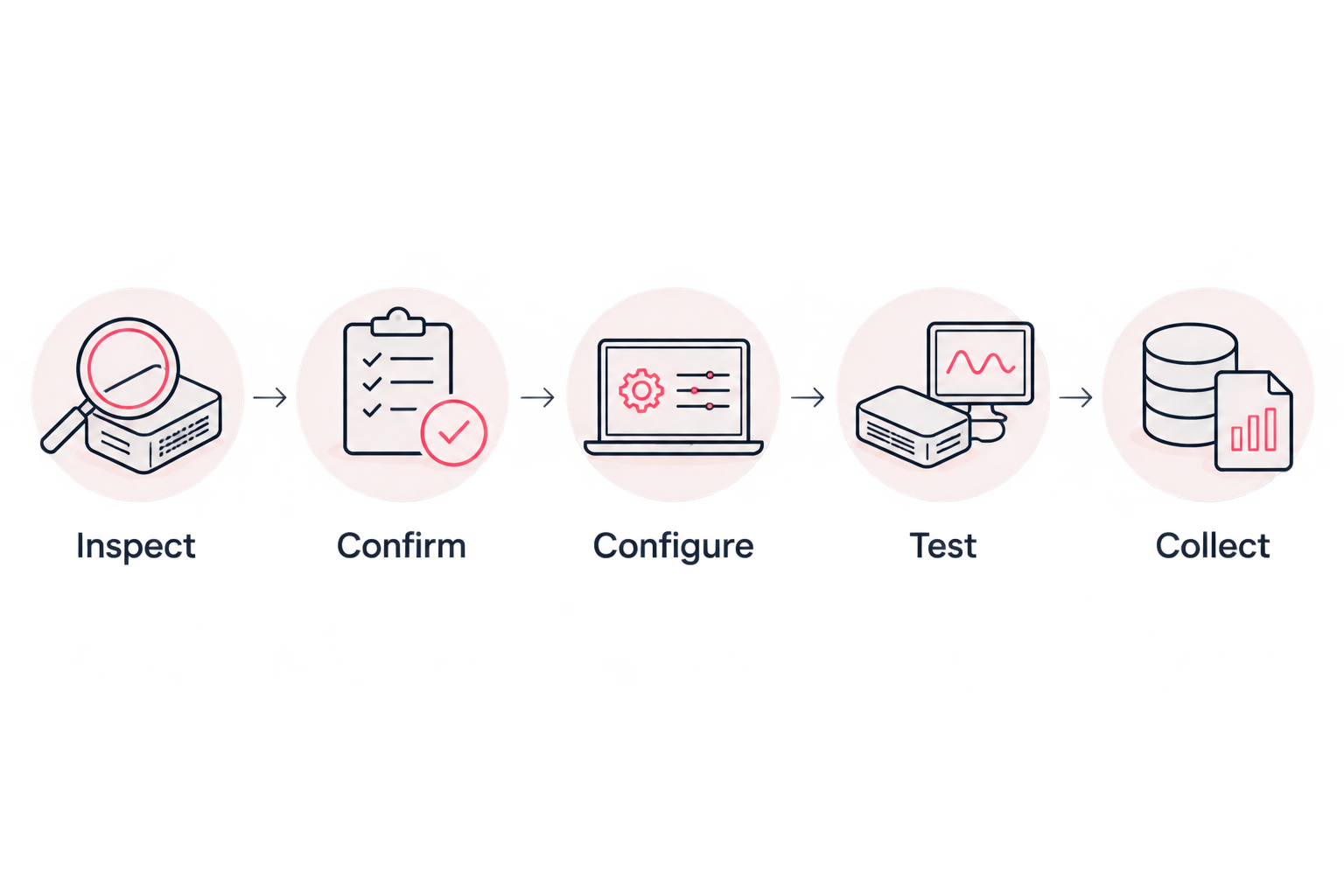
The sequence is Inspect, Confirm, Configure, Test, Collect. Keeping those gates separate prevents a completed mount from being mistaken for a completed safety check.
Passing a shop test does not make skiing injury-proof. Bindings cannot release in every fall or prevent every injury; the purpose of the process is correct setup and assessment under the applicable procedures, not a guarantee.
Verify the handover
At pickup, match the returned skis and boots to the equipment you submitted. Ask what work was completed, whether any condition needs monitoring and what changes require another assessment.
Have the technician demonstrate entry, exit and brake operation with your boots. Keep the service record and clarify any unfamiliar instructions before leaving. Do not adjust release settings afterward to make stepping in feel easier.
When you change boots but keep the used skis
A different boot does not automatically require a remount. It does require a fresh compatibility and adjustment assessment, even when the new boot carries the same nominal size.
- Bring both new boots and both skis to the shop.
- Ask the technician to check the new sole standard, sole condition and boot sole length.
- Have the technician determine whether the existing binding can accommodate the boot under its manufacturer’s procedure.
- Complete the required adjustment and testing before skiing the changed system.
Expected result: you either retain a verified existing installation or receive a clear explanation of why another route is necessary. Skiboulder lists binding adjust with torque test separately from mounting services; the technician determines which applies.
Use the same change-control rule throughout 2026: a different boot, replacement sole or binding change triggers another compatibility discussion. Visual similarity does not establish an unchanged interface.
Troubleshooting
The boot clicks in, but compatibility is unclear
Stop using the setup until the technician identifies both interfaces. Physical engagement does not establish that the boot sole and binding are an approved combination. Bring the equipment rather than relying on a photograph of the boot inside the binding.
The shop will not service the included bindings
Ask for the reason and discuss a suitable replacement or another ski. Shop service programs and manufacturer procedures govern what work can proceed. Do not treat a refusal as a problem to solve by adjusting the binding at home.
Old holes interfere with the proposed mount
Let the technician evaluate another permitted position, another compatible binding layout or a different ski. Do not insist on a preferred mounting point when the ski cannot support it. Plugged holes remain part of the ski’s mounting history.
The system does not pass its release test
Leave the equipment out of use while the technician investigates. Boot-sole wear, contamination, binding condition and adjustment are possible contributors. Do not compensate by choosing a different release setting yourself.
The skis chatter or feel reluctant to turn
Describe the snow, speed and turn shape to the technician instead of immediately blaming binding position. Boot fit, ski suitability, edge condition and technique all affect the experience. Rule out equipment problems before requesting irreversible changes.
Customize your workflow
Choose the equipment route around fit and intended use, not around the bindings already attached. Used ownership gives you a specific pair to maintain, but it also brings that pair’s condition and mounting history.
A rental lets you ski without selecting a permanent pair first. A seasonal lease offers another route for repeated use, while retail equipment lets you select around a defined fit and performance goal; each still needs appropriate fitting and setup. Ask Skiboulder which routes suit your plans, and confirm the equipment and service inclusions rather than assuming they are identical.
For equipment you keep, add base and edge inspection to your maintenance routine. Describe the snow you ski and any handling changes before requesting an edge angle or structure pattern. A binding test and a tune solve different problems; neither replaces the other.
FAQ
Can I ski used skis with the bindings already attached?
Only after the equipment has been assessed for your boots and skier information and has completed the applicable adjustment and testing. Attached bindings are not proof of compatibility or correct function.
Do used skis always need a binding remount?
No. A compatible, serviceable binding with sufficient adjustment range can sometimes retain its existing mount; the technician determines whether adjustment or remounting is appropriate.
Should I get ski boots before mounting bindings?
Yes, finalize your boots before the binding mount. The technician needs the actual boots to check their sole interface, condition and boot sole length.
Is Mondo size the same as boot sole length?
No. Mondo size describes boot sizing, while boot sole length describes the external sole length used in binding setup; boots with the same nominal size can differ.
How many times can used skis be remounted?
There is no universal remount limit that establishes suitability for every ski. Existing hole locations, ski construction and condition determine whether a proposed installation can proceed.
Does a binding release test guarantee I will not get injured?
No. A release test assesses the system under the applicable procedure, but bindings cannot release in every fall or prevent every injury.
Can a ski tune fix an unsafe binding setup?
No. Tuning addresses base and edge condition, while binding inspection, adjustment and testing address the ski–boot–binding system.
One last thing
Bring both boots, not just one. Damage, wear and replacement soles deserve inspection on the actual equipment you will ski. For your 2026 Skiboulder visit, put both boots, both skis and the seller’s equipment history together before heading to the shop.
Related guides
NEED A TUNE OR A FRESH SETUP?
– BETTER SKIING

- Professional Wintersteiger base grinds
- Precision edge sharpening
- Phantom Glide treatments
- Full binding safety checks
BOOK YOUR TUNE

KEEP YOUR GEAR
MOUNTAIN-READY
Keep your gear running
smooth — bring it to the experts.
0 comments