

Seasonal lease signup to end-of-season return: 2026 workflow

Instead of restarting your rental setup before every ski trip, organize seasonal ski rentals around one fitting, a written equipment record and a confirmed return plan. Use this 2026 workflow to choose your lease, check the setup in the shop, maintain it through winter and return every issued item.
TL;DR
- Skiboulder seasonal ski rentals suit Boulder skiers who want in-shop fitting and equipment for the season.
- Confirm ski lease inclusions, service terms and return instructions before accepting equipment.
- Bring your actual ski boots when using personal boots with leased skis.
- Report changing boot fit and equipment damage during the season, not just at return.
Why this matters
A season lease keeps the equipment with you, but fit and condition still need attention. Boots can feel different after repeated use, children can outgrow their setup, and rock damage needs assessment before another day on snow.
Treat the lease as an equipment-care workflow, not just a pickup appointment. Skiboulder offers rentals, boot fitting, tuning and retail gear, so describe the whole setup when asking for help—not just the ski you want.
For the broader selection questions, start with the seasonal ski rentals guide. The steps below focus on the handoffs: signup, fitting, ongoing checks and return.
Before you start
- Gather skier information. Have each skier's height, weight, age, skiing experience and intended terrain ready. Bring your ski socks and any personal boots you intend to use.
- Clarify the agreement. Ask which equipment is included, how fitting is handled, what service requires separate authorization and what return instructions apply to your 2026 lease. Keep the agreement accessible.
- Bring the actual boot, not just its size. A boot's labeled size does not establish binding compatibility or adjustment. If you plan to use personal boots, the technician needs to assess the actual boot-and-binding combination.
Do not assume an online selection completes the fitting or binding check. Follow the shop's instructions for completing signup and collecting equipment; a product selection alone does not establish a safe setup.
Lease selection and signup record
Match the lease to the skier
- Describe the skiing first. Tell the fitter whether you ski groomed runs, mixed resort terrain, terrain parks or a structured training program. Include experience honestly rather than choosing equipment for an ability level you hope to reach.
- Choose the relevant lease category. Use adult, junior or demo as a starting point, then confirm suitability with the shop. A category name does not determine the correct length, boot fit or binding setup.
- Confirm the issued equipment. Ask whether boots and poles are part of your chosen arrangement and whether you are using any personal equipment. Record the answer rather than assuming every lease has identical inclusions.
These lease options serve different needs. The table describes their selection role, not a promise about a particular model or package contents.
| Lease option | Best for | Practical advantage | Limitation to resolve |
|---|---|---|---|
| Adult Season Ski Lease | Adult skiers seeking season-long equipment use | Keeps the rental setup with you through the lease period | Confirm equipment inclusions and suitability for your terrain |
| Junior Season Ski Lease | Younger skiers needing a junior fitting | Gives the fitting conversation a junior-specific starting point | Growth requires attention; confirm how fit changes are handled |
| Demo Season Ski Lease | Skiers evaluating a ski over the season | Allows extended experience with a ski rather than a brief trial | Confirm the selected ski and all applicable lease terms |
Expected result: You can name the lease category, explain why it fits your skiing and identify which equipment still needs fitting or confirmation.
Build the equipment record
- Save the agreement. Keep the lease documentation somewhere you can retrieve from your phone. Use a clearly named folder such as 2026 ski lease.
- Record the equipment. Note the ski model and length, boot identification and any equipment numbers shown on the paperwork. Photograph the issued items and their visible condition without treating photographs as a substitute for reporting damage.
- Confirm the return plan. Record the deadline and return location supplied by the shop. Add a calendar reminder that leaves room to gather the equipment and resolve questions before that deadline.
Keep each skier's record separate in a family lease. Similar-looking boots and poles are easy to mix up, and a clear assignment helps you report the correct equipment when requesting service.
Expected result: Your 2026 lease record identifies the skier, issued equipment and return instructions without relying on memory.
Pickup fitting and equipment handoff
Check boot fit before accepting the setup
- Wear 1 pair of ski socks. Use the socks you intend to ski in, with no trouser cuffs tucked inside the boot. Extra fabric can create pressure that confuses the fit assessment.
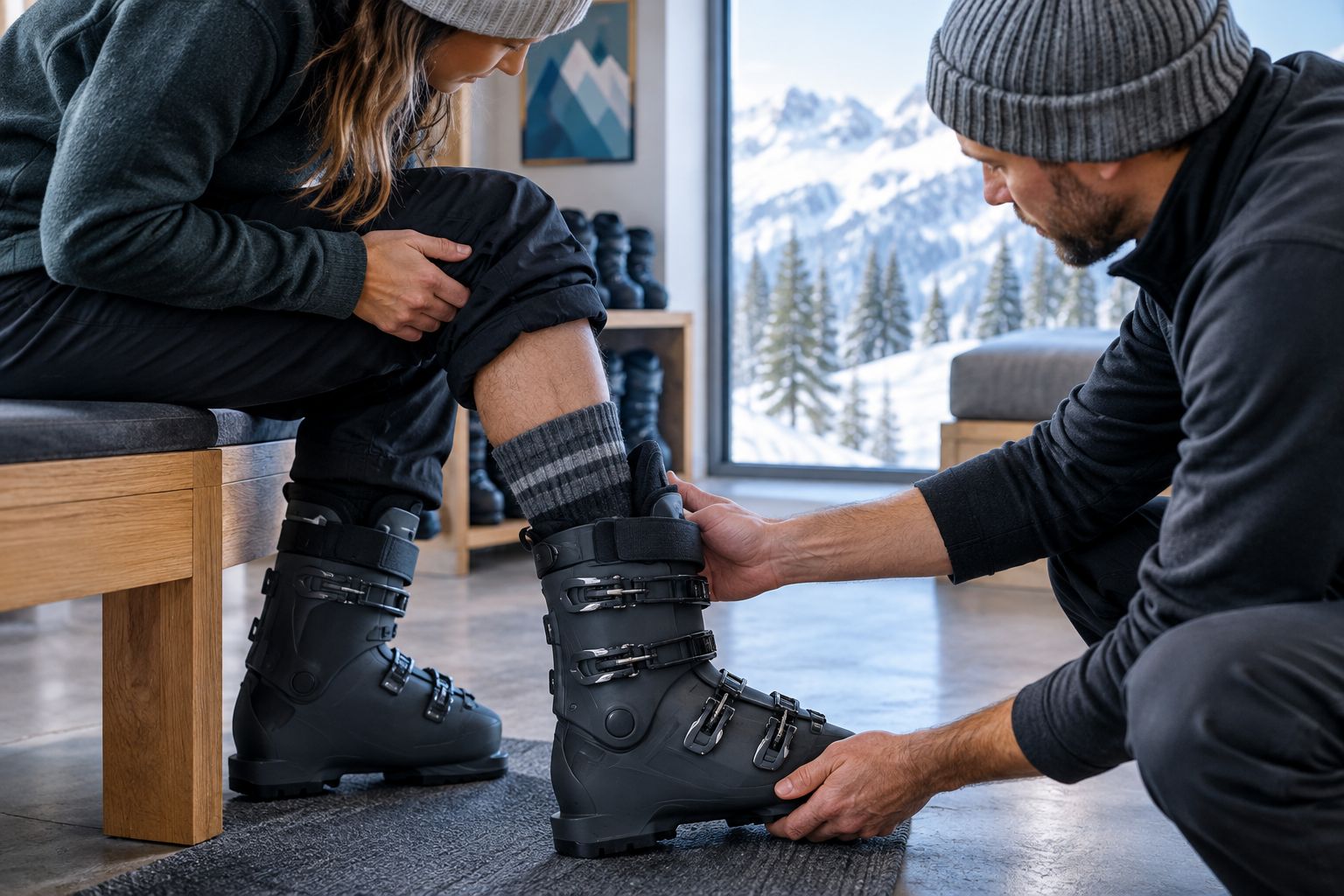
- Close the boot under the fitter's guidance. Stand upright, then flex forward into a skiing stance. Describe heel movement, concentrated pressure, toe contact and any numbness rather than reporting only that the boot feels tight.
- Explain previous problems. Mention recurring shin discomfort, heel lift, cold-sensitive areas or footbeds you normally use. Do not assume a previous boot size is automatically the right starting point.
- Repeat the check after any change. Walk and flex as directed before accepting the setup. Speak up about pain or loss of sensation; do not plan to fix those problems by overtightening the boot later.
Expected result: You understand how to close the boots and can describe their fit in a skiing stance. Unresolved pain or numbness returns to the fitter before pickup is complete.
Confirm the binding setup and handoff
- Provide accurate skier information. Confirm the details requested by the technician. Binding setup is not a setting to copy from a friend, a previous rental or an online example.
- Present the actual boots. Ask the technician to confirm compatibility and complete the appropriate adjustment and checks. Do not alter release settings or binding position yourself.
- Learn the operating steps. Ask how to clear snow from the boot soles, step into the binding and release it normally. Practice under supervision if the equipment is unfamiliar.
- Count the issued items. If your package includes skis, boots and poles, check for 2 skis, 2 boots and 2 poles. Match any additional items against the agreement rather than assuming they belong to the package.
Expected result: The equipment matches the paperwork, the shop has addressed the boot-and-binding combination, and you know how to operate the setup without changing its adjustments.
Midseason care and return preparation
Establish the after-ski routine
- Dry the equipment. Wipe moisture from the skis and let boots dry according to their care instructions. Avoid direct high heat, which can damage boot components.
- Inspect the bases and edges. Look for new gouges, damaged edges, separating materials or loose-looking components. Describe what you see to the shop instead of attempting an unfamiliar repair.
- Record changes in performance. Note whether the skis feel less predictable on firm snow, glide poorly or behave differently after an impact. Include snow conditions so the technician has useful context.
- Ask before modifying leased gear. Get authorization before changing edge angles, grinding bases, remounting bindings or arranging work elsewhere. A lease does not make those decisions yours by default.
A tune addresses equipment condition; it does not correct an unsuitable boot fit or replace skiing instruction. Likewise, a fit adjustment does not repair a damaged ski edge.
Expected result: You have a repeatable care routine and can distinguish a maintenance question from a fit or binding concern.
Close the lease deliberately
- Read the return instructions again. Use the deadline attached to your agreement, not the closing date of your favorite resort. Confirm how the shop wants the equipment prepared.
- Gather every issued item. Compare the physical equipment with the record you made at pickup. Check family equipment separately so boots and poles do not end up in the wrong group.
- Report damage and changes. Tell the shop about impacts, repairs, missing items or equipment that stopped functioning normally. Do not hide a problem under a general request for a tune.
- Complete the handoff. Follow the shop's return process and retain whatever return documentation it provides. Ask about any unresolved item before considering the lease finished.
For your 2026 return, prioritize a complete, documented handoff over making the gear look untouched. Accurate reporting gives the technician information that surface cleaning cannot.
Expected result: Every issued item is accounted for, concerns have been disclosed and the return status is clear.
When boot fit or equipment needs change
A growing junior and an adult changing to personal boots create the same workflow trigger: the original setup needs reassessment. A different boot requires a fresh compatibility and adjustment check, even when the labeled size matches.
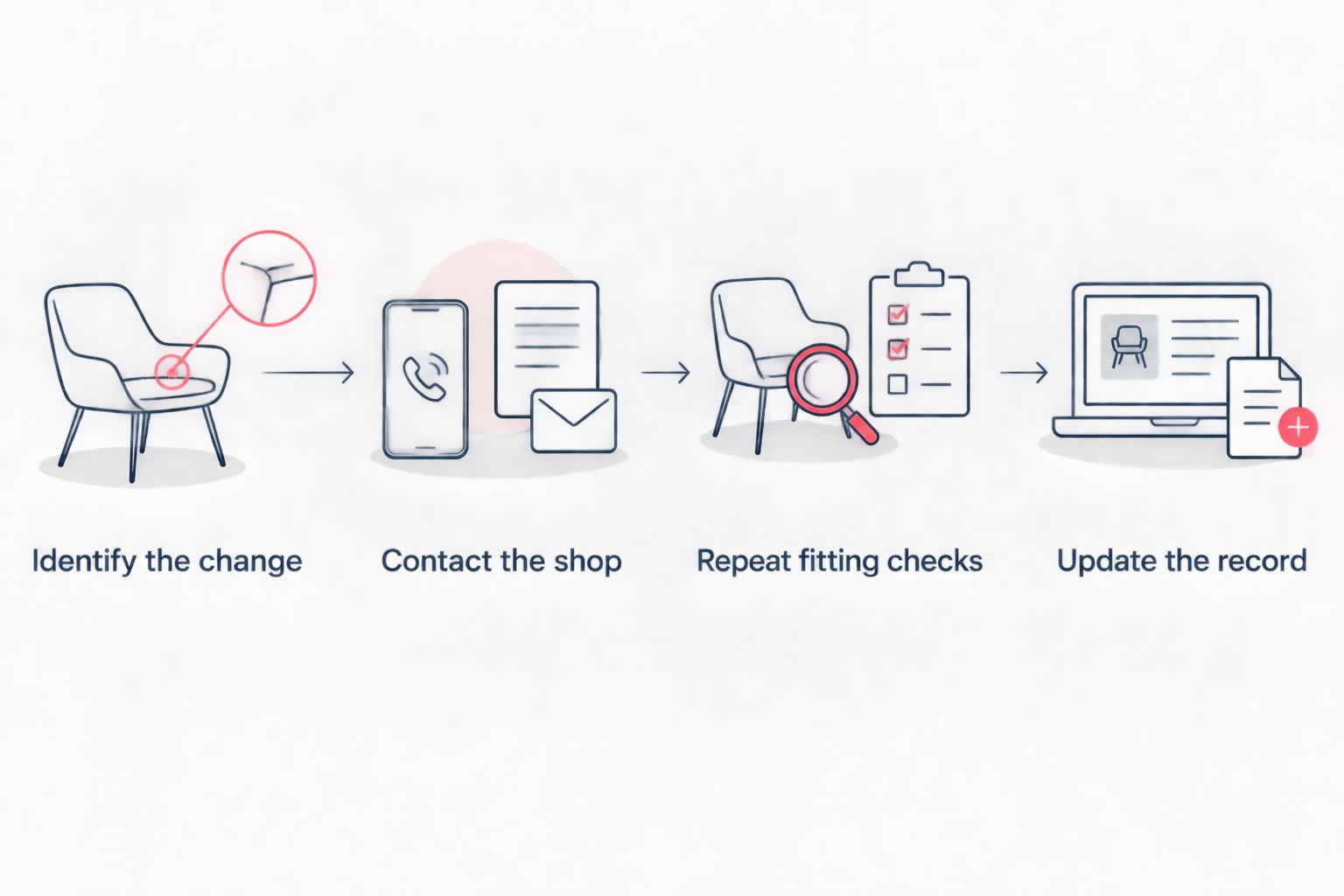
- Identify the change. Write down what changed: growth, a new boot, persistent heel movement, different terrain needs or damage after an impact.
- Contact the shop before the next outing. Explain the issue and ask what equipment to bring. Confirm how the lease agreement handles any proposed change; do not assume an exchange is included.
- Repeat the relevant fitting checks. A boot change affects the binding conversation. A ski change also requires the technician to assess the complete combination.
- Update the record. Replace outdated equipment details and note any revised instructions. Keep the original return deadline unless the shop explicitly changes it.
Expected result: The equipment record reflects what you actually ski, and any changed boot-and-binding combination has returned to the technician for assessment.
Troubleshooting
Boots feel loose after repeated use
Return to the fitter with the boots, socks and footbeds you use. Liners can settle with wear, but heel movement also needs a fit assessment; tightening every closure harder is not a reliable correction.
A child's boots become painful midseason
Stop treating the original fitting as permanent. Report where the pressure occurs and bring the complete setup as directed so the shop can assess growth, fit and any resulting binding work.
A boot will not engage in the binding
Check for packed snow or ice on the boot sole and binding contact areas, using the operating guidance provided at pickup. If the boot still will not engage normally, stop and get help; do not force it or turn adjustment screws.
A rock strike leaves deep base damage
Stop skiing if you see exposed core material, a displaced edge or separating components. Contact the shop for inspection and authorization before repair; wax does not repair structural damage.
Equipment details do not match the paperwork
Set the mismatched item aside and contact the shop with its identification details. Do not resolve the mismatch by trading equipment between family members, especially boots already associated with a checked binding setup.
Customize your workflow
For a family, create one equipment record per skier and a shared return reminder. For frequent weekend skiing, attach the drying and inspection routine to unpacking rather than waiting until the next departure.
If you are considering personal boots or retail skis, use the lease season to record useful observations: heel hold, pressure locations, turn behavior and the conditions you actually ski. Skiboulder's boot fitting and retail services give those observations a practical next step without assuming you need to replace the whole setup.
Keep your 2026 notes specific. “Heel lifts when flexing forward” gives a fitter more to assess than “boots feel wrong,” and “edge grip changed after a rock strike” gives a technician more than “needs sharpening.”
FAQ
How do seasonal ski rentals work from signup to return?
Seasonal ski rentals involve choosing a lease, completing fitting and equipment checks, keeping the issued gear through the agreed period and returning it under the agreement's instructions. Record the equipment and return deadline at pickup, then report fit changes or damage during the season.
What should I bring to a seasonal ski rental fitting?
Bring your ski socks, relevant skier information and any personal boots or footbeds you intend to use. Ask the shop beforehand whether it needs anything else for your specific setup.
Can I use my own ski boots with leased skis?
Personal boots require the shop to confirm compatibility with the leased bindings and complete the appropriate adjustment and checks. Bring the actual boots; their labeled size alone is not enough.
Are boots and poles included in every season ski lease?
Confirm boots and poles against the specific lease agreement rather than assuming every package includes them. Skiboulder offers several lease categories, and the issued-equipment record should identify what you receive.
What should I do if my child outgrows leased ski boots?
Contact the shop for a fit reassessment before the next ski day. Confirm how equipment changes are handled under the agreement, and have the technician reassess the binding setup if the boots change.
Can I tune seasonal rental skis myself?
Ask the shop what maintenance is authorized before tuning leased skis yourself. Edge-angle changes, base grinding and repairs affect equipment condition and should not be undertaken without permission.
When do I return my seasonal ski rentals?
Return seasonal ski rentals by the deadline stated in your lease agreement. Resort operating dates do not replace that deadline; confirm the return location, preparation instructions and required items with the shop.
One last thing
Treat a change of boots as a change to the ski setup—not just your footwear. Two boots with the same labeled size can differ in sole length or sole standard, so the binding needs reassessment rather than an assumption that the old adjustment still applies.
Before the first outing on changed equipment, bring that question to the technician. It is the most useful checkpoint to repeat after the original pickup.
Related guides
NEED A TUNE OR A FRESH SETUP?
– BETTER SKIING

- Professional Wintersteiger base grinds
- Precision edge sharpening
- Phantom Glide treatments
- Full binding safety checks
BOOK YOUR TUNE

KEEP YOUR GEAR
MOUNTAIN-READY
Keep your gear running
smooth — bring it to the experts.
0 comments