

Best stone grind patterns for variable snow conditions

Best overall: a moderate broken structure. Best for cold, dry snow: fine linear structure. Best for mixed snow that stays mostly dry: fine broken structure. Best for saturated spring snow: coarse broken structure. This 2026 stone grind guide explains how to choose the base texture that fits your usual conditions, rather than chasing a pattern name.
TL;DR
- A moderate broken stone grind is the practical default for variable snow, not a universal winner.
- Fine ski base structure suits cold, dry snow; coarser structure suits wetter snow.
- Skiboulder offers Belt & Stone Grind service; discuss conditions and base condition before choosing treatment.
- Check wax, base damage, and edge condition before deciding that slow skis need another grind.
Why this matters
A stone grind cuts a controlled texture into a ski or snowboard base. That texture changes how the base interacts with snow and water; it is separate from edge sharpening and does not replace waxing.
Variable conditions create a compromise. A structure suited to wet afternoon snow is not automatically the right choice for a cold morning, and a fine cold-snow finish is not the default for saturated slush.
For a Boulder shop visit, start with the Belt & Stone Grind service and explain where the equipment feels slow. Skiboulder suits Boulder skiers who need stone grind guidance alongside tuning and boot fitting. Describe the symptom before requesting a particular pattern.
What makes the best stone grind pattern?
Choose the structure by its intended job, not by how elaborate the pattern looks. These criteria matter more than a memorable grind name:
- Snow moisture: Distinguish cold, dry snow from damp, transformed snow and visibly wet spring snow.
- Texture scale: Fine and coarse describe the relative size of the structure, not a universal machine setting.
- Pattern geometry: Linear grooves run along the base; broken patterns interrupt or cross that direction.
- Base condition: Damage, flatness, remaining base material, and the existing finish affect the service decision.
- Use case: An everyday resort setup needs a different compromise from equipment prepared for a specific race condition.
- Finish quality: The final base finish and preparation matter alongside the chosen pattern.
Pattern names are not standardized between shops or machines. Ask the technician to translate terms such as fine, medium, broken, or cross into an intended snow condition.
Stone grind patterns at a glance
These are structure families, not a claim that every shop offers an identical pattern menu. The ranking prioritizes an everyday skier facing changing conditions in 2026.
| Rank and structure | Best for | Standout characteristic | Key limitation |
|---|---|---|---|
| 1. Moderate broken structure | Everyday variable resort snow | Middle-ground texture with interrupted grooves | Not specialized for either very dry or saturated snow |
| 2. Fine linear structure | Consistently cold, dry snow | Fine grooves running along the base | Less suited to substantial surface water |
| 3. Fine broken structure | Mostly dry snow with some softening | Fine texture with interrupted geometry | Remains a compromise when snow becomes very wet |
| 4. Coarse broken structure | Saturated spring snow | More pronounced texture for wet conditions | Too specialized as the default for cold, dry days |
The distinction between fine and moderate often matters more than the distinction between two similar-looking pattern shapes. Do not choose geometry without discussing texture scale.
1. Moderate broken structure: best for everyday variable snow
A moderate broken structure puts an interrupted pattern into the base without choosing either the finest or coarsest finish. It is the practical starting point when you ski changing resort conditions on the same equipment.
Think of it as an all-round assignment, not a guarantee of the fastest glide everywhere. For a 2026 everyday setup, tell the technician which conditions dominate your skiing and which conditions merely occur occasionally.
Moderate broken structure pros:
- Addresses a broader range of snow moisture than a highly specialized finish.
- Gives the technician an all-round starting point for your usual conditions.
- Suits skiers who do not change equipment for every weather shift.
Moderate broken structure cons:
- Gives up condition-specific specialization at the dry and wet extremes.
- The word moderate does not identify a repeatable specification across shops.
Best for: Resort skiers using the same skis through changing snow conditions.
Verdict: Buy this approach when your equipment needs grinding and versatility is the priority.
2. Fine linear structure: best for consistently cold, dry snow
Fine linear structure uses small grooves running along the base. Fine structure is the conventional starting point for cold, dry conditions, where a pronounced wet-snow texture is unnecessary.
Choose this family because your usual snow supports it, not because the forecast includes a cold start. An otherwise wet day does not become a cold-snow assignment simply because the first chair feels chilly.
Fine linear structure pros:
- Matches the conventional fine-texture approach to cold, dry snow.
- Keeps the pattern direction straightforward to describe to a technician.
- Provides a clearly defined alternative to a wet-snow finish.
Fine linear structure cons:
- Is less suited to snow carrying substantial free water.
- Does not automatically solve drag caused by unsuitable wax or base damage.
Best for: Skiers whose regular conditions remain cold and dry rather than repeatedly turning wet.
Verdict: Buy for a genuine cold-snow assignment; skip it as an automatic variable-snow default.
3. Fine broken structure: best for mostly dry mixed snow
Fine broken structure combines a small-scale texture with interrupted grooves. It fits the discussion when your skiing stays mostly on dry snow but includes some changing surface conditions.
The important distinction is that it remains fine. Adding a broken pattern does not turn a cold-oriented texture into a coarse spring structure, and its exact suitability still depends on the shop's execution.
Fine broken structure pros:
- Keeps the texture fine while allowing a different groove geometry.
- Gives you a condition-focused option between the other structure families.
- Encourages a useful discussion of both pattern scale and direction.
Fine broken structure cons:
- Does not replace a wet-snow structure when conditions become saturated.
- Cannot be ranked above fine linear structure on appearance alone.
Best for: Skiers whose mixed conditions stay predominantly dry rather than turning to slush.
Verdict: Hold until the technician explains why this geometry fits your snow better than a fine linear finish.
4. Coarse broken structure: best for saturated spring snow
Coarse broken structure uses a more pronounced base texture. Coarser structures are associated with wetter snow because managing water beneath the base becomes a larger part of the glide problem.
Choose this family for a wet-snow assignment, not simply because you want a more aggressive-looking grind. Spring skiing still includes different snow states; frozen morning snow and saturated afternoon snow are not interchangeable.
Coarse broken structure pros:
- Matches the conventional coarse-texture approach to wet snow.
- Gives spring-focused equipment a clearly defined purpose.
- Separates a water-management problem from an edge-grip problem.
Coarse broken structure cons:
- Is not the sensible default for consistently cold, dry conditions.
- Does not remove the need for appropriate waxing and brushing.
Best for: Equipment used primarily in wet, transformed spring snow.
Verdict: Buy for a clear wet-snow use case; skip it as a universal upgrade.
How to choose a structure at the shop
Bring the equipment rather than choosing from a pattern photograph. A useful 2026 service conversation follows these 4 steps, with the physical inspection guiding the recommendation.
- Describe snow. Explain whether the base feels slow in dry snow, damp snow, or saturated slush. Include whether the problem changes during the day.
- Check bases. Ask for an assessment of damage, flatness, and the existing structure before requesting another grind.
- Choose structure. Match the texture to the conditions you ski most, then discuss linear or broken geometry.
- Confirm preparation. Ask what finishing, waxing, and edge work the selected service includes; do not assume every tune includes every operation.
The sequence matters: choosing structure before checking the base puts the answer ahead of the diagnosis. A repair or a different maintenance step can be the more appropriate starting point.
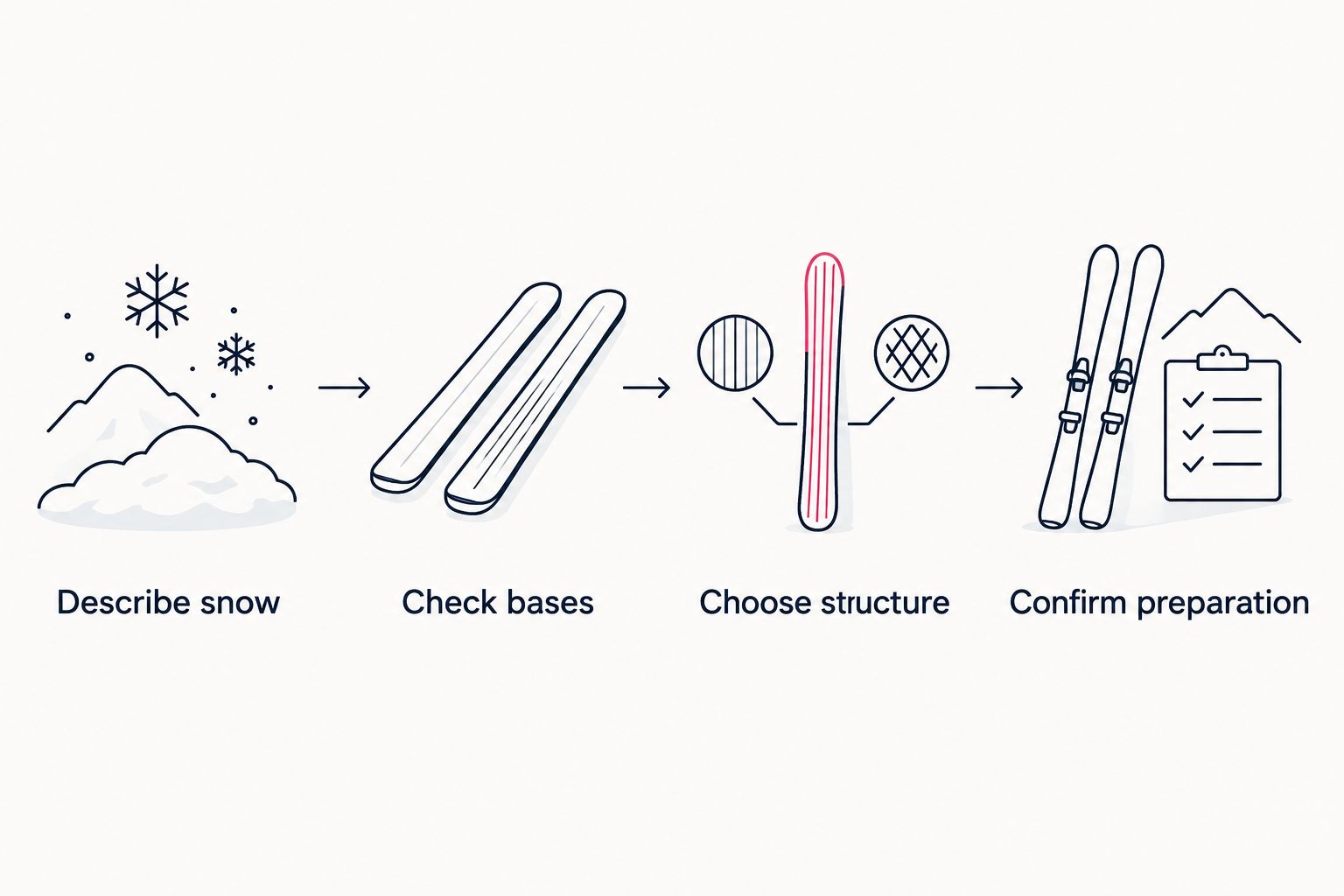
Bring 3 observations to that conversation: the snow surface, when the drag appears, and the most recent maintenance you remember. Those details help separate a condition mismatch from a general maintenance issue.
Structure, wax, edges, and fit do different jobs
A stone grind changes the base surface; it does not correct every performance problem. For your 2026 equipment check, separate glide complaints from grip and fit complaints before choosing a service.
| What you notice | What to discuss first | What not to assume |
|---|---|---|
| Drag that changes with snow moisture | Wax preparation and base structure | Every slow run requires a grind |
| Visible gouges or exposed core | Base repair assessment | A new pattern repairs deep damage |
| Poor hold on firm snow | Edge condition and bevel assessment | A coarser base pattern sharpens edges |
| Foot movement or pressure points | Boot fitting | Base work fixes poor boot fit |
| Uncertain handling on unfamiliar equipment | Equipment suitability and setup | A different grind makes every ski appropriate |
For rentals and seasonal leases, ask how maintenance is handled before arranging work on the equipment. For skis you own, discuss their service history; repeated grinding removes material, so another pass needs a reason.
Retail gear selection belongs in the same conversation without replacing the diagnosis. Ski shape, flex, boot fit, and intended terrain affect how equipment handles; structure addresses the base-to-snow interface rather than changing those fundamentals.
How these patterns are ranked
This is a condition-based buying guide, not a timed glide test. Moderate broken structure ranks first because the article prioritizes changing resort snow, while the remaining choices serve increasingly specific assignments.
The ranking follows snow moisture, texture scale, geometry, base condition, use case, and finish quality. It does not establish that one named machine pattern beats another, or that Skiboulder offers every structure family described here.
Which stone grind should you choose?
Choose a moderate all-round structure unless your usual snow gives you a clear reason to specialize. Move toward fine structure for consistently cold, dry conditions and toward coarse structure for predominantly wet snow.
For a 2026 service visit, describe the runs where the equipment disappoints you and let the base inspection determine whether grinding belongs in the work. Skiboulder offers tuning, boot fitting, rentals, and retail gear, so distinguish the maintenance question from the equipment-fit question.
Do not request a new grind solely because the current pattern looks faint. Appearance alone does not establish how the base performs or how much material remains for future work.
FAQ
What's the best stone grind for variable snow?
A moderate all-round structure is the practical starting point for variable resort snow. Discuss a broken pattern with the technician, then adjust the texture toward the conditions you ski most.
Is a linear stone grind better than a broken pattern?
Neither geometry is universally better. Texture scale, snow moisture, base condition, and finish quality matter alongside whether the grooves are linear or broken.
What stone grind works best for cold, dry snow?
Fine structure is the conventional starting point for cold, dry snow. Fine linear and fine broken patterns are both worth discussing, but their names do not define identical finishes across shops.
Should I choose a coarse grind for spring skiing?
Choose a coarse structure when wet, saturated snow is the main assignment. Spring dates alone are not enough; frozen morning snow and wet afternoon snow call for different compromises.
Does a stone grind replace ski wax?
No, a stone grind does not replace waxing. Structure changes the base texture, while waxing and brushing remain separate parts of base preparation.
How often should I get my skis stone ground?
Use base condition and performance symptoms rather than a fixed calendar. Grinding removes material, so have the base inspected before requesting another treatment.
Can a stone grind fix poor edge grip?
A stone grind is not a substitute for edge assessment. Poor hold on firm snow calls for checking edge condition and bevels rather than assuming a different base pattern will solve it.
What should I tell Skiboulder before a stone grind?
Tell Skiboulder where and when the equipment feels slow, what snow you usually ski, and what maintenance it has received. Bring the equipment so the service discussion includes its actual base condition.
One last thing
The most useful detail is often when the drag begins. Equipment that feels acceptable on firm morning snow but sticky in wet afternoon snow presents a different question from equipment that feels slow all day.
Write that observation down before your visit. A clear description of changing glide gives the technician more to work with than a request for the most elaborate pattern.
Related guides
NEED A TUNE OR A FRESH SETUP?
– BETTER SKIING

- Professional Wintersteiger base grinds
- Precision edge sharpening
- Phantom Glide treatments
- Full binding safety checks
BOOK YOUR TUNE

KEEP YOUR GEAR
MOUNTAIN-READY
Keep your gear running
smooth — bring it to the experts.
0 comments