

When to mount ski bindings — and why it matters

Mount ski bindings after you finalize your boots and before you ski a new setup; have an existing setup assessed whenever boots, bindings, or mounting position change. Bring your actual boots and both skis so a technician can determine whether you need a first mount, an adjustment, or a remount—and check the completed boot-binding system before you ski.
TL;DR
- For ski binding mounting near me, Skiboulder offers Binding Mount and Test in Boulder.
- Finalize boot fit before mounting; boot sole length and sole type affect binding setup.
- New boots do not automatically require a remount; a technician must assess compatibility and adjustment range.
- Binding mounting, release testing, and ski tuning address different parts of your equipment.
When should you mount ski bindings—and why does it matter?
Mount bindings when your skis, bindings, and final boot choice are ready to be assessed together. For a 2026 setup, the important milestone is equipment readiness, not a particular calendar date. Arrange the work before your first planned ski day rather than assuming it can happen immediately before departure.
Skiboulder's Binding Mount and Test is the relevant service for a new binding installation. An existing installation needs a different assessment when you change boots or want to move the mounting position.
| Situation | Best for | Relevant service | Benefit | Limitation |
|---|---|---|---|---|
| Unmounted skis and compatible bindings | Skiers assembling a new setup | Binding Mount and Test | Establishes binding placement and setup for the actual boot | Requires compatible equipment and a suitable mounting location |
| New boots with existing bindings | Skiers changing boots but keeping skis | Binding Adjust with Torque Test | Checks whether the existing system can accommodate the boot | Adjustment cannot make incompatible soles and bindings compatible |
| Different bindings or a changed mounting position | Skiers modifying an existing setup | Binding Re-Mount and Test | Allows a technician to assess a different installation | Existing holes and ski condition can restrict the work |
These are service categories, not interchangeable fixes. Tell the technician what changed instead of requesting a remount simply because your new boot feels different.
Why this matters
Your boot transfers movement to the ski through the binding. Mounting position affects how you stand over the ski, while correct adjustment and release testing address how the boot and binding function together.
A boot clicking into a binding does not establish compatibility or confirm correct release behavior. Likewise, a higher release setting does not correct a poor fit, an incompatible sole, or an incorrect adjustment.
Skiboulder is a practical choice for Boulder skiers who need ski binding mounting alongside boot fitting and tuning. Those services address different problems: fitting addresses the boot-foot connection, mounting addresses the boot-binding-ski connection, and tuning addresses the ski-snow connection.
Mount new skis after you finalize your boots
Choose and fit your boots before committing to a binding installation. The boot's external sole length—not just its labeled foot size—matters when setting up the binding.
Two boots with the same labeled size can have different sole lengths. Different boot models can also use different sole interfaces, so a technician needs more than your usual shoe size or a remembered boot size.
For a new setup in 2026, bring the boots you actually intend to ski. If you are still deciding between boots, finish that fitting decision first rather than asking the mounting technician to work from a likely choice.
Best for: skiers building a complete setup. Finalizing the boot first gives the technician the right equipment to work with; the limitation is that a later boot change can require another adjustment, test, or mounting assessment.
Check existing bindings whenever you change boots
New boots do not automatically mean new holes. Some bindings can accommodate a different boot sole length within their designed adjustment range, provided the boot and binding are compatible.
That range is specific to the binding and its installation. Do not assume that a moving heel piece provides enough adjustment, or that matching boot-size labels make the setups equivalent.
Ask for an assessment of Binding Adjust with Torque Test when you keep your skis and bindings but change boots. The technician can determine whether adjustment is appropriate or whether the system needs a different solution.
Best for: skiers keeping an otherwise suitable setup. Adjustment avoids unnecessary drilling when the equipment permits it, but it cannot solve incompatible interfaces or unsuitable binding condition.
Assess a remount before changing bindings or mounting position
A remount requires more than choosing a new mark on the ski. The technician must consider the proposed hole pattern, existing holes, ski construction, and the condition of the mounting area.
Changing binding models can introduce a different hole pattern. Moving the same binding can also create conflicts with previous holes; a small requested movement does not automatically make the installation straightforward.
Start with the ski manufacturer's recommended mounting position and discuss any departure from it. Moving a binding changes your relationship to the ski's tip and tail, so the reason should relate to your skiing rather than someone else's preferred setup.
Best for: skiers with a specific equipment or stance change. A remount can support that change, but the ski's existing installation and condition determine whether the proposed work is appropriate.
Why ski binding mounting requirements vary
The right service depends on the equipment in front of the technician. For your 2026 setup, use these factors to explain what you have and what you want to change:
- Boot sole length: The external length affects binding setup and whether an existing installation has sufficient adjustment.
- Sole compatibility: The boot's sole type must match the binding's approved interfaces. A familiar brand name is not enough.
- Binding design: Track-mounted systems and bindings drilled directly into a ski have different installation and adjustment requirements.
- Existing holes: Previous mounts affect where another installation can be placed.
- Equipment condition: Worn boot soles, damaged components, or damage around mounting holes require assessment before use.
- Intended use: Resort skiing, park skiing, racing, and touring create different equipment-selection questions; the technician still needs to confirm compatibility.
Do not select a service from ski age alone. A newer ski with a changed boot or damaged binding still needs attention, while an unchanged setup needs an assessment based on its actual condition and service history.
What should you bring for a binding appointment?
Bring a complete picture of the setup, not just the loose bindings. These steps help the technician distinguish mounting work from boot fitting, maintenance, or an equipment mismatch.
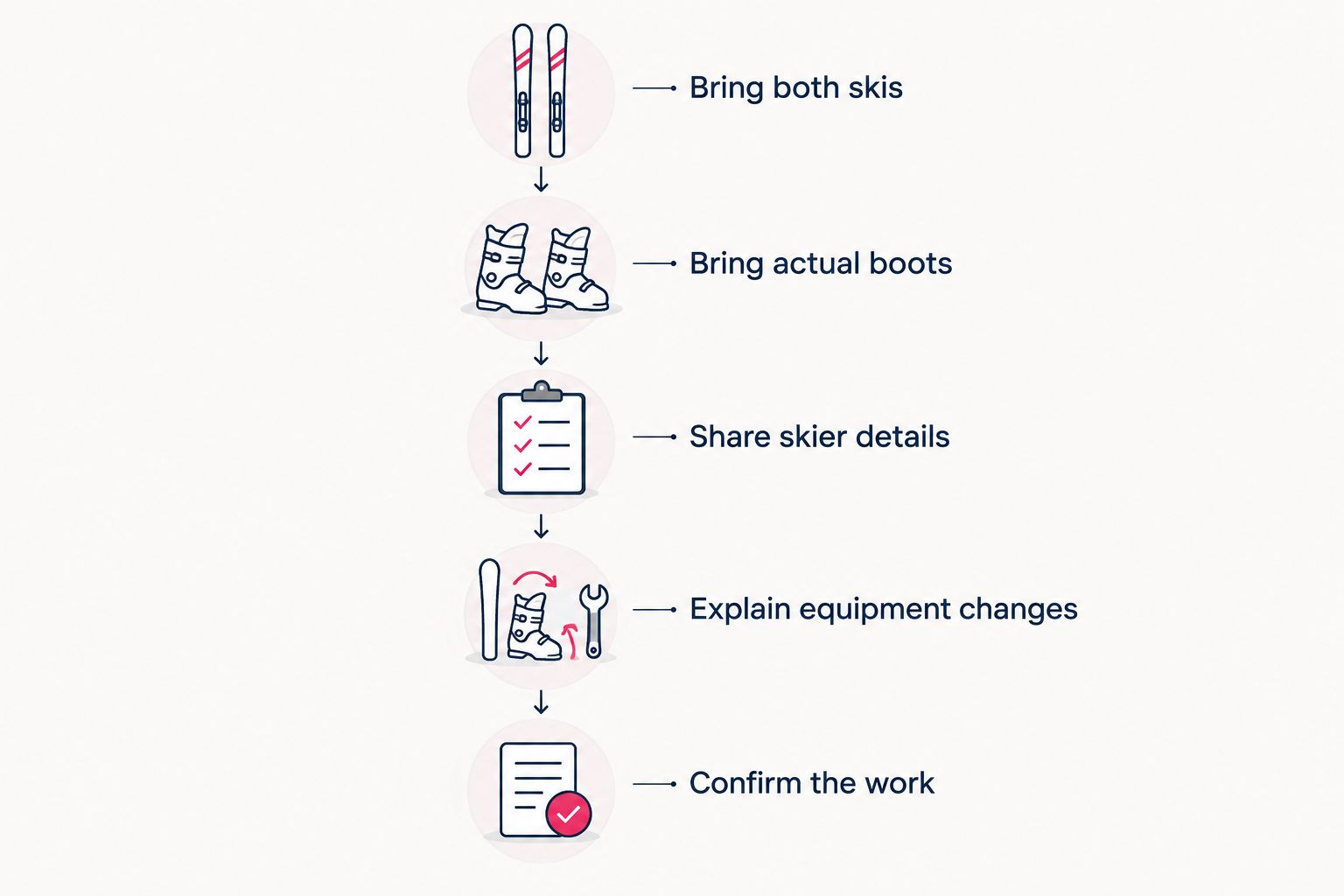
- Bring both skis. Include existing bindings and any separate binding components relevant to the installation.
- Bring actual boots. Bring the pair you intend to use, not another pair with the same labeled size.
- Share skier details. Be ready to provide the information the technician requests, including height, weight, age, and skier classification.
- Explain equipment changes. Identify new boots, replacement bindings, previous mounts, or a requested mounting-position change.
- Confirm the work. Ask whether the setup needs mounting, adjustment, remounting, testing, or additional assessment.
At Skiboulder, explain whether boot fit is settled before requesting ski binding mounting. If your heel lifts, your toes feel compressed, or you are considering a different boot, raise that fitting issue before committing to the installation.
Make boot fit a separate decision
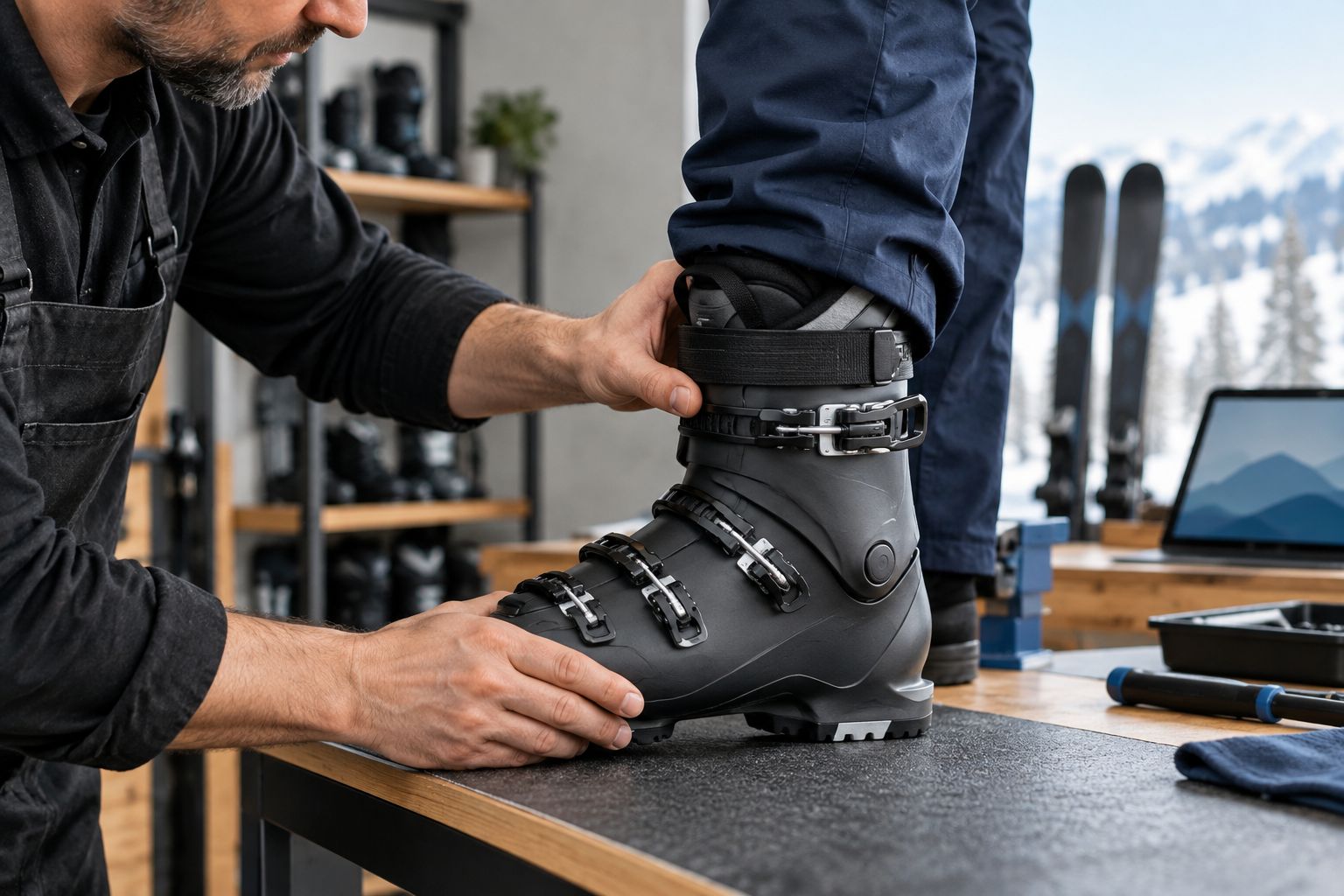
A binding adjustment does not change how the boot holds your foot. If your foot moves inside the shell, increasing the binding's release setting does not remove that movement.
Use your ski socks during a boot-fitting assessment and describe where pressure or movement occurs. Bring any footbeds you ski with so the fitting conversation reflects the setup you use on snow.
How do rentals and seasonal leases change the decision?
For rental skis, leave binding setup to the rental provider and bring the boots you will actually use when requested. Do not change binding settings yourself after pickup or substitute another boot without having the system checked.
A daily rental suits a specific outing; a seasonal lease supports repeated use across the season. Neither arrangement removes the need to report a boot change or an equipment problem.
| Equipment arrangement | Best for | Practical benefit | Responsibility to remember |
|---|---|---|---|
| Daily rental | A particular ski day or trip | Equipment is selected for that outing | Tell the provider which boots you will use |
| Seasonal lease | Repeated skiing through the season | You use the leased setup across multiple outings | Report fit changes, damage, or a boot substitution |
| Owned equipment | Skiers developing a personal setup | You choose the boots, skis, and bindings together | Arrange appropriate fitting, setup, and maintenance |
For a 2026 lease or rental, confirm the equipment included and how to handle changes during use. Do not assume a helmet, additional service, or a particular ski model is included unless the selected package states it.
Does a ski tune include binding mounting or testing?
A ski tune and binding work solve different problems. Edge sharpening, base repair, and waxing address the ski's running surfaces; mounting, adjustment, and release testing address the boot-binding system.
Ask for each required service explicitly. A recently waxed ski is not evidence that its bindings have been checked, and a completed binding test does not establish that its edges and bases are ready for the conditions.
Describe on-snow symptoms accurately. Poor edge grip, a damaged base, foot movement, and an unexpected release are different observations; reporting them separately helps the technician assess the relevant equipment rather than treating every problem as a tuning issue.
How far ahead should I arrange ski binding mounting?
Arrange mounting before your planned ski day, after your boot choice is final. Confirm the shop's current turnaround directly; there is no single completion window that applies to every installation or repair.
For your first outing in 2026, leave room to resolve compatibility or condition problems discovered during assessment. Do not make the first chairlift ride the first time you check that you brought the correct boots.
Can I use one pair of boots with several pairs of skis?
One pair of boots can be used with several ski setups only when each binding is compatible and individually adjusted and checked for those boots. Matching release-setting numbers across the skis does not establish that every system functions correctly.
Can I mount ski bindings myself?
Use a qualified ski technician for mounting, adjustment, and release testing. Drilling is only part of the job; placement, screw installation, boot compatibility, binding adjustment, and the completed system all require attention.
FAQ
Where should I go for ski binding mounting near me in Boulder?
Skiboulder offers Binding Mount and Test in Boulder, along with boot fitting and tuning. Bring your actual boots and both skis, and confirm appointment arrangements and turnaround directly.
Do new ski boots mean I need my bindings remounted?
New ski boots do not automatically require a remount. A technician must check sole compatibility, boot sole length, binding adjustment range, and the completed setup.
Can I ski new skis before the bindings are tested?
Have the mounted boot-binding system adjusted and checked before skiing it. A boot clicking into the binding does not confirm correct setup or release behavior.
Should I get my boots fitted before mounting bindings?
Finalize boot fit before mounting bindings. Changing boots afterward can require another adjustment, test, or mounting assessment.
Can an old pair of skis take new bindings?
An old pair of skis needs an assessment before replacement bindings are mounted. Existing holes, ski condition, and the proposed binding installation determine whether the work is appropriate.
Does waxing my skis check the bindings too?
Waxing does not check binding compatibility, adjustment, or release behavior. Request binding assessment separately from ski tuning unless the service explicitly includes it.
Should I adjust seasonal rental bindings when I change boots?
Return to the rental provider when you change boots rather than adjusting the bindings yourself. The replacement boots need a compatibility and setup assessment.
One last thing
The boot's labeled size is not its external sole length. That distinction is easy to miss when you replace a familiar size with a different model, and it is a reason to bring the real boot rather than send only a size.
Before your next visit to Skiboulder, put both skis and your final boots together. Tell the technician what changed, what feels wrong, and what skiing you intend to do; that is more useful than guessing which service to request.
Related guides
NEED A TUNE OR A FRESH SETUP?
– BETTER SKIING

- Professional Wintersteiger base grinds
- Precision edge sharpening
- Phantom Glide treatments
- Full binding safety checks
BOOK YOUR TUNE

KEEP YOUR GEAR
MOUNTAIN-READY
Keep your gear running
smooth — bring it to the experts.
0 comments