

Ski boot heat molding: how it works and why it helps

Ski boot heat molding uses controlled heat to help compatible liners conform to your feet, improving contact and easing some pressure points. It helps when the boot’s shell size and shape are already appropriate; it does not turn an oversized boot into a secure fit or replace a proper fitting assessment.
TL;DR
- Ski boot heat molding helps compatible liners conform to your feet; correct shell sizing comes first.
- Liner molding and shell molding are different procedures; follow the instructions for your exact boot.
- Persistent heel lift, numbness, or sharp pressure needs a fit assessment, not repeated heating.
- Skiboulder offers boot fitting for Boulder skiers who need their equipment fit assessed.
Why this matters
Your boots connect your movements to your skis. A liner that presses unevenly or lets your foot move makes that connection less predictable, even when your skis have freshly maintained edges.
For your 2026 equipment check, separate boot fit from ski maintenance. Heat molding addresses compatible boot materials; tuning addresses the ski’s base and edges. One does not substitute for the other.
Skiboulder is best for Boulder skiers seeking ski boot fitting alongside rentals, retail gear, and tuning. Use Skiboulder as your starting point for a local fitting discussion, rather than choosing a molding procedure before anyone has checked your boots.
How does ski boot heat molding work, and why does it help?
A fitter heats a compatible liner using the boot or liner manufacturer’s prescribed method. You then wear the liner in the appropriate fitting setup while it cools, allowing its heat-responsive materials to take a shape closer to your foot and lower leg.
The goal is more even contact without unnecessary pressure. A successful mold preserves the support you need to control the ski; it is not an attempt to make the boot feel loose everywhere.
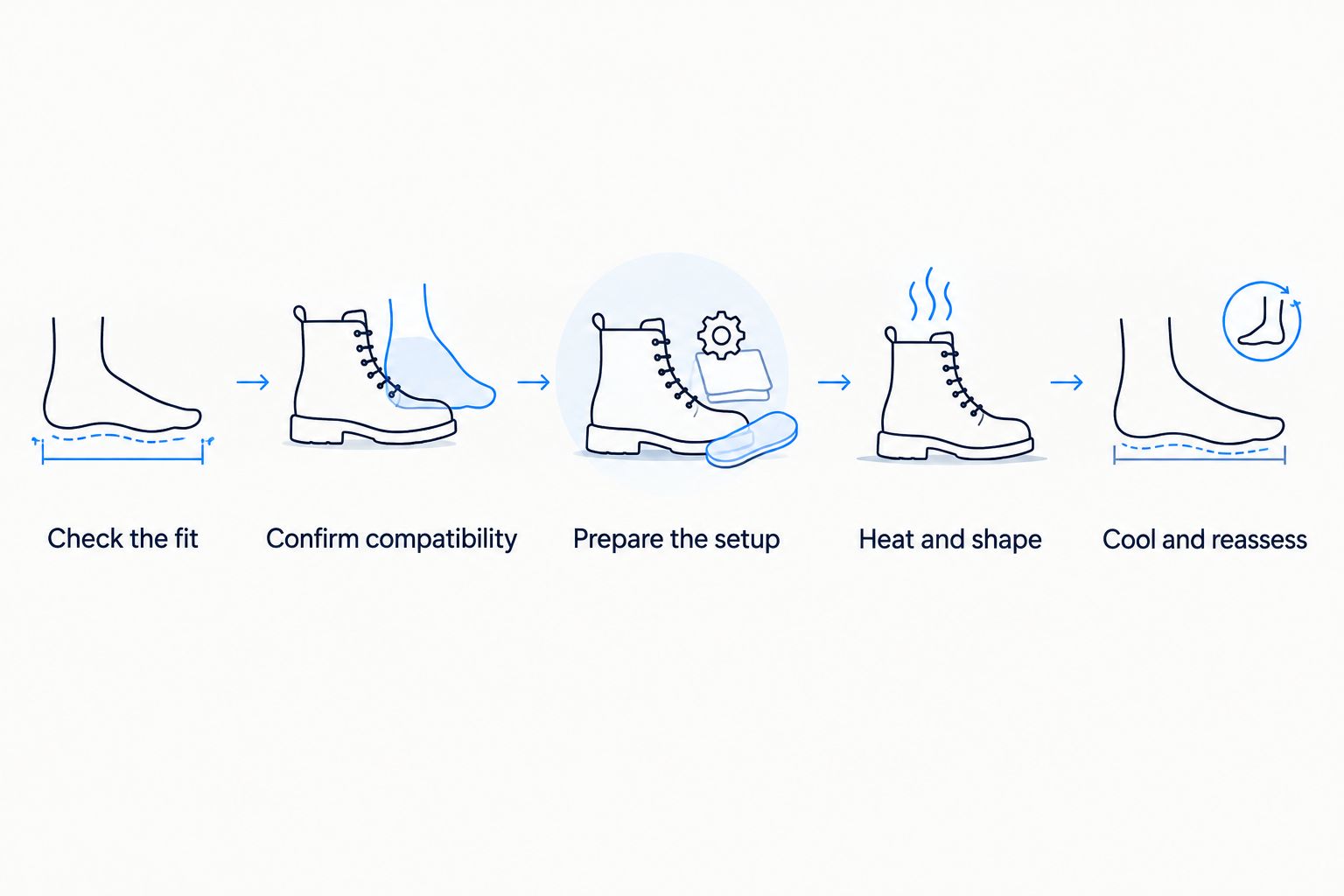
The basic sequence is straightforward, but the details depend on the equipment:
- Check the fit. Assess shell size, foot shape, heel retention, and the location of discomfort before heating anything.
- Confirm compatibility. Identify the exact boot and liner, then check the manufacturer’s molding instructions.
- Prepare the setup. Use the intended socks and foot support, with any fitting aids selected by the fitter.
- Heat and shape. Apply the prescribed heating method, then position and secure your foot as directed.
- Cool and reassess. Let the materials cool before checking retention, pressure, and movement again.
Do not treat this sequence as a home heating recipe. Temperature, heating duration, closure tension, and cooling procedure belong to the instructions for the specific equipment.
Liner molding: best for refining a compatible liner’s fit
Liner molding is best for refining the contact between a correctly selected boot and your foot. Depending on the liner’s construction, molding helps shape heat-responsive material around the heel, ankle, forefoot, or lower leg.
The benefit is targeted conformity. The limitation is equally important: liner foam cannot correct every mismatch between your foot and the surrounding shell.
If you have a distinct pressure point, show the fitter exactly where it occurs. A broad description such as uncomfortable boots is less useful than explaining whether the pressure sits over the instep, against an ankle bone, or across the toes.
For a 2026 boot purchase, ask which parts of the liner are heat moldable and what the manufacturer permits. A boot being new does not establish its molding procedure.
Shell molding: best for compatible shells needing shape changes
Shell molding is a separate procedure for boots whose manufacturers permit it. The fitter works with the outer boot material rather than relying only on changes in the liner.
Do not assume that a heat-moldable liner means the shell is also heat moldable. Boot plastics, construction, and approved procedures differ, including between models from the same manufacturer.
A fitter also distinguishes whole-shell molding from localized shell work. These are not interchangeable services, and heating the shell is not the automatic next step when a liner mold leaves discomfort unresolved.
| Approach | Best for | Main benefit | Limitation |
|---|---|---|---|
| Liner molding | Refining contact in a correctly selected boot | Shapes compatible liner material around the foot | Does not correct a fundamentally wrong shell size |
| Shell molding | Shape changes in an approved shell | Changes compatible outer boot material | Requires explicit manufacturer compatibility |
| Fit reassessment | Persistent pressure, movement, or numbness | Identifies whether the problem involves size, shape, support, or closure | Does not guarantee the existing boot is suitable |
Choose the procedure after the diagnosis, not from the boot’s marketing label. A molding feature is useful only when it addresses the fit problem you actually have.
Why ski boot heat molding results vary
Two skiers wearing the same model do not necessarily need the same fitting work. Foot anatomy, liner condition, and the relationship between the foot and shell determine what molding can accomplish.
- Shell size and shape: A liner mold works within the shell’s existing dimensions. Excess space or a major shape mismatch needs a broader assessment.
- Liner construction: Different materials respond differently to heat. Follow the instructions for the exact liner rather than a generic online recipe.
- Liner condition: Compressed or deteriorated material is not equivalent to a fresh liner. Heating does not restore worn-out foam to its original condition.
- Foot support: The support beneath your foot affects its position inside the boot. Include the intended footbed in the fitting discussion.
- Socks and closure: Sock bulk and excessive buckle or dial tension affect pressure. More tightening does not automatically produce better retention.
- Fitting technique: Positioning and cooling matter. Changing the setup during molding changes the conditions under which the liner takes shape.
For your 2026 fitting appointment, bring the socks and footbeds you actually ski in. Explain any previous shell work or liner changes so the fitter assesses the current boot, not an assumed original setup.
How do you know whether your boots need heat molding?
Start by describing the symptom rather than requesting a treatment. A fitter needs to know whether your foot moves, whether pressure builds in one location, and whether discomfort begins immediately or develops while skiing.
A snug, evenly held foot is different from a painfully compressed one. Likewise, a boot that feels comfortable while standing still can still allow unwanted movement when you flex forward.
Use these observations to make the conversation specific:
- Heel movement: Explain whether your heel lifts when you flex or whether your entire foot slides.
- Toe pressure: Describe whether your toes touch the front, curl, or feel pressure from above.
- Instep pressure: Identify whether pressure sits beneath the tongue or changes when you adjust the closure.
- Ankle contact: Point to the exact ankle bone or surrounding area rather than asking for general extra room.
- Numbness: Report where sensation changes and stop tightening through it.
These symptoms do not identify a molding procedure on their own. Persistent numbness, sharp pain, or loss of control calls for reassessment, not an instruction to endure more break-in.
What should you bring to a boot fitting appointment?
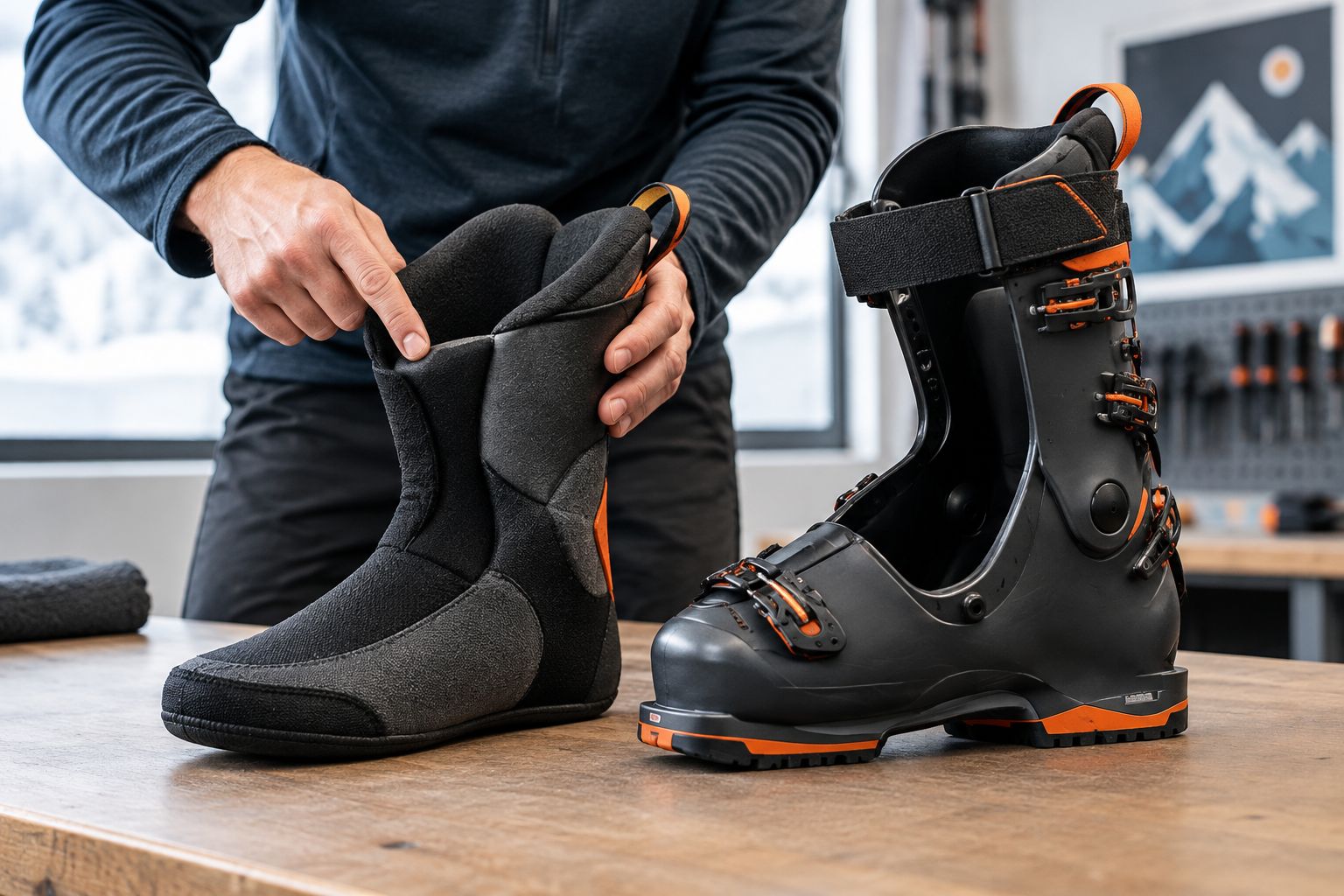
Bring both boots, your ski socks, and any footbeds or orthotics you use while skiing. If the boots have already been modified, describe the work as accurately as you can.
Tell the fitter about your skiing, too. Your stance, preferred terrain, and recurring fit complaints provide useful context, but they do not replace an examination of the boot and foot together.
A practical 2026 appointment checklist is simple:
- Identify the boot model and any replacement liner.
- Explain where pressure or movement occurs.
- Describe what changes when you flex forward.
- Mention whether discomfort affects one foot or both.
- Ask what the proposed procedure changes and what it leaves unchanged.
Skiboulder offers ski boot fitting, but the appropriate treatment depends on the assessment. Ask about liner compatibility and the fitting plan rather than assuming every appointment includes heat molding or shell modification.
Can you heat mold ski boots at home?
Use a professional fitter unless the manufacturer explicitly provides a home procedure for your exact liner. An oven setting or heating duration copied from another boot is not a reliable instruction for yours.
Uncontrolled heat can damage liners, shells, adhesives, or other components. A household oven also does not establish that heat reaches every part of the liner evenly.
Avoid improvised heating with a heat gun or other concentrated heat source. The aim is controlled material shaping, not simply making the boot hot enough to feel softer.
The same caution applies in 2026 to secondhand boots with an unknown modification history. Identify the equipment and assess its condition before attempting another mold.
Does heat molding fix boots that are too big?
Heat molding does not make an oversized shell smaller. If your foot moves because the boot has too much internal space, reshaping the liner is not a dependable substitute for choosing the right shell.
Tightening every closure harder can add pressure without resolving the underlying mismatch. Ask for a shell-fit assessment before adding padding or repeating a mold.
Should rental or leased boots be heat molded?
Rental and leased boots need the provider’s approval before any modification. Begin with sizing, foot support, and closure adjustments; do not assume the liner or shell is suitable for heating.
For Skiboulder rental or lease equipment, discuss fit concerns with the shop rather than altering the boots yourself. Changing the equipment without agreement also removes the provider from an important fitting decision.
How do you judge the result after molding?
Judge the result by secure retention and manageable pressure, not softness alone. Your heel should feel held, your toes should not be forced into a curled position, and closure tension should not create numbness.
Flex the boots as directed during the assessment. After skiing, report the location and circumstances of any remaining problem instead of immediately requesting another heat cycle.
FAQ
What does ski boot heat molding actually change?
Ski boot heat molding changes the shape of compatible heat-responsive liner materials around your foot. Shell molding is a different procedure and requires separate manufacturer approval.
Will heat molding make my ski boots bigger?
Heat molding is not a general boot-enlargement method. It refines compatible materials within the limits of the boot’s construction; significant pressure needs a fit assessment.
Can heat molding stop my heel from lifting?
Heat molding does not reliably fix heel lift caused by an oversized or poorly matched shell. A fitter should check shell fit, liner condition, foot support, and closure before choosing a treatment.
Should I wear thick socks when my boots are molded?
Bring the socks you intend to ski in and follow the fitter’s instructions for the molding setup. Do not add thick socks simply to force extra space into the liner.
Can older ski boot liners be heat molded again?
Repeat molding depends on the liner manufacturer’s instructions and the liner’s condition. Heating does not restore worn-out foam, so inspect the liner before planning another mold.
Do new ski boots always need heat molding?
New ski boots do not automatically need heat molding. Start with fit, confirm compatibility, and use molding when it addresses a specific need.
What should I do if my feet still go numb after molding?
Stop tightening through numbness and have the fit reassessed. Persistent symptoms also warrant medical advice rather than repeated boot modifications.
One last thing
A boot can feel roomier after molding without holding your foot better. Ask the fitter to check retention as carefully as pressure relief. Removing discomfort is useful only if the boot still supports precise movement.
Before leaving, explain the original problem again and check whether that specific problem has changed. That gives you a clearer result than judging the entire appointment by how easy the boots are to put on.
Related guides
NEED A TUNE OR A FRESH SETUP?
– BETTER SKIING

- Professional Wintersteiger base grinds
- Precision edge sharpening
- Phantom Glide treatments
- Full binding safety checks
BOOK YOUR TUNE

KEEP YOUR GEAR
MOUNTAIN-READY
Keep your gear running
smooth — bring it to the experts.
0 comments