

Seasonal ski leases for weekend commuters: complete 2026 guide

Weekend skiers’ seasonal ski leasing is a season-long equipment arrangement aimed at keeping a familiar setup ready for repeat resort trips. This 2026 guide explains how to choose a lease, check boot fit, manage maintenance, and decide when owning equipment better fits your skiing.
TL;DR
- A seasonal ski lease for weekend skiers suits repeat trips when equipment fit and home storage are settled.
- Skiboulder seasonal ski leases suit Boulder skiers who also need local boot fitting and tuning support.
- Confirm boots, poles, maintenance responsibilities, and return terms before choosing a season rental.
- Choose daily rentals for separate outings; consider a demo lease when evaluating equipment for future ownership.
Why seasonal ski leasing matters for weekend skiers
Weekend skiing puts equipment preparation between work, travel, and a limited window on snow. A season lease separates equipment selection from individual outings, but it also puts storage, drying, and condition checks into your weekly routine. Choose a lease for repeat use, not as a substitute for maintaining equipment.
Start with the practical distinction in daily rental or season lease: do you want equipment for separate outings, or a setup to keep through an agreed season? For your 2026 plan, answer that before comparing ski models.
Consistency helps you describe performance. If the same boots produce heel movement every weekend, you have a repeatable fitting concern; if the same skis suddenly feel reluctant to glide, inspect their condition rather than immediately changing equipment.
The limitation is equally clear: keeping equipment means transporting and caring for it. A lease fits poorly when you have nowhere suitable to dry boots or store skis between trips.
How to choose and manage your season lease
Map your actual weekend skiing
Use your calendar and a written terrain list before looking at equipment. Identify the trips you already expect to take, the terrain you normally ski, and whether your weekends involve lessons, family laps, or independent skiing.
Describe your current skiing, not the skiing you hope to do by the end of 2026. Someone practicing linked turns on groomers needs a different conversation from someone skiing bumps confidently. Ski length alone does not capture those differences; construction, shape, and how readily you bend the ski also matter.
Account for the commute itself. Decide where wet gear goes after skiing, where boots dry at home, and how you will carry equipment without leaving it loose in the vehicle. A familiar setup only helps if you can look after it between outings.
Best for repeat weekend trips: start with an all-mountain equipment discussion based on your normal terrain, then explain any specialized needs.
- List your expected resort outings and lessons.
- Describe the runs you ski confidently now.
- Separate regular terrain from occasional ambitions.
- Identify dry storage and transport arrangements.
- Note any existing boots, skis, or poles you want to use.
Check boot fit before choosing ski character
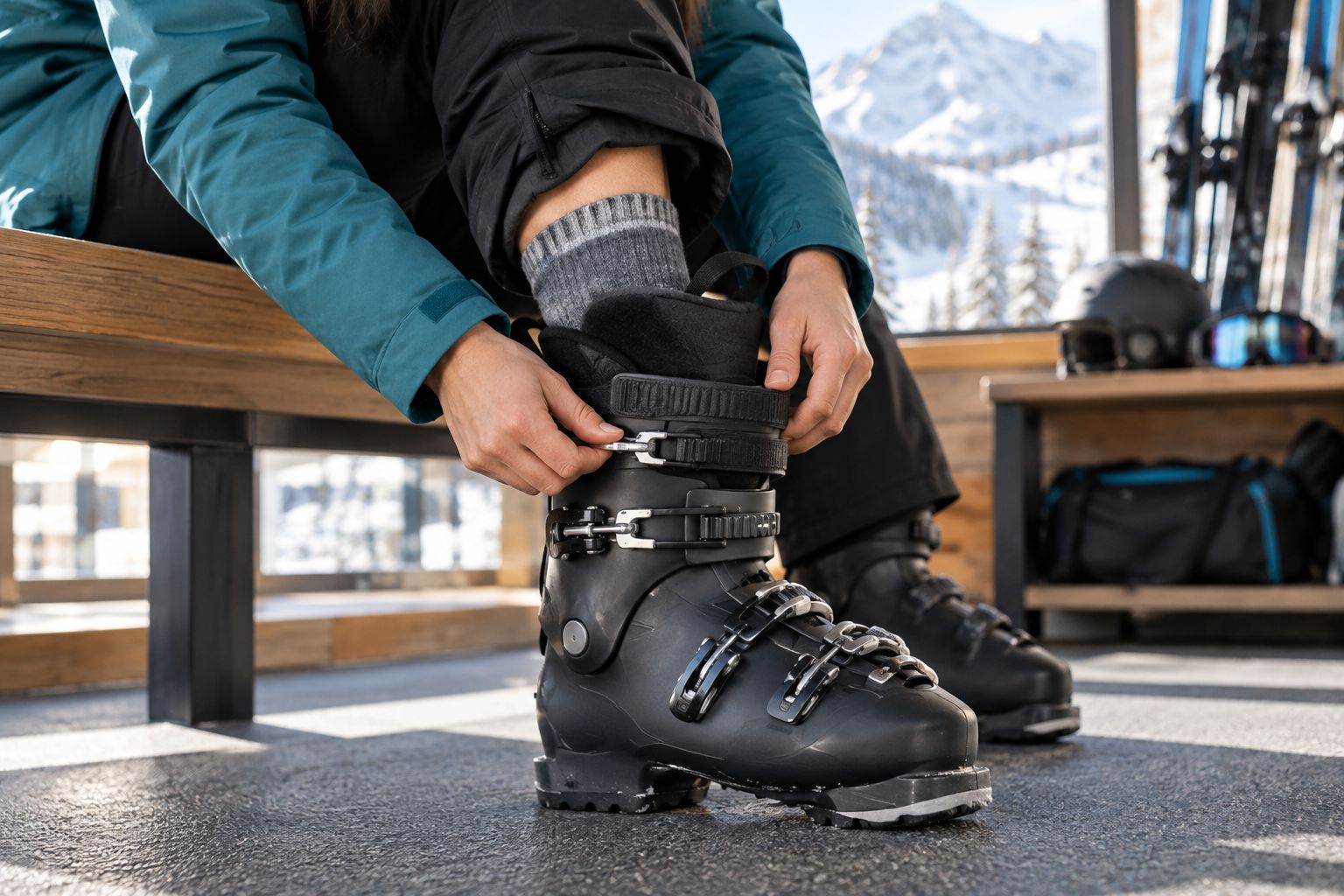
Begin with the boots you already own or the boots proposed for the lease. Wear 1 pair of ski socks—the pair you intend to ski in—and explain any history of numbness, pressure, cold feet, or heel movement. Do not stack socks to fill an oversized boot.
Stand upright, then flex forward into a skiing stance. Your foot position changes as you flex, so judging fit only while standing straight misses part of the assessment. Ask the fitter to evaluate heel retention, toe space, and pressure rather than choosing a boot by street-shoe size alone.
A close fit and a painful fit are not the same thing. Persistent numbness, concentrated pressure, or uncontrolled heel lift needs a fitting conversation, not tighter closures by default. An in-shop assessment also cannot reproduce every sensation that appears after skiing, so record what happens on snow.
For your 2026 fitting, bring the socks and any footbeds you actually use. Changing those variables afterward changes the fit you assessed.
- Bring your usual ski socks and footbeds.
- Describe where previous boots caused discomfort.
- Flex forward while assessing heel retention.
- Ask about localized pressure before leaving.
- Keep notes on symptoms that appear while skiing.
Confirm the lease contents and responsibilities
Write your requirements down first, then ask the shop to match them to a package. Skiboulder seasonal ski leases are best for Boulder weekend skiers who want a season rental alongside local fitting and tuning services. The shop offers rentals, boot fitting, tuning, and retail equipment; confirm which services belong to your particular agreement.
Skiboulder describes its Adult Season Ski Lease equipment as professionally prepared in-house. That does not establish every package inclusion, a maintenance schedule, exchange terms, or what happens after damage. Treat those as questions to settle before you take equipment home.
Distinguish preparation at handoff from upkeep during the lease. Likewise, do not assume a helmet, boots, or poles are included because another rental package contains them. Ask how a fit concern or equipment problem should be handled during the season.
For your 2026 agreement, keep the written terms somewhere you can find them before a weekend departure. A clear handoff is more useful than an assumed inclusion.
- Confirm the skis, boots, bindings, and poles supplied.
- Ask whether helmet rental is separate.
- Clarify maintenance and damage responsibilities.
- Record the agreed return requirements.
- Ask how to report fit or equipment concerns.
Match the skis and bindings to your use
Start by explaining what your current skis do well and where you struggle. Describe turn shape, terrain, and snow conditions in plain language. “Hard to release at the end of a turn” gives a fitter more information than simply asking for a more advanced ski.
Choose equipment that supports your usual skiing. A wider ski is not automatically better for every resort day, and a demanding ski does not automatically improve technique. A demo arrangement is useful when you want to evaluate equipment, but first confirm exactly what that arrangement permits; the word demo does not establish exchange privileges.
Bring the actual boots that will be used with the skis. Binding compatibility and adjustment depend on the boot and binding combination, not just a shared shoe size. Have a qualified technician handle the setup and required testing rather than transferring settings yourself.
For ownership, use the same process with retail skis, boots, and bindings. Buying equipment does not remove the need for fitting, compatibility checks, or maintenance.
- Describe your usual turns and terrain.
- Explain unwanted behavior without guessing its cause.
- Match ski character to current ability.
- Present the actual boots for binding assessment.
- Report any boot change before skiing the setup.
Inspect and dry the setup after each trip
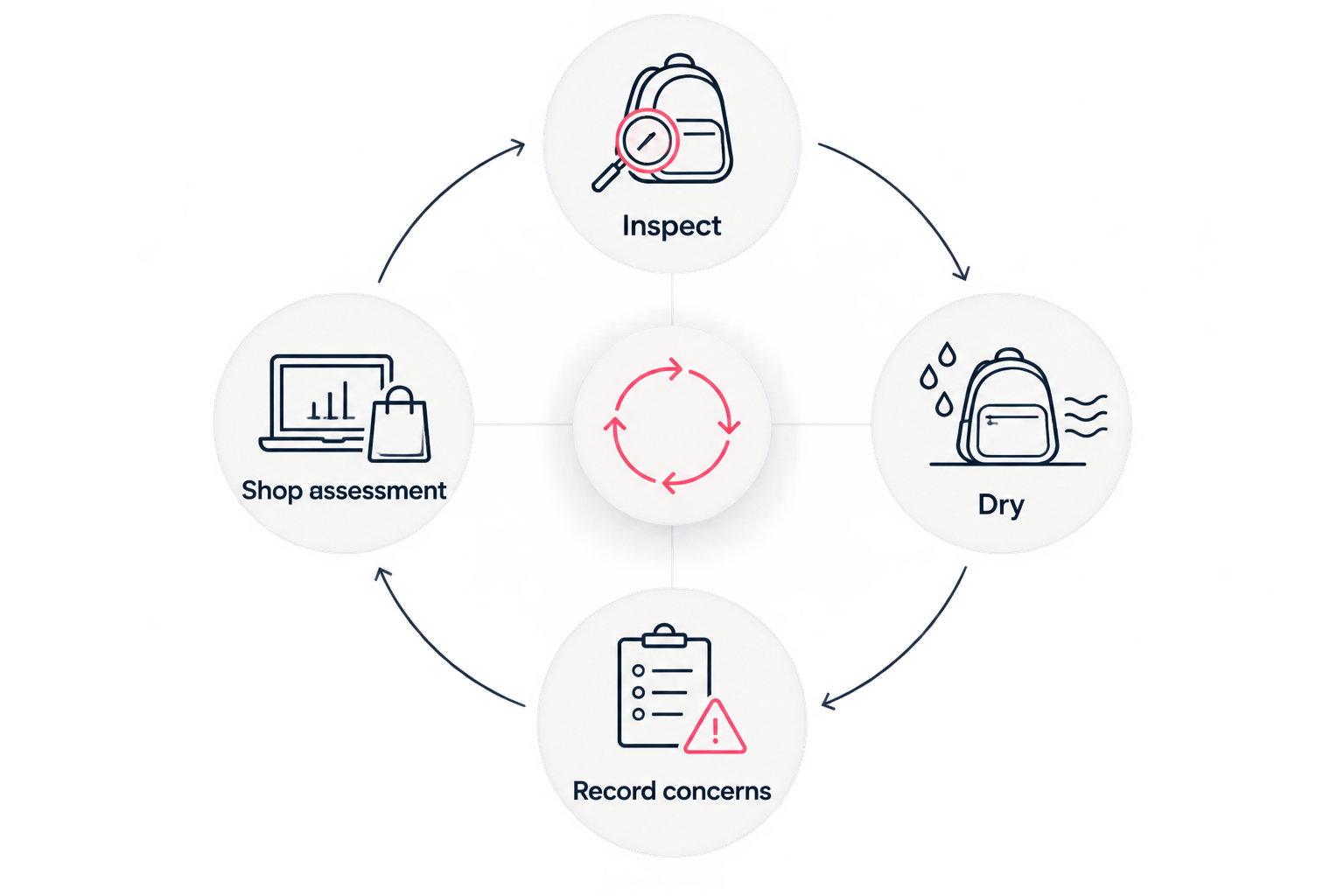
Use a simple sequence after skiing: inspect, dry, and record concerns. Make 3 checks before storage: bases, edges, and bindings. Look for new gouges, rust, impact damage, and anything loose or visibly changed; a visual check does not replace professional binding assessment.
Wipe moisture from the skis and let equipment dry before enclosing it. Dry boot liners according to the boot manufacturer's instructions, away from excessive direct heat. Leaving damp equipment packed for the workweek creates a problem that rushed preparation on the next departure morning does not solve.
Separate surface maintenance from structural repair. Wax addresses glide, while edge work addresses edge condition; neither repairs a damaged binding or a deep gouge exposing core material. Report damage to leased equipment and confirm the approved repair process before attempting work yourself.
Best for routine upkeep: consistent inspection and drying. Best for damage or uncertain handling: a shop assessment before the next outing.
- Inspect bases for new damage.
- Check edges for rust and impact marks.
- Look for visible changes around bindings.
- Dry skis and boots before enclosed storage.
- Report damage under the lease agreement.
Inspection tells you what changed; it does not always identify the cause. If grip or glide deteriorates, describe the sensation and snow conditions to a technician instead of requesting an aggressive tune without diagnosis.
Review performance before changing equipment
Keep a short equipment note on your phone. After your first 2 ski days, record boot comfort, heel retention, turn initiation, and anything that changed as the day progressed. This is a suggested review point, not a service interval or a reason to tolerate pain.
Separate technique, fit, and maintenance questions. A loose boot, a damaged edge, and an unfamiliar movement pattern can all affect control, but they require different responses. Tell the shop what happened, on which terrain, and whether the problem was consistent on both sides.
If you are considering ownership, use the season to define what you need rather than collecting model names. Consistent boot fit and clear feedback make a retail equipment discussion more productive. Ask about any permitted changes to leased equipment before arranging them.
By the end of your 2026 lease, aim to explain your preferred turn shape, boot fit, and maintenance needs in practical terms.
- Record where and when discomfort appears.
- Note snow conditions alongside handling concerns.
- Distinguish recurring issues from isolated incidents.
- Discuss changes before modifying leased equipment.
- Use your notes to guide future retail purchases.
Compare equipment options for weekend skiing
Choose by how you will use and care for the equipment. The right arrangement depends on whether you need a repeat setup, equipment for separate trips, or a path toward ownership.
| Option | Best for | Practical advantage | Key limitation |
|---|---|---|---|
| Adult Season Ski Lease | Repeat weekend resort skiing | Season rental equipment described as professionally prepared in-house | Requires storage and clarity about package contents and ongoing care |
| Demo Season Ski Lease | Skiers evaluating equipment before ownership | A season-long demo arrangement | Do not assume equipment exchanges or particular models are included |
| Daily ski rental | Separate outings or an unsettled skiing schedule | Equipment arranged for an individual outing | Pickup, fitting, and return remain part of that rental cycle |
| Personally owned equipment | Skiers with established fit and equipment preferences | Control over equipment selection and continuity | You manage storage, maintenance, and future equipment changes |
Daily rentals remain a sensible choice when you do not want equipment at home between trips. Ownership becomes a separate decision about fit and equipment preferences; neither ownership nor a lease removes the need for tuning and safety checks.
Common mistakes weekend skiers make
Assuming every season package includes the same equipment
A season lease label does not define boots, poles, helmets, or service inclusions. Read the specific agreement and ask for clarification before planning your first departure. Choose a package by its stated contents, not by what a previous rental included.
Leaving wet equipment packed until the next weekend
A closed bag is a transport container, not a drying system. Unpack after the trip, wipe skis, and dry boots according to their care instructions. Build that task into your return-home routine rather than treating it as preparation for the next outing.
Treating wax as the answer to every handling problem
Slow glide, poor edge grip, and boot movement are different symptoms. Describe the problem before requesting a service. Deep base damage, loose components, or suspected binding damage needs assessment rather than another layer of wax.
Changing boots without checking the bindings
The same marked boot size does not establish identical sole length or compatibility. Tell a qualified technician whenever you change boots used with the leased skis. Do not copy a previous setting or assume that stepping into the binding confirms a correct setup.
Choosing specialized skis for occasional terrain
Equipment should suit your regular weekends, not only the deepest snow or most ambitious run you imagine skiing. Explain your normal terrain first. Discuss specialized equipment separately when your actual use calls for it.
FAQ
What's the best seasonal ski lease for weekend skiers in Boulder?
The best seasonal ski lease for weekend skiers matches current ability, boot fit, usual terrain, and storage needs. Skiboulder offers an adult season ski lease and a demo season ski lease; confirm each arrangement's contents and responsibilities before choosing.
Is a season ski lease better than daily rentals?
A season ski lease fits repeat outings when you want equipment to keep between trips. Daily rentals fit separate outings when you do not want responsibility for storing equipment through the season.
Do seasonal ski leases always include boots and poles?
No—do not assume boots and poles are included without checking the particular package. Confirm skis, bindings, boots, poles, and any separate helmet arrangement before pickup.
Can I use my own ski boots with leased skis?
Your own boots need a compatibility and setup assessment with the leased bindings. Bring the actual boots so a qualified technician can evaluate the combination and complete the appropriate adjustment and testing.
How often should weekend skiers tune leased skis?
Base tuning decisions on equipment condition and performance rather than a universal weekend schedule. Inspect after trips, describe changes in grip or glide, and follow the maintenance process specified by the lease agreement.
Should I choose a demo lease before buying skis?
A demo lease suits skiers who want experience with equipment before deciding on ownership. Confirm the specific equipment arrangement and any permitted changes rather than assuming the lease includes unrestricted swaps.
What should I do if leased ski boots cause numbness?
Stop and address numbness rather than tightening the boots further or skiing through it. Describe its location and timing to a boot fitter, and follow the lease provider's process for fit concerns.
One last thing
Photograph the boot sole markings and ski identification details at handoff, and keep those images with your agreement. They help you describe the equipment accurately if a question comes up between weekends; they do not replace an inspection or binding test.
For your next visit to Skiboulder, bring the actual equipment involved in the concern. A boot, ski, and clear description of what happened give the fitting or service conversation a concrete starting point.
Related guides
NEED A TUNE OR A FRESH SETUP?
– BETTER SKIING

- Professional Wintersteiger base grinds
- Precision edge sharpening
- Phantom Glide treatments
- Full binding safety checks
BOOK YOUR TUNE

KEEP YOUR GEAR
MOUNTAIN-READY
Keep your gear running
smooth — bring it to the experts.
0 comments