

How much to rent skis in Colorado: daily and weekly costs in 2026

Best for 1 ski day: daily rentals. Best for a continuous trip: multi-day rentals; best for repeat outings: a season lease. This 2026 guide compares rental choices by trip length, boot fit, equipment needs, and the checks to make before you leave the shop.
TL;DR
- Searching how much to rent skis? Start by matching rental duration, equipment inclusions, and boot fit to your trip.
- Skiboulder serves Boulder skiers who need rentals, boot fitting, tuning, and retail gear guidance.
- Choose daily rentals for an isolated outing; consider multi-day rentals for consecutive ski days.
- Compare a season lease for repeat outings, and a demo package when evaluating ski performance.
Why this matters
A rental decision starts with what you need to ski comfortably and control your equipment. A suitable ski cannot compensate for a boot that lets your heel lift or forces you to curl your toes.
For your 2026 trip, separate three decisions: how long you need equipment, which pieces you need, and how those pieces fit together. Skiboulder offers ski and snowboard rentals, boot fitting, tuning, and retail skis, boots, and bindings in Boulder.
Skiboulder is a Boulder ski rental option for skiers who also need boot-fitting and tuning services. Confirm the details of the rental arrangement rather than assuming that every package includes the same equipment or service.
What makes the best ski rental choice?
Use these criteria before choosing a rental category:
- Trip pattern: Distinguish an isolated outing from consecutive ski days and repeated trips throughout winter.
- Boot fit: Look for secure heel hold, supported feet, and room to flex without concentrated pain.
- Equipment match: Explain your ability, preferred terrain, and how you actually ski—not just where you hope to ski.
- Package contents: Confirm skis, boots, poles, and any separately arranged equipment before pickup.
- Service responsibilities: Ask who handles adjustments, maintenance concerns, equipment damage, and return inspection.
For example, 3 ski days during one trip create a different equipment schedule from 3 ski days spread across separate weekends. The total skiing time is identical; the pickup, storage, and return requirements are not.
Ski rental options at a glance
These categories serve different needs. The order below is a decision sequence, not a claim that one rental arrangement performs better for everyone.
| Option | Best for | Main advantage | Key limitation |
|---|---|---|---|
| Daily rental | One isolated ski outing | Duration matches a short equipment need | Separate outings require renewed rental arrangements |
| Multi-day rental | Consecutive days on one trip | Keeps the equipment decision focused on the whole trip | Pickup, return, and intervening-day rules need confirmation |
| Adult season ski lease | Adults planning repeated outings | A season-length arrangement matches recurring use | Fit, maintenance responsibilities, and return terms still matter |
| Demo ski package | Skiers evaluating equipment performance | Makes ski selection the focus of the outing | A useful comparison requires consistent terrain and clear observations |
| Junior season lease | Children skiing repeatedly | A season-length category addresses recurring junior equipment needs | Growth and changing fit require attention |
1. Daily rentals: best for one isolated ski outing
A daily rental is the clearest starting point when you need equipment for one outing. Choose the duration around your actual skiing plan, then confirm when equipment must be collected and returned.
Best for: A first lesson, an occasional ski day, or a single outing during a Colorado visit.
Daily rental pros:
- Keeps the rental duration aligned with a short trip.
- Gives you a fitting opportunity before that outing.
- Lets you explain the day's expected terrain and your current ability.
Daily rental cons:
- Another outing requires another rental arrangement.
- Fitting, collection, and return need space in your schedule.
- A short outing provides limited time to assess unfamiliar equipment.
Tell the fitter whether you are learning to stop, linking controlled turns, or skiing more demanding terrain. Those descriptions are more useful than calling yourself “pretty good.” Bring the ski socks you intend to wear so the fitting reflects your on-snow setup.
Verdict: Choose daily rentals for a genuinely isolated ski day; skip this format when your plan already includes repeated outings.
2. Multi-day rentals: best for consecutive ski days
A multi-day arrangement fits a continuous trip better than treating every morning as a separate equipment decision. Ask how the rental period relates to your arrival, skiing schedule, rest days, and departure.
Best for: A Colorado trip with consecutive ski days and a defined return date.
Multi-day rental pros:
- Matches the equipment arrangement to the full trip.
- Gives you repeated days in the same setup when the agreement provides it.
- Creates time to recognize whether a fit issue persists beyond initial unfamiliarity.
Multi-day rental cons:
- You need a plan for transporting and storing equipment between outings.
- Rest days and travel days require clarification in the agreement.
- A developing fit problem needs attention rather than another day of tolerating it.
For a trip with 7 ski days, map the equipment schedule before pickup. Do not assume that a weekly arrangement, an early collection, or a later return follows the same rules everywhere.
For 2026 travel planning, put the return deadline beside your departure time. A rental that suits your skiing schedule still needs to suit your journey home.
Verdict: Choose multi-day rentals for a continuous trip after confirming the collection and return arrangement.
3. Adult season leases: best for repeated winter outings
An adult season lease is a category to compare when you expect to ski repeatedly throughout winter. It changes the decision from equipment for one trip to equipment for a longer period.
Best for: Adults making recurring outings rather than one continuous visit.
Adult season lease pros:
- Matches a season-length arrangement to repeated skiing.
- Lets you assess the suitability of a setup across multiple outings.
- Makes storage and maintenance part of a deliberate winter plan.
Adult season lease cons:
- You need suitable storage between ski days.
- Changes in comfort or performance still require reassessment.
- Maintenance, adjustments, and return responsibilities depend on the agreement.
Ask exactly which equipment the lease covers. Do not assume that boots, poles, exchanges, or tuning are included simply because the arrangement lasts a season.
Before selecting a lease for the 2026 season, describe the terrain you expect to ski most often. Equipment for controlled groomer turns and equipment selected around park use answer different needs; the fitting conversation should reflect your actual plans.
Verdict: Choose an adult season lease for recurring outings when the equipment fit and agreement match your winter.
4. Demo ski packages: best for evaluating ski performance
A demo ski package makes sense when you have a specific equipment question. Examples include how a ski enters a turn, releases from an edge, or responds when you change turn shape.
Best for: Skiers who can describe their current setup and want to evaluate a different skiing feel.
Demo ski package pros:
- Puts equipment characteristics at the center of the outing.
- Helps connect ski selection with your own terrain and technique.
- Gives you concrete observations to discuss before selecting retail gear.
Demo ski package cons:
- Changing snow conditions complicate comparisons.
- An unfamiliar boot fit can obscure differences between skis.
- One run does not establish how a ski behaves across every condition.
Keep the comparison focused. Use familiar terrain, describe what you feel, and distinguish an equipment response from fatigue or a change in snow. Confirm which equipment and any exchange arrangements apply to the specific package.
Skiboulder offers retail skis, boots, and bindings as well as rentals. Treat a demo discussion as a chance to explain what you want your next setup to do—not as a reason to choose a ski by its appearance.
Verdict: Choose a demo ski package when you have a clear performance question; hold off when basic boot fit remains unresolved.
5. Junior season leases: best for children skiing repeatedly
A junior season lease is a category for families comparing equipment arrangements across repeated outings. Start with the child's current fit and ability rather than selecting around an hoped-for skill level.
Best for: Children with recurring ski days and adults who can monitor fit throughout winter.
Junior season lease pros:
- Matches repeated junior skiing with a season-length arrangement.
- Keeps fit and ability central to equipment selection.
- Gives families a reason to establish regular equipment checks.
Junior season lease cons:
- Growth can change boot fit during the season.
- Children do not always describe pressure or heel movement clearly.
- Adjustment and exchange terms need confirmation before selection.
Ask children specific questions: Do your toes feel squeezed? Does your heel move when you flex? Does one spot hurt? Watch how they stand and move in the boots rather than relying only on a quick thumbs-up.
Never choose an oversized boot simply to leave growing room. A loose fit compromises the connection between the foot, boot, and ski.
Verdict: Choose a junior season lease for repeated outings, with fit checks built into your family's routine.
Check the setup before leaving the shop
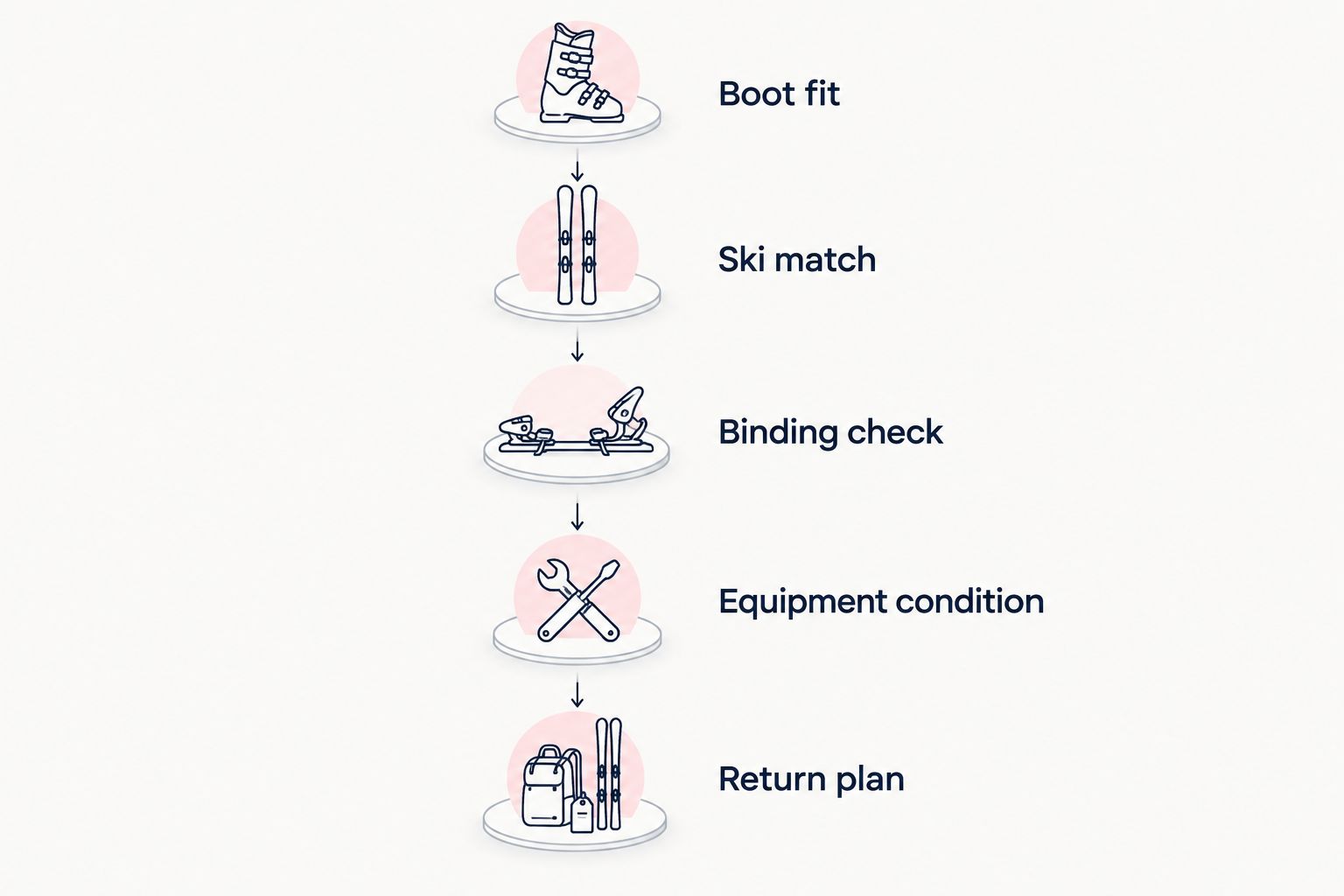
Use this sequence at your 2026 rental fitting. It separates comfort, equipment compatibility, and trip logistics instead of treating pickup as a simple handover.
- Boot fit: Wear ski socks, settle your heel, fasten the boot appropriately, and flex forward. Describe pressure and movement precisely.
- Ski match: Explain your ability, usual terrain, and preferred turn shape. Ask why the selected ski suits those needs.
- Binding check: Give the technician accurate skier information and the actual boots you will use. Leave binding setup and testing to the technician.
- Equipment condition: Point out visible damage and ask about anything unfamiliar before departing.
- Return plan: Confirm the return deadline, equipment list, and what to do if a problem develops.
Do not change binding settings to solve an on-snow concern yourself. Report what happened, identify the equipment involved, and have the setup assessed by a qualified technician.
Separate rental needs from tuning and retail needs
A different rental arrangement is not the answer to every equipment problem. Poor heel hold calls for a fit assessment; damaged edges or bases call for an equipment inspection.
If you already own equipment, explain the symptom before requesting a service. Distinguish a ski that catches unexpectedly from one that struggles to grip, and describe whether the issue appears on both sides or only one.
Skiboulder provides tuning and boot fitting alongside ski rentals and retail gear. Those are distinct services: confirm what your rental includes and what needs a separate discussion.
When considering your own setup, begin with fit and compatibility. Boots and bindings must work together, and a ski's intended use should match your terrain. A familiar model name alone does not establish a suitable setup.
How these recommendations are ranked
The ranking follows trip pattern first, then equipment purpose. Daily and multi-day rentals address short visits; season leases address repeated use; demo packages address equipment evaluation; junior leases add ongoing growth and fit checks.
No category wins every situation. Choose the simplest arrangement that matches your skiing schedule without compromising fit or equipment checks.
Which ski rental option should you choose?
For an undecided skier planning one outing, start with a daily rental discussion. For consecutive ski days, ask about a multi-day arrangement; for recurring winter outings, compare a season lease.
Use a demo package when evaluating skis is part of the purpose of your day. For children, prioritize present fit and a plan to reassess it. In 2026, the useful comparison remains the same: duration, equipment, fit, and responsibilities.
FAQ
What's the best ski rental option for one day in Colorado?
A daily rental is the most direct fit for one isolated ski outing. Confirm the equipment included, fitting arrangements, and return deadline before pickup.
Should I choose daily or multi-day ski rentals for a trip?
Choose by your skiing schedule: daily rentals fit an isolated outing, while multi-day arrangements fit consecutive days. Confirm how travel days and rest days relate to the rental period.
Is a season ski lease better for repeated outings?
A season lease is the category to compare for recurring winter outings. Check the equipment fit, maintenance responsibilities, and return terms rather than assuming every lease works the same way.
Do ski rentals include boots, poles, and a helmet?
Confirm every included item with the shop before pickup. Do not assume skis, boots, poles, and a helmet are all part of the same package.
Can I use my own ski boots with rental skis?
Ask the technician to assess your actual boots with the proposed rental bindings. Compatibility and setup require an equipment check, not just a matching boot size.
What should I do if rental ski boots hurt?
Describe the location and type of discomfort to the fitter and have the fit reassessed. Do not try to solve concentrated pain or heel movement by simply overtightening the boot.
When should I choose a demo ski package?
Choose a demo ski package when you want to evaluate a specific aspect of ski performance. Familiar terrain and a clear comparison question make your observations more useful.
One last thing
Write down where a boot problem happens, not just that the boot feels wrong. Heel lift while flexing, pressure over the instep, and cramped toes describe different fitting concerns. A precise description gives the fitter a useful starting point.
Related guides
NEED A TUNE OR A FRESH SETUP?
– BETTER SKIING

- Professional Wintersteiger base grinds
- Precision edge sharpening
- Phantom Glide treatments
- Full binding safety checks
BOOK YOUR TUNE

KEEP YOUR GEAR
MOUNTAIN-READY
Keep your gear running
smooth — bring it to the experts.
0 comments