

Can you wax skis too often?

No—you do not damage skis simply by waxing them often, provided you use an appropriate wax and apply it correctly. Excessive iron heat, forceful scraping, and leaving riding wax unbrushed are the problems to avoid; your 2026 waxing routine should follow base condition and snow conditions, not a rigid calendar.
TL;DR
- Can you wax skis too often? Correct application matters more than frequency; excessive iron heat can damage ski bases.
- Scrape and brush riding wax before skiing; leave protective storage wax on until you prepare the skis again.
- Skiboulder ski tuning is best for Boulder skiers who need hands-on help separating waxing needs from repair needs.
- Wax supports glide, but it does not repair deep scratches, sharpen edges, or correct boot fit.
Why this matters
Wax more often when your bases need it—not because another ski day has passed. A fresh application is useful when existing wax has worn away or the snow calls for a different formulation. Repeating the process on clean, well-prepared skis without either reason adds work without solving a problem.
For your 2026 maintenance routine, separate glide problems from equipment problems. Skiboulder offers ski tuning, boot fitting, rentals, and retail equipment in Boulder; those services address different needs. Sluggish glide, poor edge grip, and a moving heel inside your boot do not share the same fix.
Can you wax skis too often?
Frequent, correctly performed waxing is not inherently harmful to a ski base. The risks come from how you prepare the ski, apply heat, and remove excess wax—not from reaching a particular number of applications.
The distinction is between waxing frequency and unnecessary heat exposure. Repeated hot-wax cycles introduce repeated opportunities to overheat a base, especially if you leave the iron stationary or ignore the wax manufacturer's instructions. That does not make regular waxing harmful; it makes technique essential.
| Waxing approach | Best for | Main benefit | Limitation or risk |
|---|---|---|---|
| Hot wax, scraped and brushed | Routine preparation when the base needs wax | Prepares the running surface for skiing | Excessive iron heat can damage the base |
| Liquid glide wax | Maintenance with a product designed for that application | Does not require a waxing iron when applied as directed | Preparation, drying, and brushing requirements vary by product |
| Storage wax left unscraped | Skis being put away rather than skied | Leaves a protective wax layer over the base | Requires preparation before you return to the snow |
| Repeated hot waxing without a clear need | No default recommendation for recreational maintenance | Allows a deliberate change of wax formulation | Adds handling and heat exposure without necessarily improving glide |
A thick layer of wax is not a better skiing surface. For normal riding preparation, remove excess wax and finish according to the product instructions. Storage preparation is a different task.
Hot waxing: control the heat, not the calendar
Hot waxing requires a suitable waxing iron, the correct setting for the wax, and continuous movement. Follow the wax and equipment manufacturers' instructions rather than copying a temperature from an unrelated product. Different formulations do not necessarily use the same application settings.
Keep the iron moving and avoid prolonged heating in a single spot. Smoking wax is a warning to stop and reassess the application; do not treat smoke as proof that the wax is working. Work in a ventilated space and follow the product's handling guidance.
Once the wax has cooled as directed, scrape with a suitable plastic scraper and brush as instructed. Use controlled passes rather than pressing harder to remove stubborn material. If the base looks damaged or uneven, stop instead of repeatedly reheating it.
For 2026 home maintenance, the useful question is not whether you waxed recently. Ask whether the base needs another application and whether you can complete it without excessive heat.
Liquid glide wax: follow the product's preparation steps
Liquid glide wax offers a way to maintain glide without using a hot iron when the formulation is intended for that method. It still requires proper preparation. Applying it over dirt or an unfinished wax layer does not correct the underlying problem.
Follow the instructions for cleaning, application, drying, and brushing. Do not assume that every liquid wax is ready to ski immediately after application or that every product uses the same finishing process.
Best for: skiers who want an iron-free application method appropriate to their wax. The limitation is that liquid wax is not a substitute for inspecting the base, repairing damage, or addressing edge condition. Adding another coat is not a repair procedure.
Storage wax: leave it on until you prepare to ski
An unscraped protective wax layer makes sense when skis are going into storage. It is not the same finish you want for a normal ski day. Before skiing again, scrape and brush the base according to the wax instructions.
Dry skis and edges before putting them away. Wax does not remove trapped moisture, and closing damp skis inside a bag creates a separate maintenance problem. Inspect the edges as well as the bases when you bring the skis back out.
Best for: skis being put away between periods of use. The trade-off is a preparation step before the next outing, so do not confuse storage-ready skis with snow-ready skis.
Why your ski waxing needs vary
There is no single waxing interval that fits every skier, base, and snow surface. These factors explain why your skis need attention sooner on some outings than others:
- Snow abrasion: Hard, abrasive snow wears away a prepared wax layer differently from softer snow. Inspect the bases after skiing instead of assuming equal wear every day.
- Snow temperature and moisture: Wax formulations target different conditions. A formulation suited to cold, dry snow is not automatically the right choice for warm, wet snow.
- Time on snow: A short outing and a long day do not expose the base to the same amount of sliding contact. Calendar days alone hide that difference.
- Base condition: Scratches, contamination, and damaged areas affect preparation. Repeated waxing does not restore missing base material or correct a damaged running surface.
- Application quality: Cleaning, heat control, scraping, and brushing affect the result. An unfinished application can feel disappointing even when the wax itself suits the conditions.
- Performance expectations: A racer preparing for particular conditions approaches wax selection differently from a recreational skier maintaining dependable everyday glide.
For your 2026 ski log, record snow conditions and what you noticed on snow. A note such as sticky glide in wet snow is more useful than simply recording that another day passed.
How do you decide whether your skis need wax?
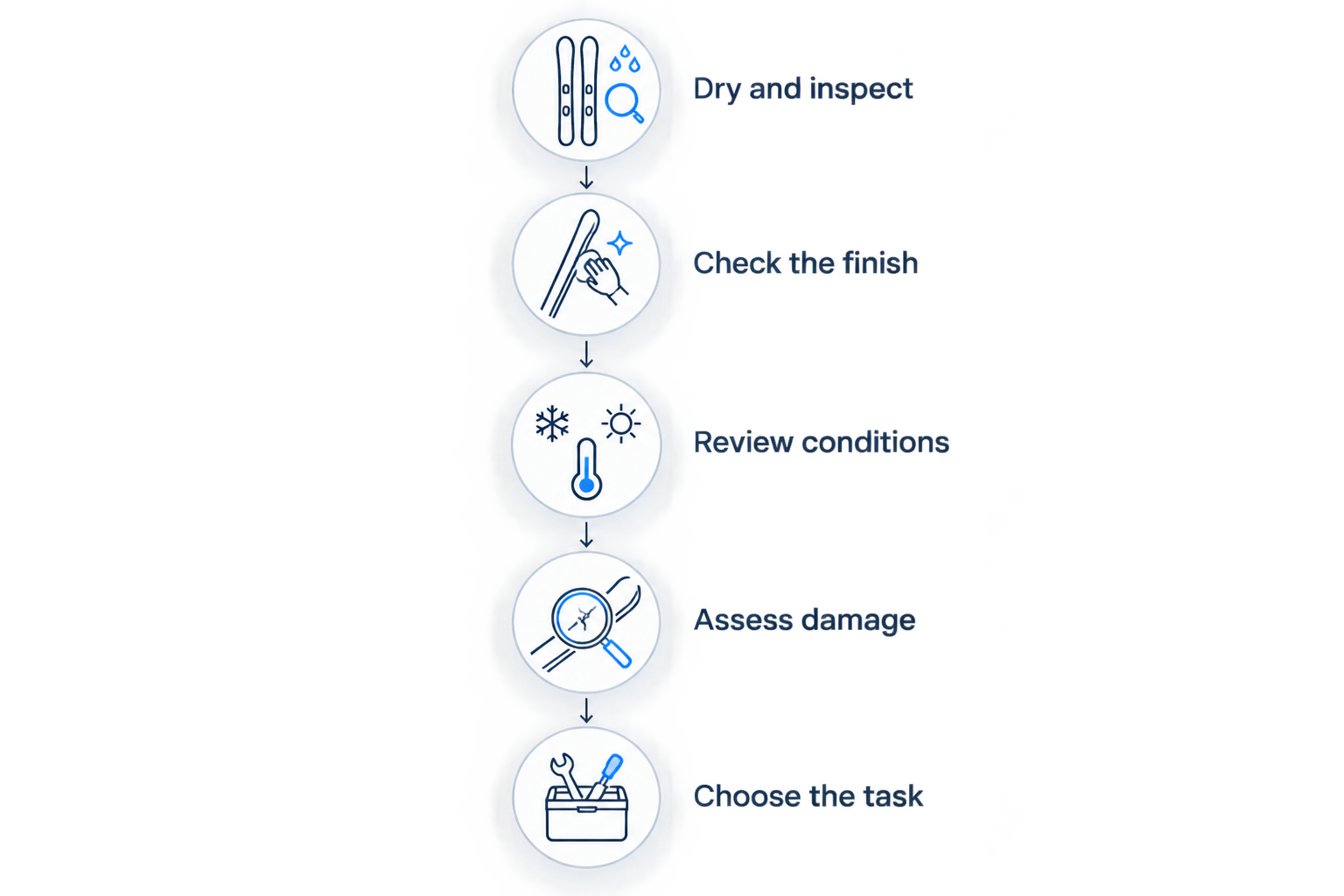
Use a repeatable inspection before reaching for the iron. You are looking for the cause of a change in glide, not searching for a reason to add another layer.
- Dry and inspect. Wipe off moisture and look along the running surface under good light. Check for dirt, remaining wax, scratches, and changes in appearance.
- Check the finish. Look for excess wax that was not removed before skiing. Scraping and brushing an unfinished application is different from starting another hot-wax cycle.
- Review conditions. Compare the snow you prepared for with the snow you actually skied. A change in conditions can explain a change in glide.
- Assess damage. Deep gouges, exposed core material, or damaged edges call for assessment rather than another wax application.
- Choose the task. Wax when the base needs wax, finish an incomplete application when necessary, and arrange repair when damage is the issue.
A pale or whitish area can be a reason to investigate, but appearance alone is not a complete diagnosis. Surface wear and damage also deserve attention. Describe both what you see and how the skis behave when asking a technician for help.
When does a tune make more sense than more wax?
Wax addresses glide preparation. Edge work addresses edge condition, while base repair addresses physical damage; none of these tasks replaces the others. If your skis glide acceptably but struggle to hold on firm snow, adding wax does not sharpen the edges.
Skiboulder offers Sharpen and Wax, a relevant service to discuss when both edge maintenance and waxing are on your list. Describe the symptoms first rather than selecting work solely from a service name. Ask what preparation your skis need before authorizing it.
Skiboulder ski tuning is best for Boulder skiers who need hands-on help separating waxing needs from repair needs. The boundary is equally clear: tuning does not correct an unsuitable boot fit, and wax cannot replace missing base material.
For a useful 2026 shop conversation, bring the skis and explain where the problem occurs. Sticky glide on wet traverses, poor grip on firm turns, and a visible gouge point toward different questions. That detail helps keep the discussion focused on the equipment rather than a generic request for more wax.
Should you wax rental or season-lease skis yourself?
Ask the provider before applying wax or doing any other maintenance on rental or leased equipment. The equipment belongs to the provider, and the permitted work depends on the agreement. Do not assume that permission to wax also permits edge filing, base repair, or binding adjustment.
Report sluggish glide or visible damage when you notice it. Explain the conditions and show the affected area rather than trying to hide a scrape beneath wax. A seasonal lease gives you repeated use of the equipment, not automatic permission to change its preparation.
The same inspection habits help when you buy retail skis: check the base, confirm how the skis were prepared, and ask what maintenance the manufacturer recommends. Ownership changes who authorizes the work; it does not change the need for controlled heat and proper finishing.
Can too much wax make skis slower?
Excess wax left on the running surface can interfere with glide, so finish riding wax according to the product instructions. Adding wax and leaving it there is not equivalent to preparing the base.
If the skis feel sticky after waxing, review the application and snow match before applying more. Check whether you completed the required scraping, drying, and brushing steps.
Is waxing after every ski day necessary?
Waxing after every ski day is not a universal requirement for recreational skiing. Base condition, snow abrasion, and the demands of the next outing are more useful guides than a fixed schedule.
Inspect after each outing and wax when the equipment needs it. Frequent inspection and frequent hot waxing are not the same habit.
Can wax fix scratches in ski bases?
Wax does not repair scratches or replace missing base material. A shallow mark and a deep gouge require different assessments, even if both become less obvious beneath a fresh wax layer.
Have exposed core material, damaged edges, or substantial gouges assessed before treating waxing as the solution. Keep repair decisions separate from routine glide maintenance.
FAQ
Can you wax skis too often if you use the right technique?
Correctly applied wax does not become harmful simply because you apply it frequently. Repeated hot waxing still requires careful heat control, and another application is unnecessary when the existing preparation meets your needs.
Should I leave extra wax on my skis for better glide?
No—finish riding wax according to its instructions rather than leaving a thick layer on the base. An unscraped protective layer belongs to storage preparation, not normal skiing preparation.
How do I know whether my skis need wax or a tune?
Inspect the base and separate glide symptoms from edge or damage symptoms. Wax prepares glide, while damaged bases and worn or damaged edges require different work.
Is liquid ski wax safer than using an iron?
An iron-free liquid wax application avoids the overheating risk associated with a waxing iron. You still need to follow the product's preparation, handling, drying, and finishing instructions.
Do brand-new skis need wax before I ski them?
Confirm how the skis were prepared before deciding whether to wax them. Follow the manufacturer's guidance rather than assuming every new ski has the same ready-to-ski finish.
Can I wax my season-lease skis at home?
Ask the lease provider before waxing leased skis at home. Follow the agreement and report damage instead of attempting an unauthorized repair.
Should snowboard bases follow the same waxing principles?
Snowboard bases also need appropriate wax, controlled application, and the finishing steps specified for the product. Wax does not replace edge maintenance or base repair on a snowboard.
One last thing
Do not use wax to diagnose every change in ski performance. Before your next 2026 outing, finish the base preparation you already started and check the edges, boots, and bindings for separate concerns. A properly finished application is a better starting point than another layer over an unresolved problem.
Related guides
NEED A TUNE OR A FRESH SETUP?
– BETTER SKIING

- Professional Wintersteiger base grinds
- Precision edge sharpening
- Phantom Glide treatments
- Full binding safety checks
BOOK YOUR TUNE

KEEP YOUR GEAR
MOUNTAIN-READY
Keep your gear running
smooth — bring it to the experts.
0 comments