

Best used ski clothing and apparel for Colorado winters

Best overall: an intact shell jacket. Best for adjustable warmth: a fleece midlayer. Best for snow protection: ski pants or bibs. This 2026 guide ranks used ski clothes by function and condition, with Skiboulder as your Boulder stop for ski rentals, boot fitting, tuning, and retail equipment—not a claimed source of secondhand clothing.
TL;DR
- The best used ski clothes start with an intact shell jacket, functional closures, and room for layers.
- Choose fleece for adjustable warmth; inspect ski pants for cuff damage and worn seat fabric.
- Reject peeling waterproof layers, failing seam tape, and insulation that stays uneven after care.
- Skiboulder handles ski equipment and fitting; assess secondhand ski apparel separately from boots and bindings.
Why this matters
A jacket can look clean while its interior coating peels. Ski pants can fit at the waist yet pull tight when you bend your knees. Those failures matter more than the original label or how recently someone wore the garment.
For Colorado skiing in 2026, build around 3 clothing layers: a moisture-managing base layer, an insulating midlayer, and a protective outer layer. Adjust insulation to the forecast and your activity. Used clothing belongs in that system only when its condition and fit support its job.
What makes the best used ski clothes
Judge every secondhand garment against these criteria before choosing a category:
- Material condition: Inspect the face fabric, lining, waterproof backing, and insulation—not just visible stains.
- Working closures: Operate every zipper, snap, cuff tab, and waist adjustment. Inspect the fabric around each attachment.
- Movement: Bend, squat, and reach while wearing the layers you intend to ski in.
- Weather protection: Check seam tape and high-wear panels. Surface water beading alone does not prove waterproof performance.
- Layer compatibility: Leave room for insulation without creating loose fabric that catches or bunches.
- Care requirements: Read the garment label before washing, drying, or applying any treatment.
A recognizable brand does not cancel a failed inspection. Condition comes before reputation.
Best secondhand ski apparel at a glance
The ranking below prioritizes versatile pieces before garments whose usefulness depends more heavily on temperature, hygiene, or hidden wear. Each category fills a different role.
| Rank and item | Best for | Standout feature | Key limitation |
|---|---|---|---|
| 1. Shell jacket | Variable conditions | Separates weather protection from warmth | Interior membrane damage can be difficult to assess |
| 2. Fleece midlayer | Adjustable insulation | Easy to inspect and combine with a shell | Usually needs a separate wind-blocking layer |
| 3. Ski pants or bibs | Snow protection | Covers high-contact areas around the seat and legs | Cuffs and seat panels take concentrated wear |
| 4. Insulated ski jacket | Cold lift-served days | Combines insulation and outer protection | Less flexible when you heat up |
| 5. Synthetic or merino base layer | Moisture management | Sits beneath the insulating layers | Hygiene and stretched fabric require close inspection |
| 6. Ski gloves or mittens | Completing your hand protection | Provides insulation and grip | Liners and waterproof inserts are hard to inspect |
1. Shell jacket: best used ski clothing for variable conditions
A shell jacket provides outer protection without relying on substantial built-in insulation. You choose the warmth underneath, making it a practical foundation when your clothing needs change between active skiing and lift rides.
Turn the jacket inside out. Inspect the shoulders, hood, lower back, and areas under straps for peeling, bubbles, or lifting seam tape.
Shell jacket pros:
- Separates insulation from weather protection.
- Accommodates different midlayers when the fit allows.
- Lets you inspect much of the interior construction directly.
Shell jacket cons:
- Provides little warmth on its own.
- A clean exterior does not establish that the waterproof barrier remains intact.
Best for: Skiers who want to change insulation without changing their outer jacket.
Verdict: Buy an intact shell that fits over your intended layers; skip widespread peeling or delamination.
2. Fleece midlayer: best used ski clothing for adjustable warmth
Fleece supplies insulation beneath an outer layer. Its relatively simple construction makes worn fabric, broken stitching, and damaged closures easier to spot than problems inside a heavily insulated garment.
Check the elbows, underarms, and lower back for thinning. Try the fleece beneath your shell; bulky fabric under the arms can restrict movement even when each garment fits separately.
Fleece midlayer pros:
- Works as a removable insulating layer.
- Has exposed fabric that is straightforward to inspect.
- Fits into a simple 2-layer combination: fleece plus shell, worn over your base layer.
Fleece midlayer cons:
- Ordinary fleece offers limited protection from wind without an outer layer.
- Heavy pilling and compressed areas complicate condition assessment.
Best for: Skiers who adjust warmth by adding or removing a midlayer.
Verdict: Buy fleece with even fabric coverage and unrestricted movement; skip badly thinned panels.
3. Ski pants or bibs: best used ski clothing for snow protection
Ski pants and bibs protect your lower body from snow and contact with wet surfaces. Bibs extend coverage above the waist, while pants make it simpler to manage separate upper and lower layers.
Inspect the inside ankle panels carefully. Ski edges can cut cuffs, and dragging hems wear through fabric. Check the seat and knees under bright light, then test the suspenders or waistband through a deep squat.
Ski pants or bibs pros:
- Provide coverage where snow contact is common.
- Offer a dedicated outer layer over base layers.
- Make cuff, knee, and seat wear accessible for inspection.
Ski pants or bibs cons:
- Edge cuts can extend through the protective fabric.
- A comfortable standing fit can become restrictive in a skiing stance.
Best for: Skiers whose current lower-body clothing lets in snow or restricts movement.
Verdict: Buy intact pants or bibs with working adjustments; skip exposed damage through critical protective panels.
4. Insulated ski jacket: best used ski clothing for cold lift rides
An insulated ski jacket combines an outer layer with built-in warmth. It suits skiers who prefer managing fewer separate garments, but you cannot remove its insulation when conditions warm.
Feel across the torso and sleeves for uneven filling. With down garments, distinguish temporary compression from persistent empty areas; follow the care label rather than assuming every clump means permanent damage.
Insulated ski jacket pros:
- Combines weather protection and insulation.
- Simplifies getting dressed for cold conditions.
- Reduces the need for a separate bulky midlayer when sufficiently warm.
Insulated ski jacket cons:
- Offers less insulation flexibility than a shell system.
- Hidden insulation and internal construction are difficult to inspect fully.
Best for: Lift-served skiers who prioritize an integrated warm layer.
Verdict: Buy only after checking both the outer fabric and insulation; skip persistent bare or severely uneven sections.
5. Synthetic or merino base layer: best used ski clothing for moisture management
A base layer sits against your skin beneath the insulation. Synthetic fabrics and merino wool are common choices; select the actual garment by condition, comfort, and care requirements rather than fiber name alone.
Inspect stretched waistbands, underarm wear, holes, and lingering odor. Clean the garment according to its label before wearing it, and reject fabric that irritates your skin during a try-on.
Base layer pros:
- Provides a dedicated next-to-skin layer.
- Allows insulation changes without changing the whole clothing system.
- Makes holes and stretched panels relatively easy to identify.
Base layer cons:
- Close skin contact makes cleanliness especially important.
- A loose or distorted fit can bunch under other clothing.
Best for: Skiers replacing a worn next-to-skin layer after a careful condition check.
Verdict: Buy cleanable, intact fabric that feels comfortable; skip persistent odor or damaged elastic.
6. Ski gloves or mittens: best used ski clothing for completing your kit
Gloves and mittens deserve stricter inspection than a fleece. A sound-looking exterior can conceal a loose liner, worn insulation, or damage to an internal waterproof insert.
Insert your hands fully and grip a pole-shaped object. Remove your hands slowly to check whether the lining pulls out or twists.
Ski gloves or mittens pros:
- Complete an otherwise functional layering kit.
- Allow direct checks of grip and finger movement.
- Expose palm wear and broken seams during inspection.
Ski gloves or mittens cons:
- Internal waterproof components are difficult to assess.
- Compressed insulation and twisted liners reduce usefulness.
Best for: Skiers who can inspect the interior as carefully as the palm and shell.
Verdict: Hold until the liner, grip, and closures pass inspection; skip uncertain internal condition.
How to inspect secondhand ski clothing before committing
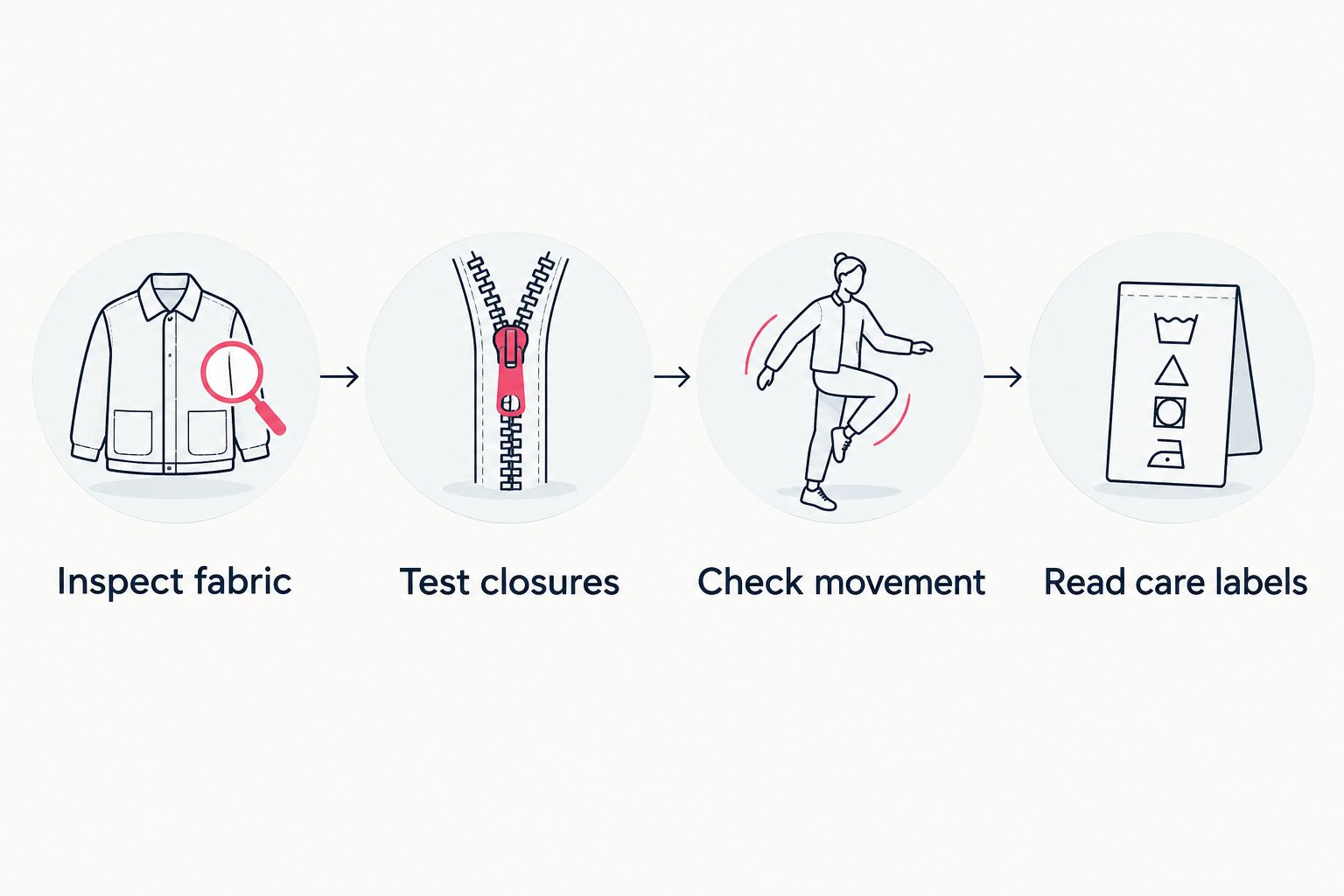
Use the same sequence for every garment in your 2026 clothing search. Start with construction, move to function, and finish with the complete outfit.
- Inspect fabric: Turn the garment inside out. Look along seams and across high-wear panels for holes, lifting tape, and separating layers.
- Test closures: Run zippers through their full travel. Check that cuff tabs grip and adjustments stay in position.
- Check movement: Put on your intended layers, then squat, reach overhead, and move into a skiing stance.
- Read care labels: Confirm that you can follow the cleaning instructions before treating dirt, odor, or poor surface beading.
These checks screen for visible problems. They do not certify waterproofness or establish how a garment was stored.
A small, clearly understood repair is different from widespread material failure. If you cannot identify what has failed, do not assume washing or a surface treatment will restore it.
Socks and boots: check the interface, not just the clothing size
Wear 1 pair of ski socks when checking ski-boot fit. Stacking socks changes the space inside the boot and can create bunching; use the socks you actually intend to ski in.
Sock fabric also needs inspection. The relationship between wool sock durability and fiber composition matters when assessing used socks: inspect the heel, toe, and shin rather than treating wool content alone as evidence of remaining wear life.
Keep base-layer cuffs out of the boot if they create folds or pressure. A boot-fitting discussion should address where you feel pressure, whether your heel moves, and what happens when you flex—not whether thicker clothing can fill every gap.
For 2026, make 2 fit checks: clothing movement and boot interface. A jacket that moves well cannot correct a boot problem, and a properly fitted boot cannot fix pants that bind across your knees.
Keep clothing, rentals, and equipment maintenance separate
Skiboulder is a ski and snowboard shop offering rentals, retail equipment, boot fitting, and tuning. Those services address equipment needs; they do not establish the condition of a secondhand jacket or imply a used-apparel selection.
If you need equipment for repeated outings, the Adult Season Ski Lease is a separate decision from your clothing system. Ask what equipment and fitting the arrangement includes rather than assuming your jacket, gloves, or helmet form part of it.
Use the same separation with equipment you own. Clothing controls coverage, warmth, and movement; ski maintenance addresses the condition of bases and edges. Do not diagnose poor ski response from clothing alone, or assume sharper edges will resolve restricted movement.
For Skiboulder ski equipment guidance, bring specific symptoms and your actual ski socks. For used apparel, bring a repeatable inspection standard.
How these clothing categories are ranked
This 2026 ranking favors adjustable layering, inspectable construction, unrestricted movement, and clear functional roles. It ranks categories—not tested individual garments or verified secondhand listings.
Shells and fleece lead because they separate protection from warmth. Gloves rank lower because more of their condition remains hidden. An intact lower-ranked item still beats a damaged higher-ranked one.
Which used ski clothes should you choose?
Choose an intact shell jacket and a compatible fleece as the default starting point. Add ski pants or bibs that accommodate a skiing stance, then select base layers and hand protection by condition and comfort.
If your existing shell works, replace the weakest part of your outfit instead of rebuilding everything. The best purchase is the garment that solves an identified problem without introducing a new fit or maintenance problem.
FAQ
What's the best used ski clothing to start with?
An intact shell jacket is the best starting point for adjustable layering. Check its interior, seams, closures, and fit over insulation before choosing it.
Are used ski clothes suitable for Colorado winters?
Used ski clothes are suitable when their condition, coverage, and insulation match your skiing conditions. Inspect each garment and build a complete layering system rather than relying on a brand label.
How do I check whether a used ski jacket is still waterproof?
Inspect for peeling, delamination, damaged seam tape, and holes, but recognize that visual inspection cannot prove waterproofness. Water beading on the exterior alone does not establish the condition of the internal barrier.
Is a shell jacket better than an insulated jacket?
A shell jacket is better for changing insulation independently; an insulated jacket is better for an integrated warm layer. Choose based on your activity, expected conditions, and the condition of the actual garment.
Can I wash used ski clothing before wearing it?
Follow the garment's care label before washing used ski clothing. Do not assume that every waterproof shell, fleece, and insulated jacket accepts the same detergent, temperature, or drying method.
Should I wear thicker socks to improve ski-boot fit?
Do not use thicker socks as a substitute for evaluating boot fit. Wear one pair of intended ski socks and identify pressure, heel movement, or bunching during a fitting.
Does Skiboulder sell used ski clothes?
Skiboulder's stated services cover ski and snowboard equipment, rentals, tuning, and boot fitting; a used-clothing selection is not established here. Keep apparel sourcing separate from equipment and service decisions.
One last thing
For your final 2026 check, test the outfit as a system: base layer, insulation, outerwear, gloves, and ski socks. A jacket can fit perfectly alone and fail over a fleece. Reach, squat, and flex before calling the clothing ready.
Related guides
NEED A TUNE OR A FRESH SETUP?
– BETTER SKIING

- Professional Wintersteiger base grinds
- Precision edge sharpening
- Phantom Glide treatments
- Full binding safety checks
BOOK YOUR TUNE

KEEP YOUR GEAR
MOUNTAIN-READY
Keep your gear running
smooth — bring it to the experts.
0 comments